France
 Austria
 Italy
 Switzerland
 English
 Deutsch
 Nederlands
 Čeština
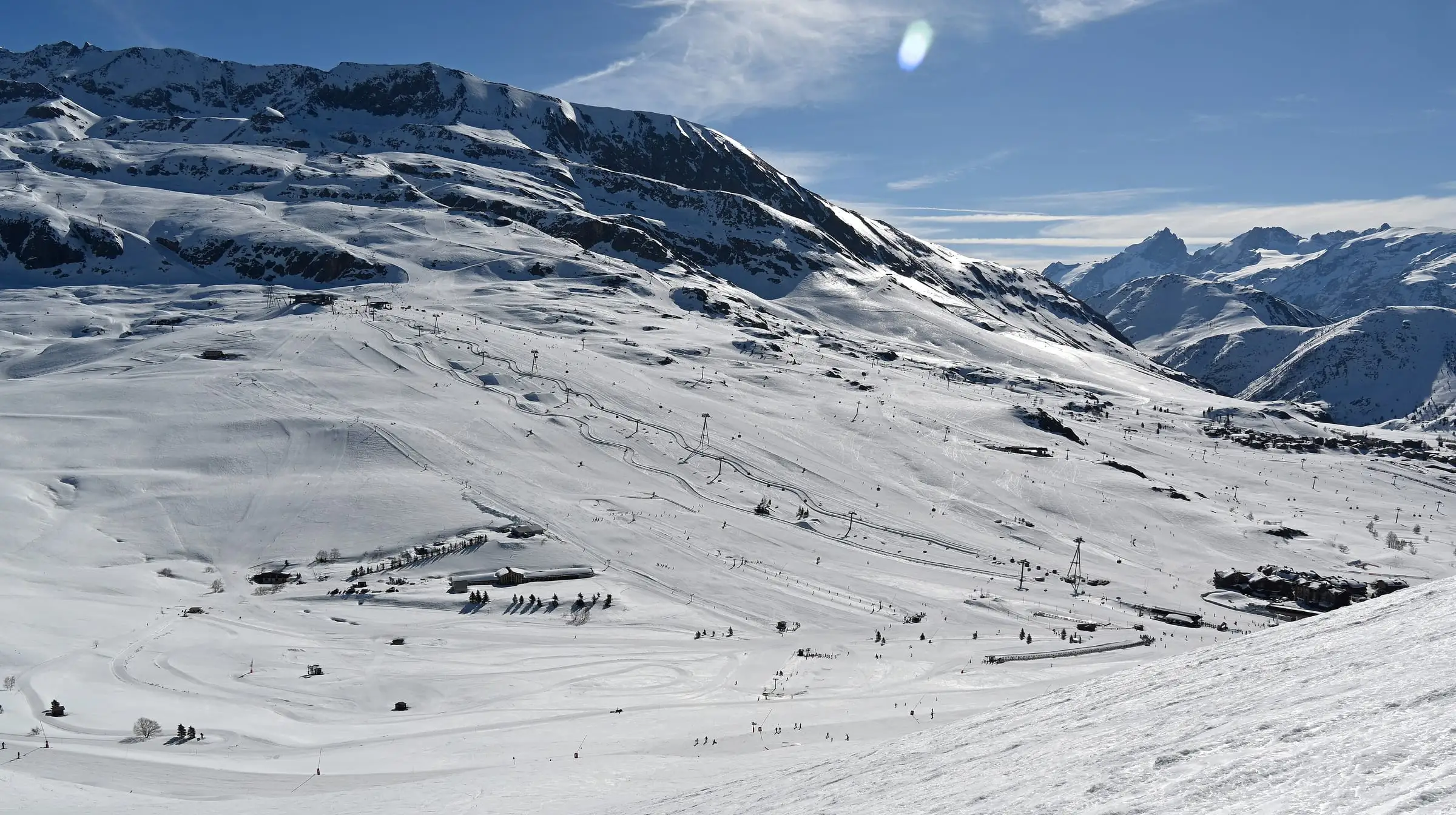
The best ski resort in Europe for beginners is Alpe d’Huez: four free lifts, two cheap step-up passes and 34 green runs that are long, wide and sunny. Val Thorens and Tignes come next, with free lifts right in the middle of villages at 2,100 m or higher, so the snow is reliable from the first week. For a gentler, wooded setting, choose Courchevel or Méribel; for nursery lifts beside the hotels in a high Austrian village, Obergurgl-Hochgurgl; for a lower bill, Livigno; and for altitude in Italy, Cervinia.
Of the resorts we cover in depth, those eight make our shortlist. Several famous names don’t, and we explain why near the end.
How we chose
We looked at what actually decides a first ski week:
- Free or cheap beginner lifts. Can you learn without buying a full pass? We name the lifts and say whether a pass is needed.
- The progression. Is there a clear next step from the nursery slope to long greens and easy blues, or does the resort jump from carpet to red?
- The share of easy runs, by the operator’s own count, by colour.
- Snow at beginner altitude. Nursery slopes are usually the lowest in a resort, so village height matters. Where we have it, we quote our own records: the average natural snow depth at one official station on the slopes, over five seasons (2021/22 to 2025/26). That’s natural snow at one spot, not the depth on the pistes, which snowmaking and grooming add to.
- Lessons, for children and for adults, and where the groups meet.
- Getting around the village in ski boots, with no buses or long walks to the nursery area.
One thing to know before you compare: French and other Alpine colours differ. France grades green, blue, red and black, and its greens are the gentlest runs in the Alps. Italy, Austria and Switzerland have no green, so their “blue” covers everything from a French green to a French blue. A resort with 40% blue in Austria isn’t the same thing as 40% green and blue in France.
We didn’t count ski-area size: a beginner uses a tiny part of any resort.
The best ski resorts for beginners at a glance
| Resort | Free beginner lifts | Beginner pass (2026/27) | Easy runs (operator’s count) | Village altitude | Our snow record |
|---|---|---|---|---|---|
| 1. Alpe d’Huez | Grenouille and Rif Nel carpets, École 1 chair | Débutant €26 a day, Première Glisse €55.50 (high season) | 34 green, 31 blue of 111 runs | 1,860 m | 92 cm in January (station at 1,860 m) |
| 2. Val Thorens | Campagnols, Musaraigne, Castor & Pollux carpets | Beginners Pass at half the public price | 12 green, 35 blue of 84 (Val Thorens–Orelle) | 2,300 m | 105 cm in January (Orelle, 2,356 m) |
| 3. Tignes | Nine, including the Rosset, Almes and Bollin chairs | Not needed for the beginner lifts | 93% of pistes above 2,000 m | 2,100 m (Le Lac, Val Claret) | No station on the slopes |
| 4. Courchevel | Not published by the operator | Minipass €39.50 a day (high season) | About half of 3 Vallées runs are green or blue | Up to 1,850 m | No station in the area |
| 5. Obergurgl-Hochgurgl | None | No beginner ticket; adult day from €69.50 | 60.2 km blue of 112 km, no green | 1,930 m (Obergurgl) | 63 cm in January (village station, 1,941 m) |
| 6. Livigno | None | Points card from €35, 6 to 8 points a ride | 32 blue, no green (lift company’s run list) | 1,816 m | No station on the slopes |
| 7. Méribel | Not published by the operator | Mini Pass €39.50 a day | 9 green, 29 blue of 78 | 1,450 m (centre) | No station in the area |
| 8. Cervinia | None | Beginners’ pass: Plan Maison return, Baby La Vieille, Campetto | 22 km blue of 103 km (Breuil side) | 2,050 m | No station on the slopes |
Snow figures are the average natural snow depth in January at one official station, over five seasons (four for Orelle). Obergurgl’s station is in the village, not on the slopes. Lift-pass prices are adult, high season, from the operators.
1. Alpe d’Huez: the best-organised learning set-up in the Alps
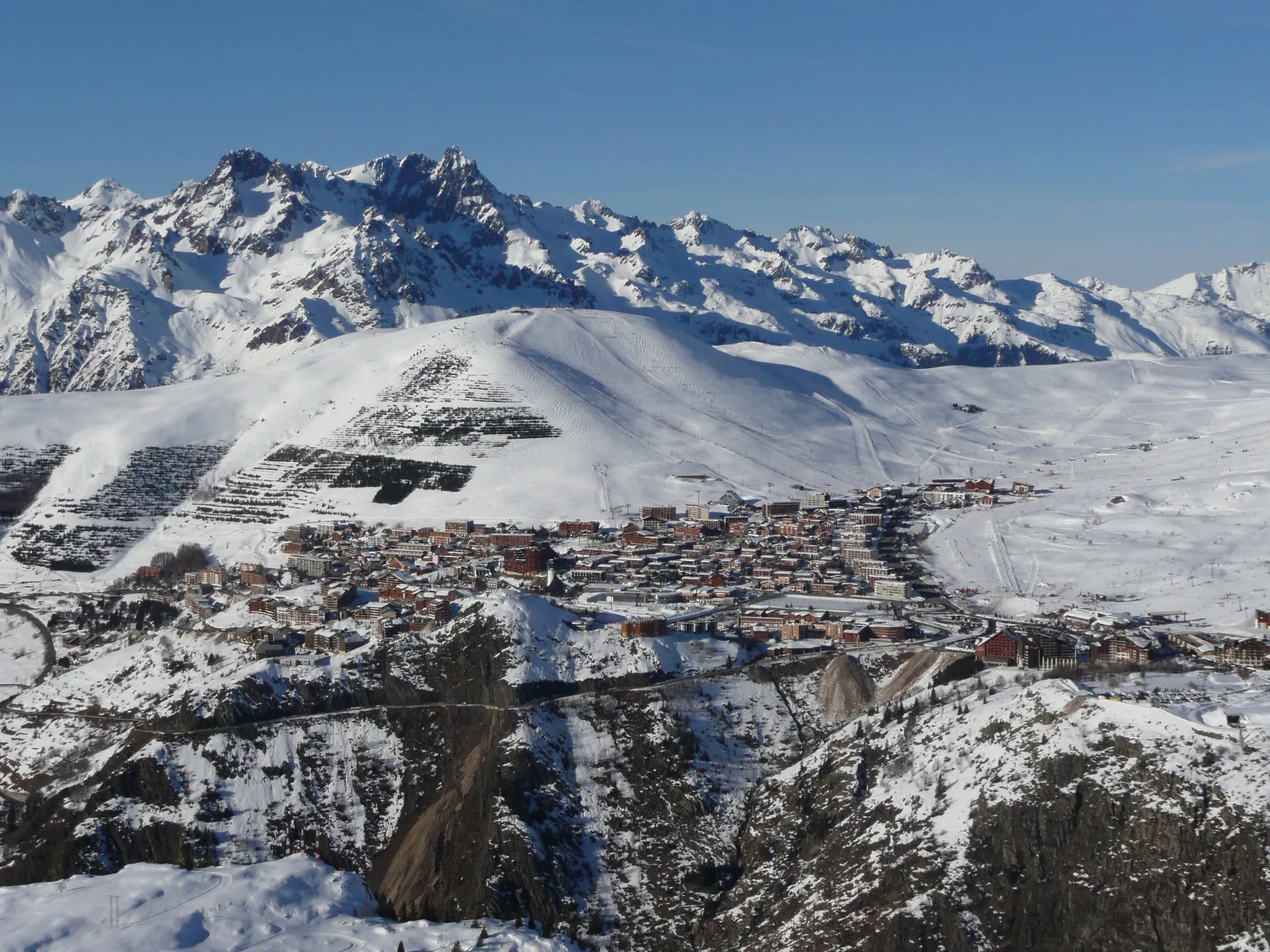
Alpe d’Huez has thought hardest about beginners. You start on lifts that are free all season: the Grenouille carpet, the little École 1 chairlift and the Petit and Grand Rif Nel carpets. Next, the Débutant pass (€26 a day from 19 December 2026 to 9 April 2027, €22 in early December) adds the Babars, Sagnes, École 2 and Poutran drags and the Berger and Mouton carpets at Les Bergers. Then the Première Glisse pass (€55.50 in high season, €47 in early December) opens the wider easy terrain above the village. You only buy the next step when you need it.
Its 34 greens are the most we cover, and the wide ones between Les Jeux and the village are where most first-timers find their feet. ESF Alpe d’Huez runs six-day adult beginner groups of up to eight, mornings, afternoons or both, from Sunday 13 December 2026, meeting at Grandes Rousses or Les Bergers, and advises not buying a pass until your instructor says so.
Our snow record: at the resort’s official station, natural snow averaged 118 cm in February and 121 cm in March as well, and every week of January to March had at least 30 cm in all five seasons.
The catch: the sun softens the lower slopes in late March and April, and the village is long, so stay near the Grandes Rousses front or Les Bergers. See our Alpe d’Huez guide and Alpe d’Huez with kids.
2. Val Thorens: free lifts at 2,300 m
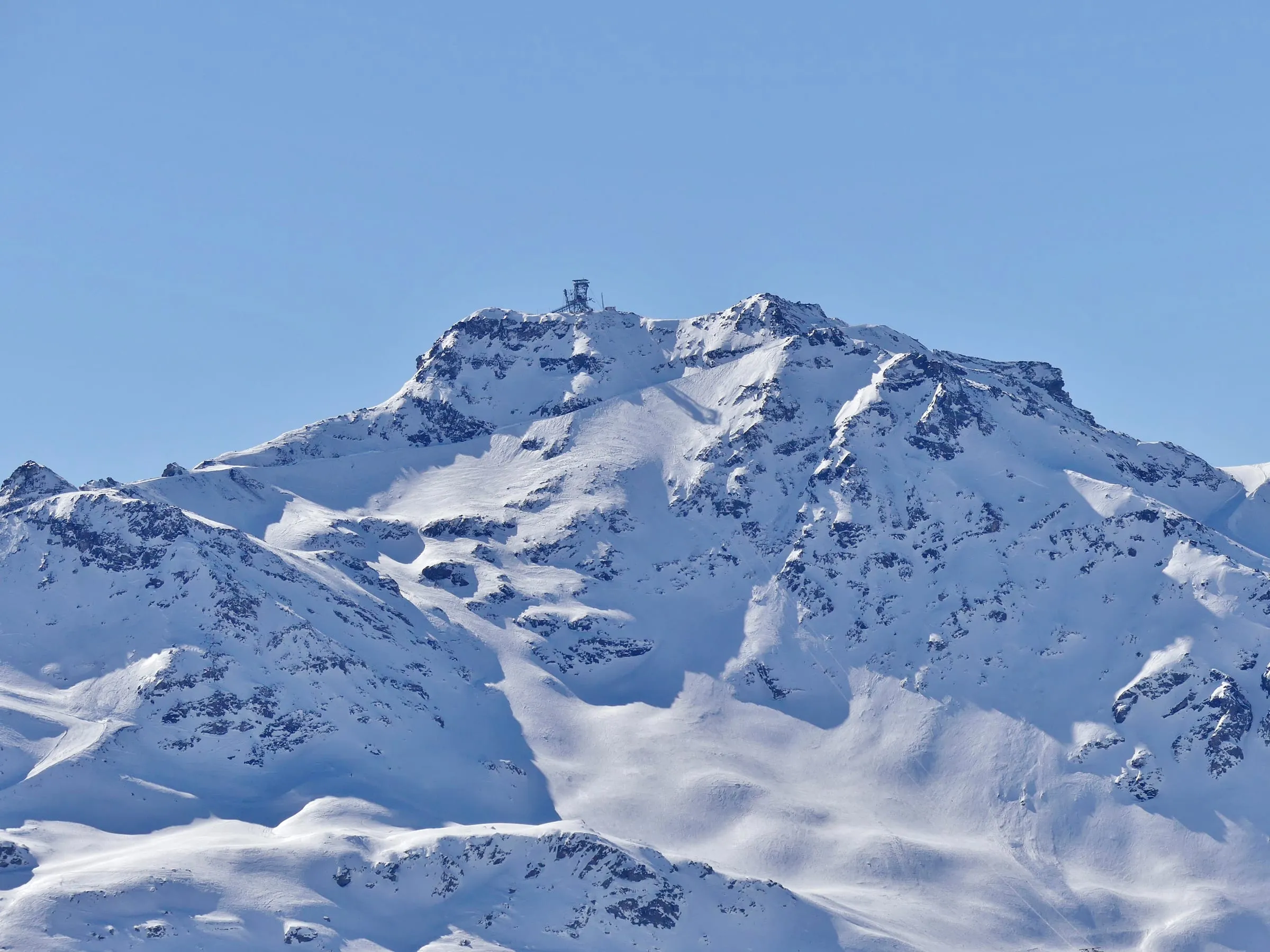
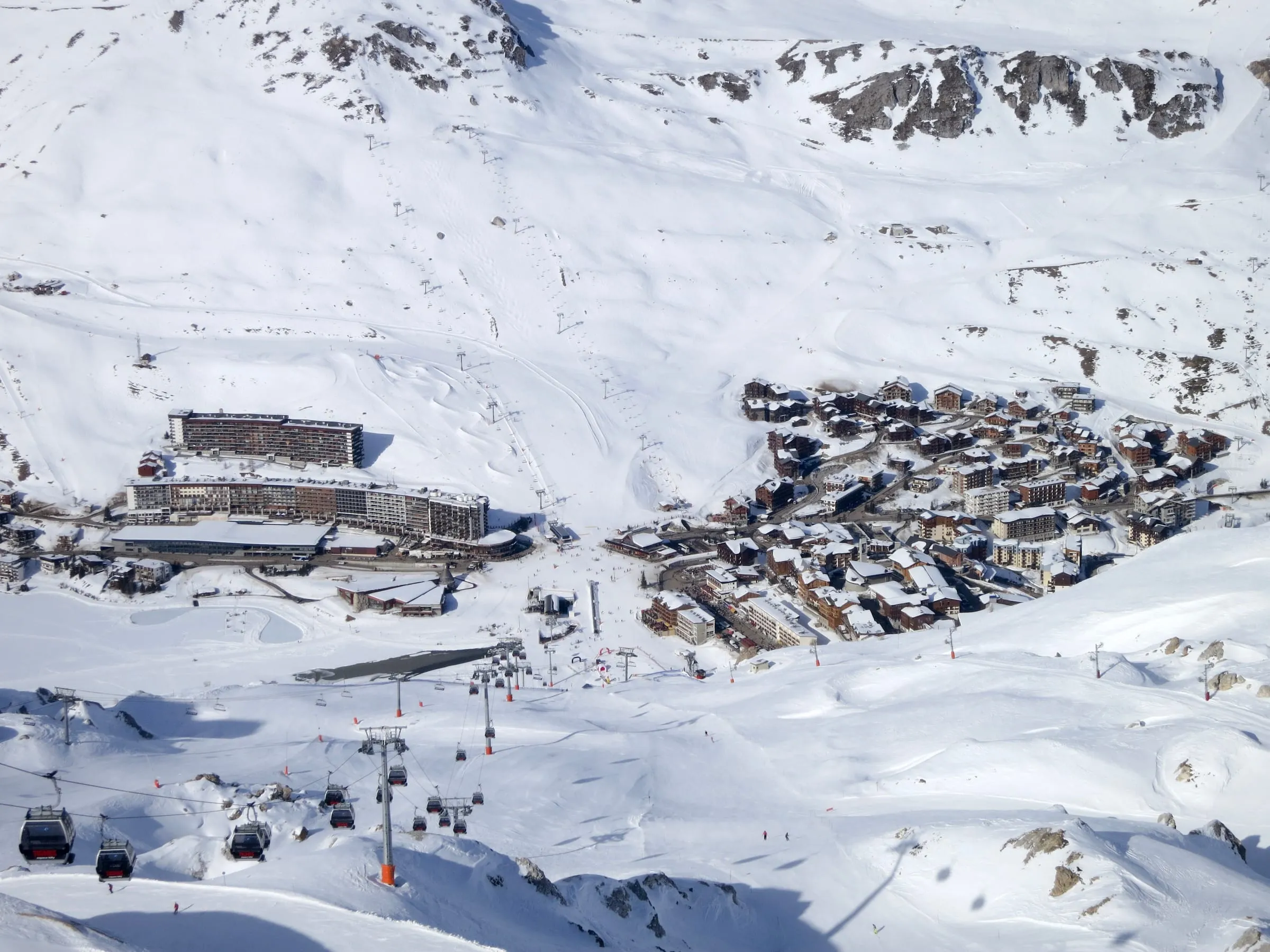
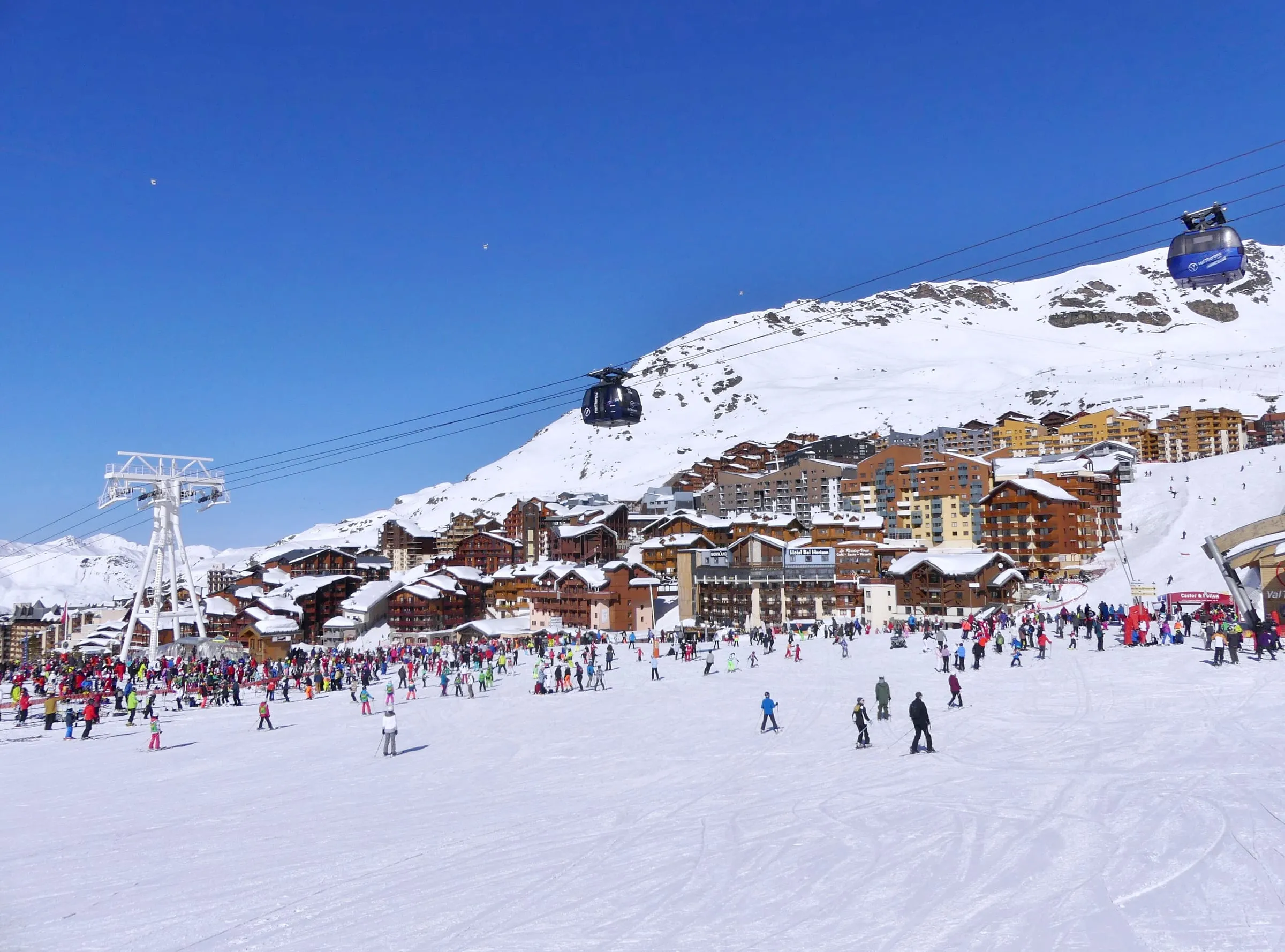
Val Thorens is known for big, open skiing, but its three free carpets are in the middle of the village, at the foot of the main slopes. Next, the Beginners Pass (half price, for four hours or a day) covers the Cairn, 2 Lacs and Caron gondolas and the Cascades and Moutière chairs, which reach the green and blue runs. ESF Val Thorens runs adult beginner lessons in small groups, by the half day, day or week.
The great advantage is snow: the nursery slopes are as high as some resorts’ summits. Our snow record: at the Orelle station, inside the Val Thorens–Orelle area, natural snow averaged 122 cm in March and still 116 cm in April.
The catch: there are no trees. In flat light or wind the open slopes lose all contrast, which is unsettling when you’re learning, and the village is steep in places. See our Val Thorens guide and Val Thorens with kids.
3. Tignes: nine free lifts, and no pass needed
Tignes has the most generous free offer we’ve found, according to the tourist office. They’re the Claret, Centre and Boisses 1 and 2 carpets, the Lavachet and Grande Pareï drags, and three proper chairlifts. Riding a real chairlift to a real green, free, does far more for confidence than a carpet. Rosset and Almes serve gentle slopes beside Tignes le Lac; Bollin does the same at Val Claret.
The villages have 400 snow guns, and each has its own progress area, so wherever you stay you can walk to one. ESF Tignes runs an “Adult Ski Discovery” course for first-timers.
The catch: the main blues are a big step up, across wide, treeless slopes where wind and poor light make life harder, and in a resort built for good skiers the main runs are busy and fast. See Tignes or Val d’Isère and Tignes with kids.
4. Courchevel: greens through the trees
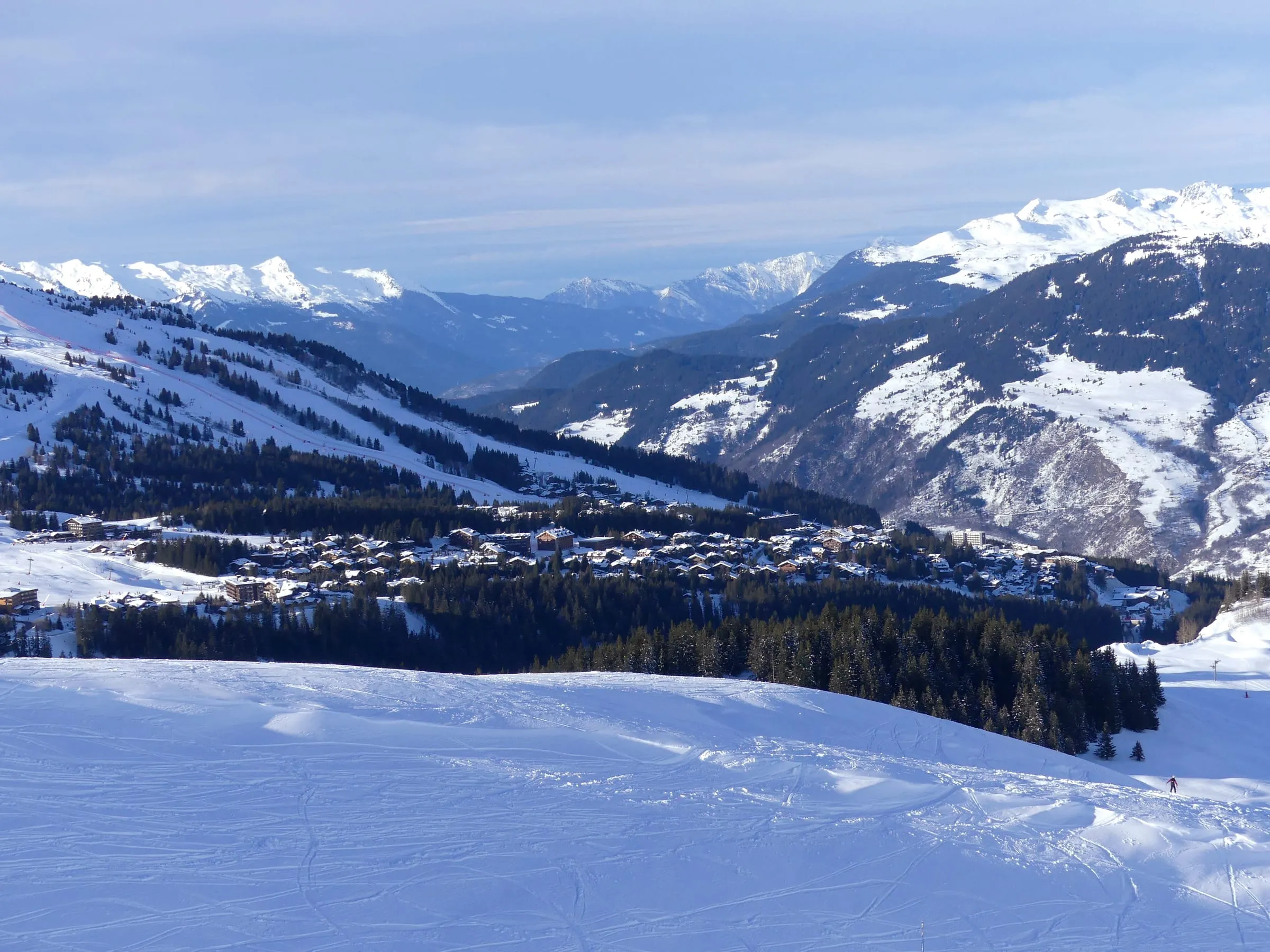
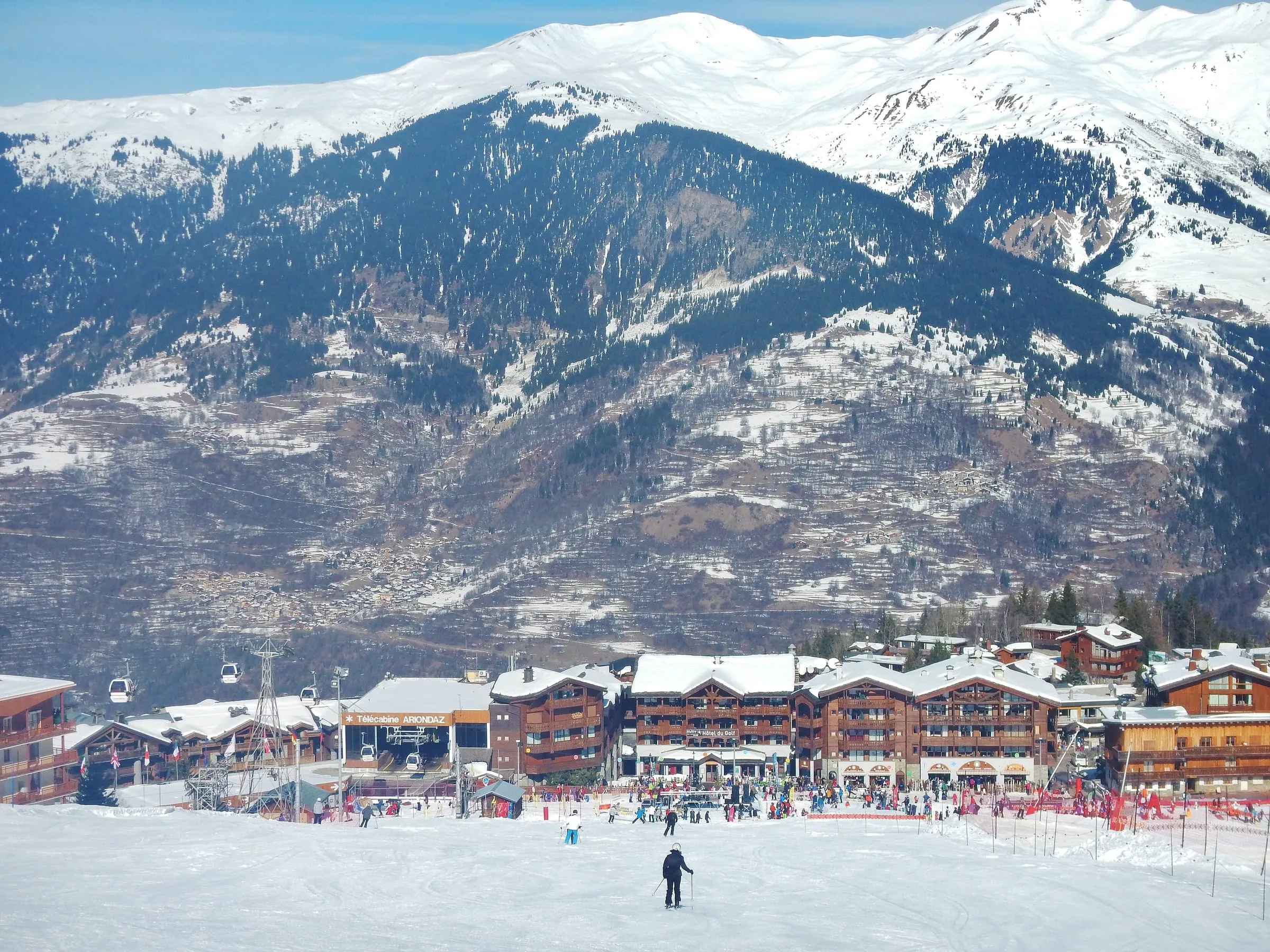
Courchevel is the most comfortable place on our list to learn, if you can afford it. It names three beginner sectors with wide, gentle greens and blues: Pralong, Ariondaz above Moriond and Bellecôte at 1850. It also marks out Easy Rider zones, and the Minipass covers the designated green pistes at one price for adults and children (from 19 December to 9 April, sold in the shops only).
The difference from Val Thorens and Tignes is the forest: many easy runs wind through pines, which give definition in bad light and shelter from the wind. Stay in Moriond (1650) for the quietest, gentlest slopes, or 1850 for the most lessons and the dearest hotels. The resort opens from 4 December 2026 to 18 April 2027.
The catch: price. Hotels and lessons are among the dearest in the Alps, and a beginner gets little from the 600 km 3 Vallées pass, so buy the Minipass or the Courchevel Valley pass. See our Courchevel guide, Courchevel with kids and, if you’re choosing a 3 Vallées base, Courchevel, Méribel or Val Thorens.
5. Obergurgl-Hochgurgl: nursery slopes next to the hotels
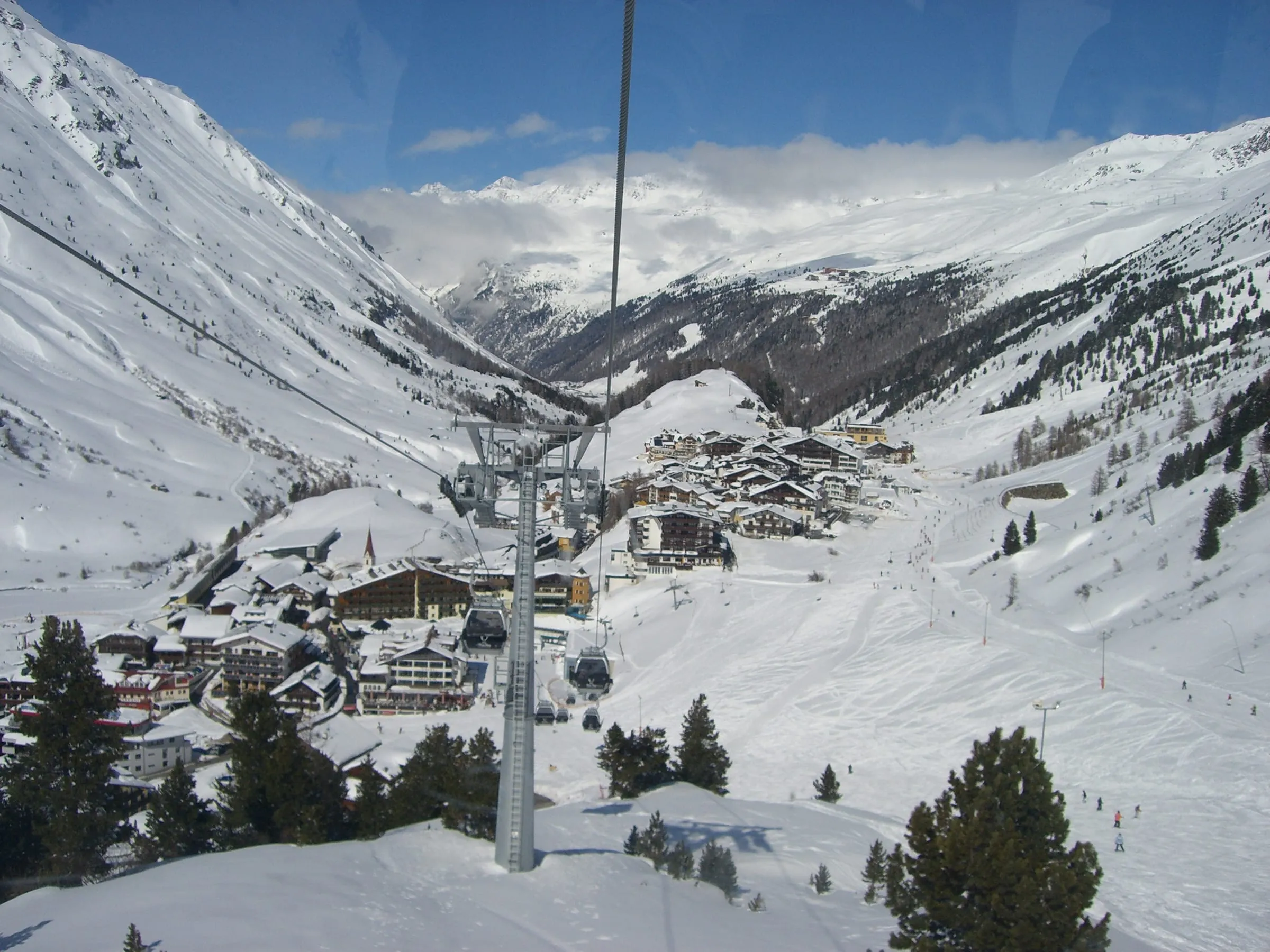
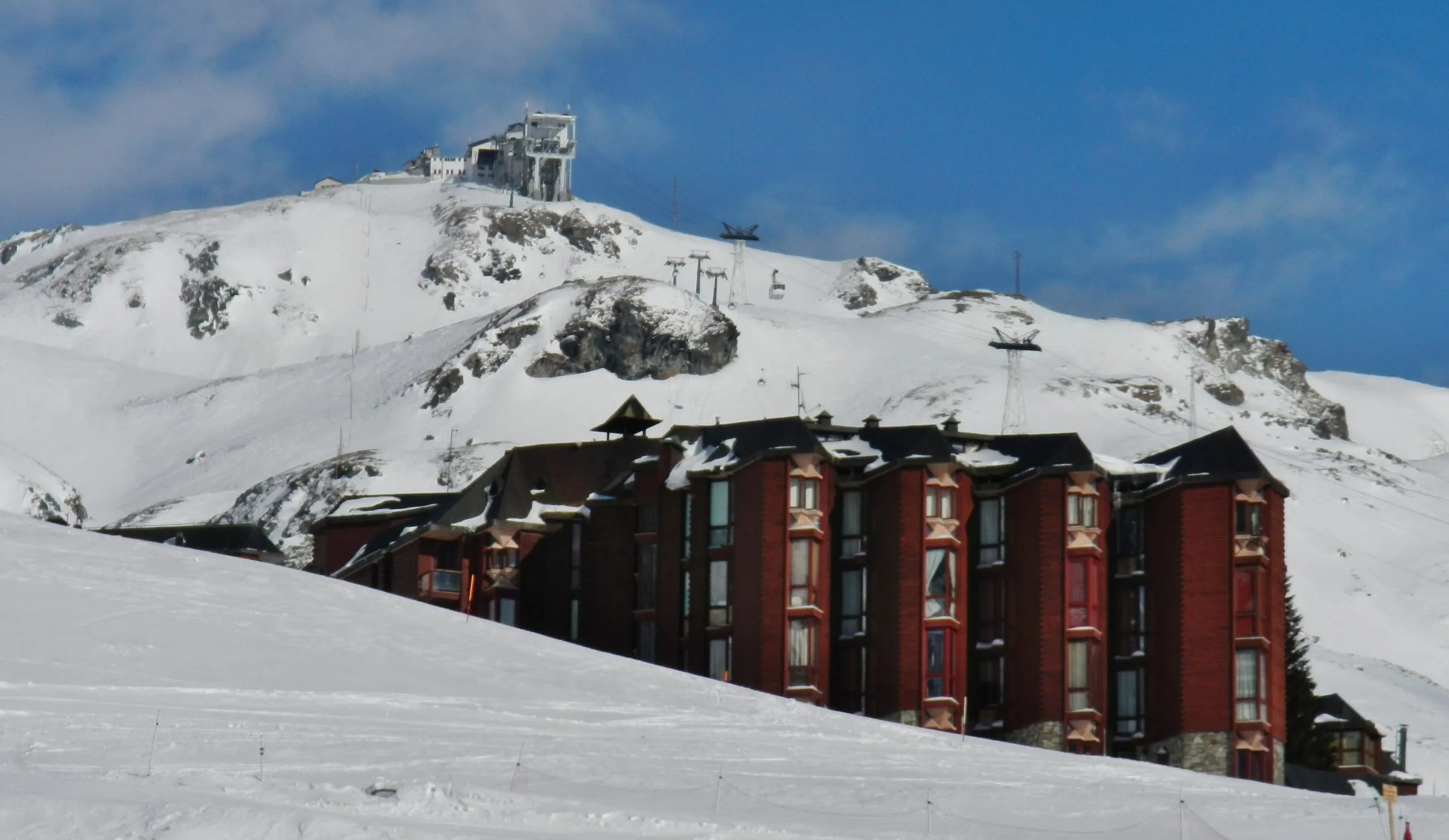
Obergurgl is the best place we cover to learn in Austria, because nothing is far: the lift company says more than 90% of accommodation is under 250 m from a piste, and the nursery slopes sit in the village. Children’s courses use carpet practice zones at Wiesental and Pirchhütt; next come the Wiesenlift, a button lift with a gentle, flat run-out, and the Mahdstuhllift area (piste 15). If button lifts unnerve you, the Hohe Mut Bahn I gondola leads to a very easy stretch of piste 6 from the middle station to the village. Then come Hochgurgl’s wide, quiet blues off the Wurmkogl chairs.
Height is the other reason: Hochgurgl is at 2,150 m, and the lift company says more than 90% of the pistes have snowmaking. Our snow record: at the GeoSphere Austria station in the village, natural snow averaged 73 cm in February and 65 cm in March, and every week from late January to mid-March averaged 30 cm or more in every season.
Adults learn in small groups split by level or privately, says the tourist office. Skischule Obergurgl runs no group courses on Saturdays, so plan to start on a Sunday.
The catch: nothing is free. The nursery lifts need a lift pass, and the 2026/27 list has no beginner or points ticket for adults: a day costs from €69.50 in high season, or from €42.50 from 2 pm. With no greens, you progress on Austrian blues. See our Obergurgl-Hochgurgl guide and Obergurgl-Hochgurgl with kids.
6. Livigno: nursery lifts in the village, and the lowest bill
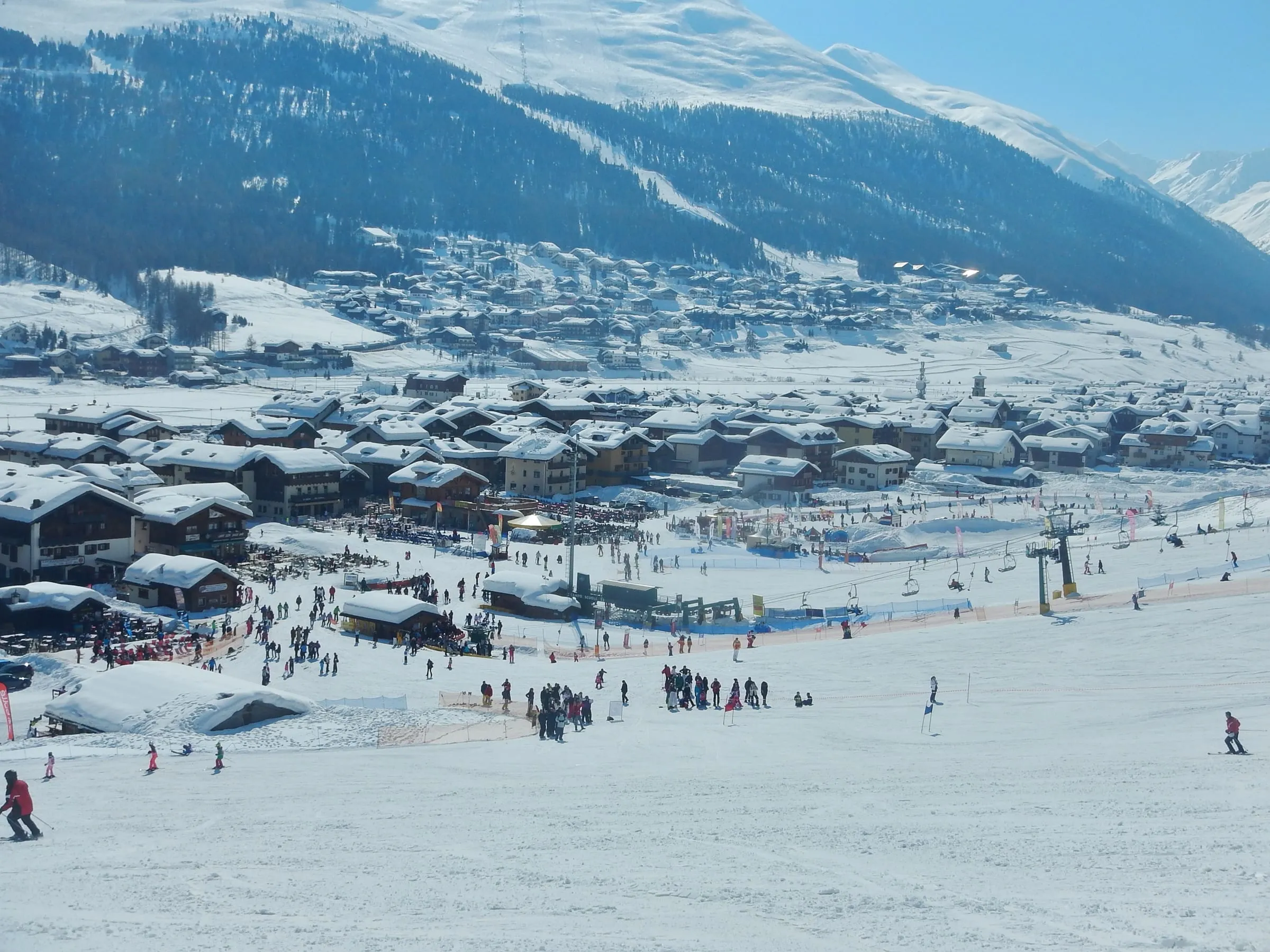
Livigno’s nursery lifts are at the edge of town, not up a gondola: on the Carosello side the Campo Scuola chair and the Ski School Area, Mini Lift Scuola and Del Sole drags serve gentle slopes you can walk to, and Mottolino has a new Easy Lift. None is free, but you don’t need a day pass: a 100-point card costs €35 and the school lifts take 6 to 8 points a ride.
It’s also our cheapest week: an adult six-day pass is €318.50 in high season 2026/27, against €421 for the 3 Vallées. The village is high for Italy, and many lifts start from the valley floor.
The catch: there are no greens. Alongside its 32 blues the run list has 38 red and 12 black, and some of those blues would be red in France. The two sides of the long valley are linked by bus, so check how far your hotel is from the Carosello nursery lifts. See our Livigno guide and Livigno with kids.
7. Méribel: the sunny Altiport
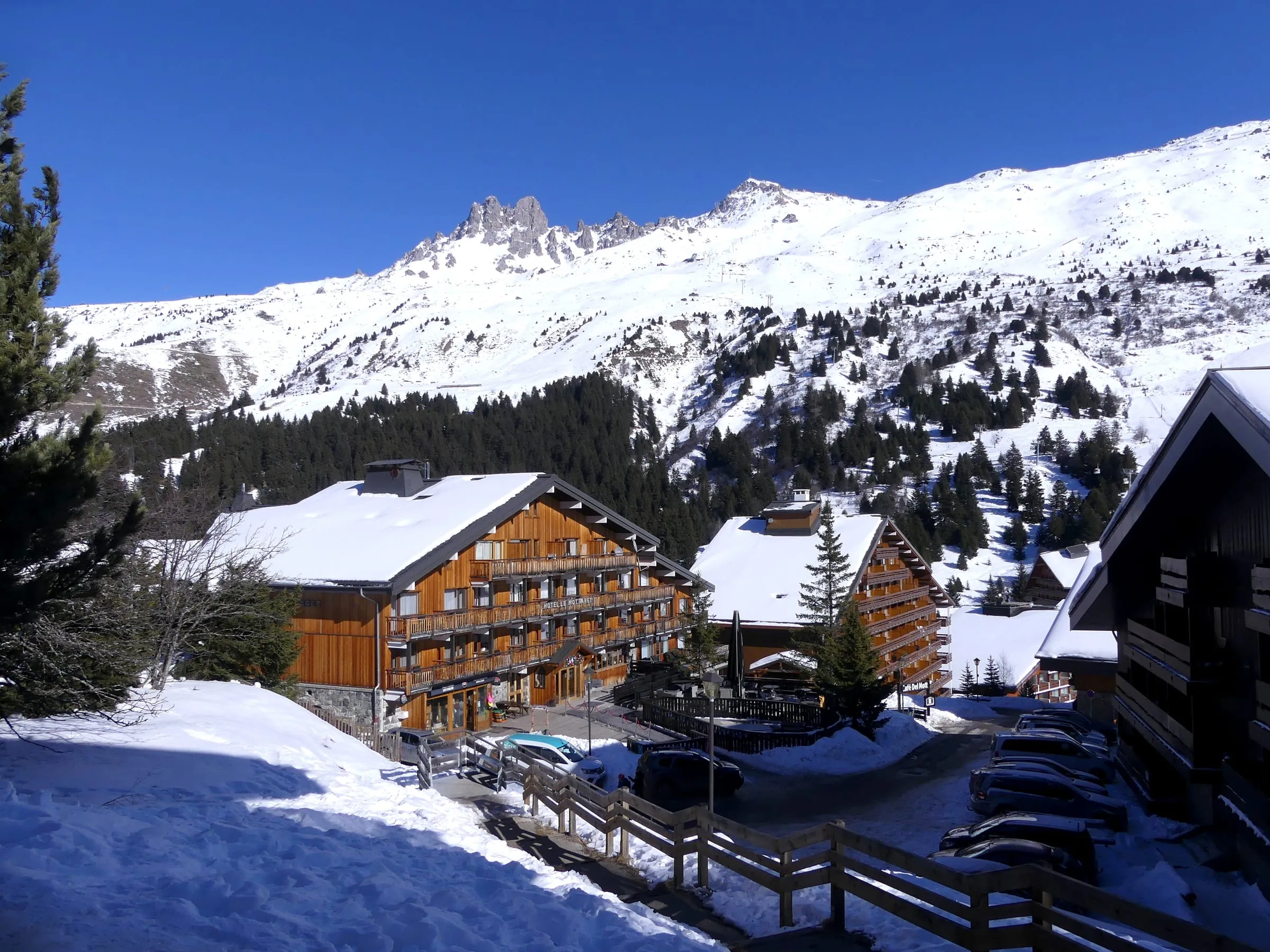
Méribel’s best beginner terrain is the Altiport, a sunny, tree-lined plateau above the village: its Family Cool area, with easy green and blue runs including the themed Piste des Inuits and Piste des Animaux. The Mini Pass (ages 5 to 75) covers the lifts beginners need: the Rhodos and Tougnète 1 gondolas, the Morel, Golf and Altiport chairs and the Combes chair from Mottaret. It’s a good middle choice: more trees than Val Thorens and cheaper than Courchevel.
The catch: the village is lower than our French picks and spread up a hillside, so many hotels are a bus or a walk from the beginner slopes, and lower runs can be thin early and late in the season. See our Méribel guide and Méribel with kids.
8. Cervinia: high, wide and gentle
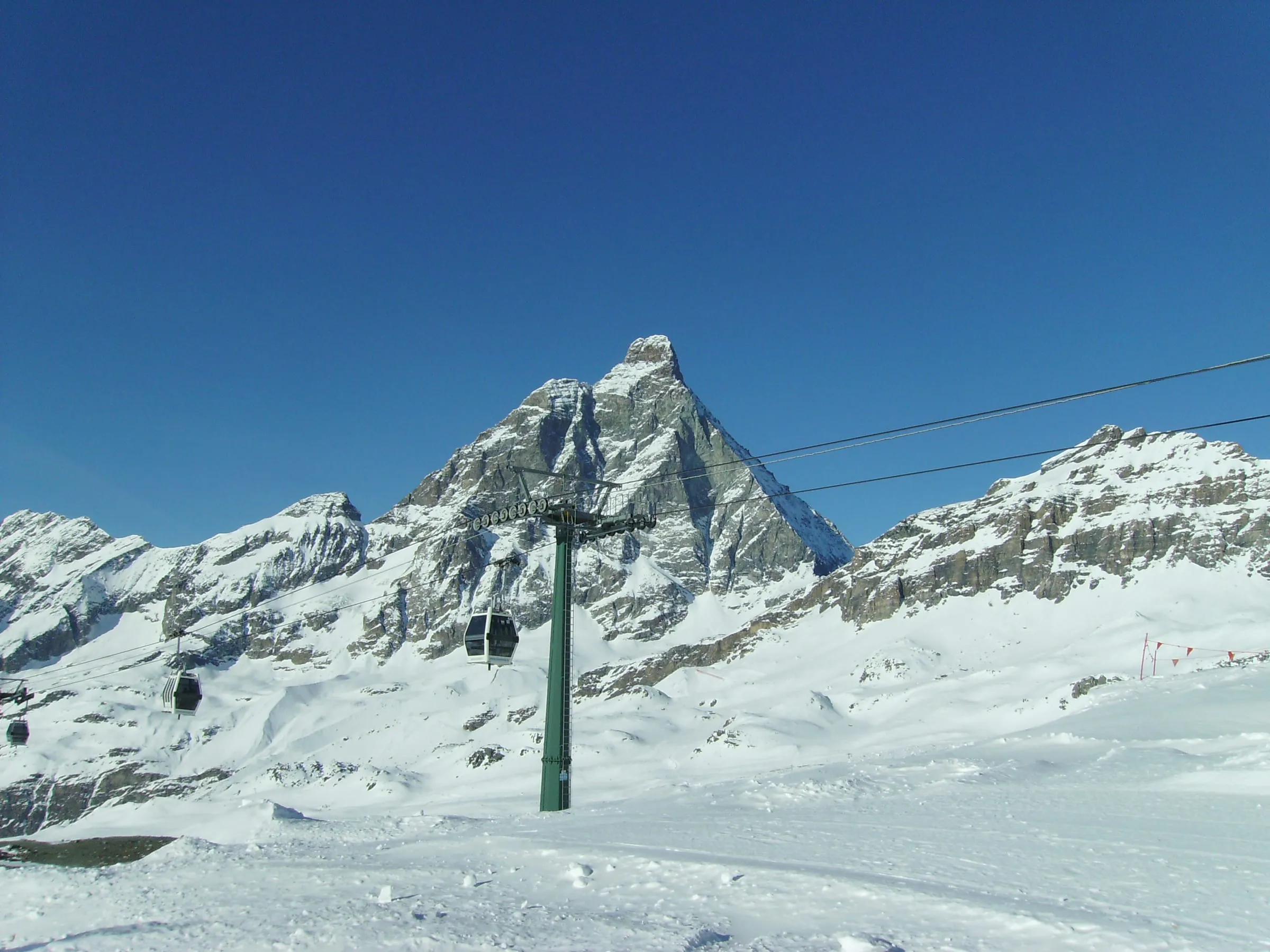
Cervinia earns its place with height and space. There’s a magic carpet at Cretaz, by the village, and another at Plan Maison, the broad plateau above. Cervino’s online shop sells a one-day beginners’ pass covering a return trip to Plan Maison, the Baby La Vieille drag and the Campetto chair at Cretaz. The Scuola di Sci del Cervino meets at Chalet Cretaz on Via Bich and sells beginner packages. Its season, 24 October 2026 to 2 May 2027, is our longest.
The catch: the Breuil-Cervinia side has 72 km of red to its 22 km of blue. Many of those reds are wide and easy, but a nervous first-timer needs guiding to the right ones, and windy days can shut the exposed upper lifts. See our Cervinia guide and Cervinia with kids.
Who should look elsewhere for a first week
St Anton. Its pistes are 43% easy on paper, but the blues and reds are steeper than their labels and busy with fast skiers. Superb snow doesn’t help you learn. Our St Anton or Ischgl guide compares the two.
Ischgl. Only 24% of its pistes are graded easy: it’s an intermediate’s resort, built around long reds.
Val Gardena. The valley has about 29 km of blue to 53 km of red and a single short green; the gentle skiing is on the Alpe di Siusi next door. See Cortina or Val Gardena.
Kitzbühel. Ten free practice lifts, but the valley is at about 800 m, so its nursery snow is a gamble months ahead.
Mayrhofen. Most nursery areas are up the mountain, and from the Ahorn the only ski route back to town is a black run, so learners take the gondola down.
Les Arcs. Good progression areas and a Beginner pass, but no free lifts; Tignes, up the valley, has higher snow and nine.
Alta Badia. A superb second week, but with no greens, villages at about 1,430 to 1,650 m and an €89 Dolomiti Superski day, beginners pay for far more than they use.
Zermatt, Verbier and Chamonix. Scattered nursery slopes and a premium for terrain you can’t use yet. Go back when you can ski reds.
Booking a beginner trip at the last minute
Beginners can book late: you don’t need the best weeks or the biggest pass.
- Snow first. In December or April, pick Val Thorens or Tignes. Alpe d’Huez is more variable in December: its station averaged 64 cm that month, in the three seasons with data.
- Avoid the French February holidays, when ski-school groups fill first and nursery slopes are busiest. Early January to the start of February is the best time to learn.
- Book lessons with the trip. A room can be found late; a place in a beginner group in a holiday week sometimes can’t.
See also last-minute ski holidays, the most snow-sure ski resorts and, with children, the best ski resorts for families.
Where to stay
For a beginner, the best hotel is the one closest to the nursery slope. These are our picks.
Our verdict
For a first week in Europe, go to Alpe d’Huez. Its free lifts, step-by-step passes and long sunny greens make learning cheap and calm. If snow is your worry, pick Val Thorens or Tignes, where free lifts sit in the middle of villages above 2,100 m. Choose Courchevel or Méribel for greens through the trees, Obergurgl for nursery slopes beside the hotels in a snow-sure Austrian village, Livigno for the lowest bill and Cervinia for Italian altitude. Leave St Anton, Ischgl and Val Gardena until you can ski reds.