France
 Austria
 Italy
 Switzerland
 English
 Deutsch
 Nederlands
 Čeština
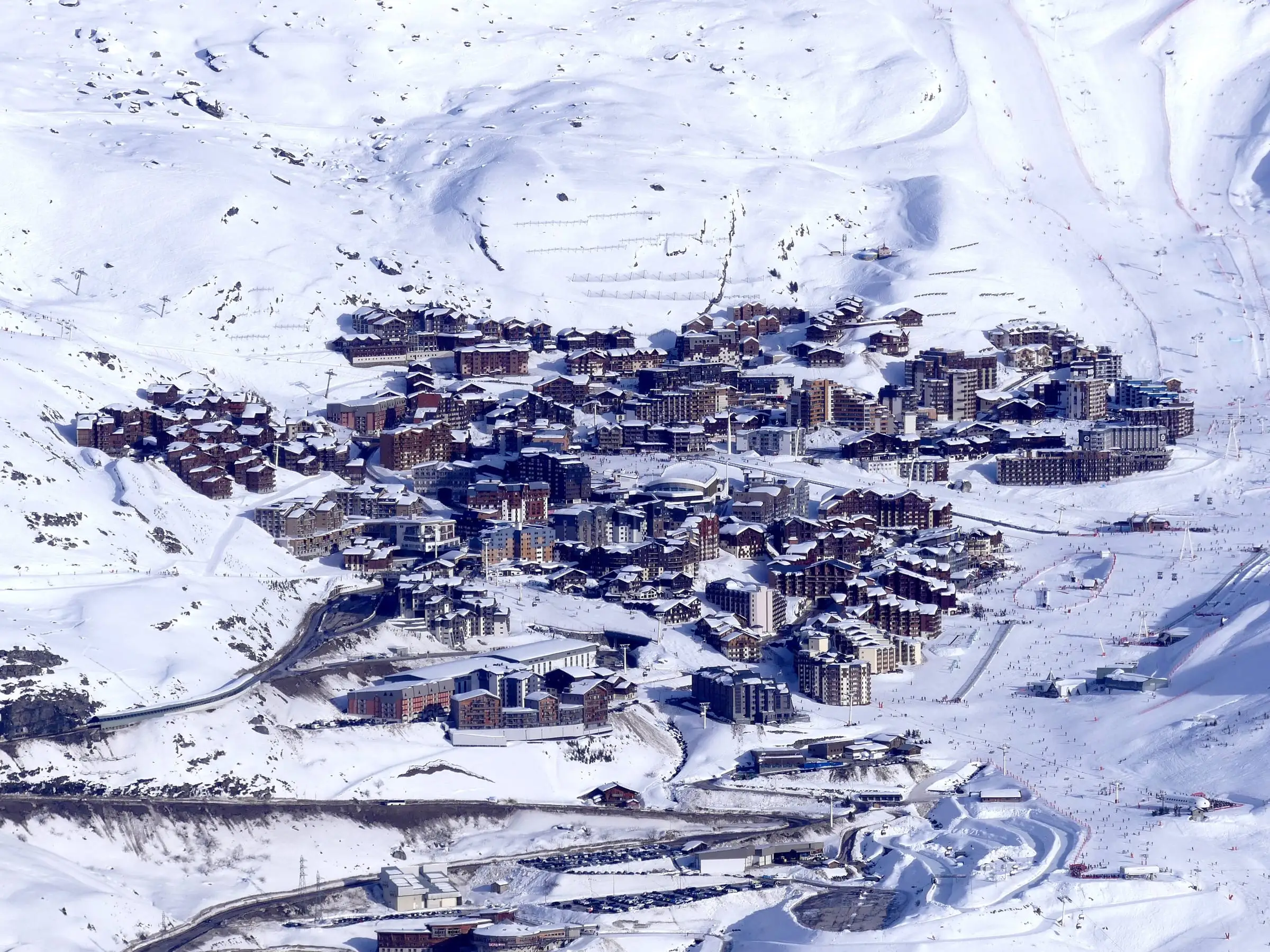
If you’re booking a ski trip for next week, go high and go where the beds are. Of the resorts we cover in depth, our best bets are Val Thorens, Sölden and Tignes for snow you can count on at short notice, St. Anton, Zermatt and Chamonix for a railway station in the village and hotels that take short stays, Ischgl as the high, big-village choice in Tyrol, and Obergurgl-Hochgurgl for some of the highest ski villages in Austria. The week matters as much as the resort: 13 to 21 February 2027 is the hardest week of the winter to book late, and mid-January and mid-March are the easiest.
How we chose
A good last-minute resort passes four tests at once.
- Snow you don’t have to gamble on. A high village or a glacier on the pass, and, where we have them, our own records of natural snow at an official station on the slopes over five seasons (2021/22 to 2025/26).
- Beds still there in the last week. A big village or town with many hotels, not a few chalets that sell out by October.
- A journey you can book on Wednesday. A short transfer from a big airport, or a train into the village.
- Flexible stays. Hotels that take three- or four-night stays and arrivals on any day, at least outside the peak weeks.
We didn’t count après or lift-pass prices: they matter, but they don’t decide whether a late booking works.
When booking late works, and when it doesn’t
The single biggest factor is whose children are off school. Ski resorts across the Alps fill with families from the UK, France, the Netherlands and Germany, and their holidays overlap in February. These are the official 2026/27 dates.
| Dates | Who’s on holiday | Booking late |
|---|---|---|
| 19 Dec 2026 to 4 Jan 2027 | Everyone: France (all zones, 19 Dec to 4 Jan), the Netherlands (19 Dec to 3 Jan), Bavaria (24 Dec to 8 Jan), England (Leeds, for example, 21 Dec to 1 Jan) | Very hard |
| 9 to 30 Jan | Nobody big | Easiest weeks of the winter |
| 6 to 12 Feb | French zone C (6 to 22 Feb), Bavaria’s Faschingsferien (8 to 12 Feb) | Getting harder |
| 13 to 21 Feb | French zones A and C, the Netherlands’ Regio Zuid (13 to 21 Feb), most of England’s half-term (15 to 19 Feb) | The hardest week to find a room |
| 20 Feb to 1 Mar | French zones A (to 1 Mar) and B (20 Feb to 8 Mar), Dutch Regio Noord and Midden (20 to 28 Feb) | Very hard |
| 2 to 7 Mar | French zone B only | Easing |
| 8 to 20 Mar | Nobody big | Easy, with good snow |
| 21 Mar to 3 May | Easter (Sunday 28 March), Bavaria (22 Mar to 2 Apr), French spring holidays (zone C 3 to 19 Apr, A 10 to 26 Apr, B 17 Apr to 3 May), England’s Easter (Leeds 5 to 16 Apr), Dutch meivakantie (24 Apr to 2 May) | Patchy: the high resorts are busy, lower ones are winding down |
French zone A includes Lyon and Grenoble, B includes Lille, Marseille and Nice, and C is Paris, Toulouse and Montpellier. English half-term is set locally, and Dutch spring dates are advisory, so some schools differ.
Events fill single resorts too: Kitzbühel’s Hahnenkamm race week (18 to 24 January), the FIS Para Alpine World Championships in Tignes (7 to 19 March), Tomorrowland Winter in Alpe d’Huez (20 to 27 March), Verbier Freeride Week (13 to 22 February) and Snowbombing in Mayrhofen (5 to 10 April).
How to read the snow before you book
Booking late lets you look at the snow first. Four checks, in order.
1. Snow lying now, at an official station. Our snow pages use official weather stations on the slopes (Météo-France, GeoSphere Austria and MeteoSwiss). They measure natural snow on open, undisturbed ground at one altitude. That’s a different number from the base depth in the resort’s own report, which measures the pistes: packed, often built up with machine-made snow, and usually given as a top and a bottom figure. Pistes can be well covered while the natural snow beside them is thin, which matters off-piste and in the trees. And a station at 2,000 m tells you little about a valley run 700 m lower.
2. New snow in the forecast. Trust the first three to five days; beyond that, totals are a hint. A big dump just before you arrive makes the week, but can close lifts while slopes are made safe.
3. The freezing level, against the village altitude. A rain forecast is only bad news below the freezing level. Rain at 1,500 m means slush on St. Anton’s village runs (1,304 m) but fresh snow on the Galzig above.
4. Wind. Strong wind closes the cable cars and exposed top lifts first: St. Anton’s Valluga, Chamonix’s high lifts, Zermatt’s glacier lifts. Resorts with trees and lower gondolas cope better; Zermatt’s lift company, like most, publishes a live weather-and-wind page.
Our planner on the homepage puts these checks in one place: the snow lying now at official stations, the forecast, and how much snow those stations had on your dates in past seasons. Each resort also has a snow report page, such as Val Thorens snow report.
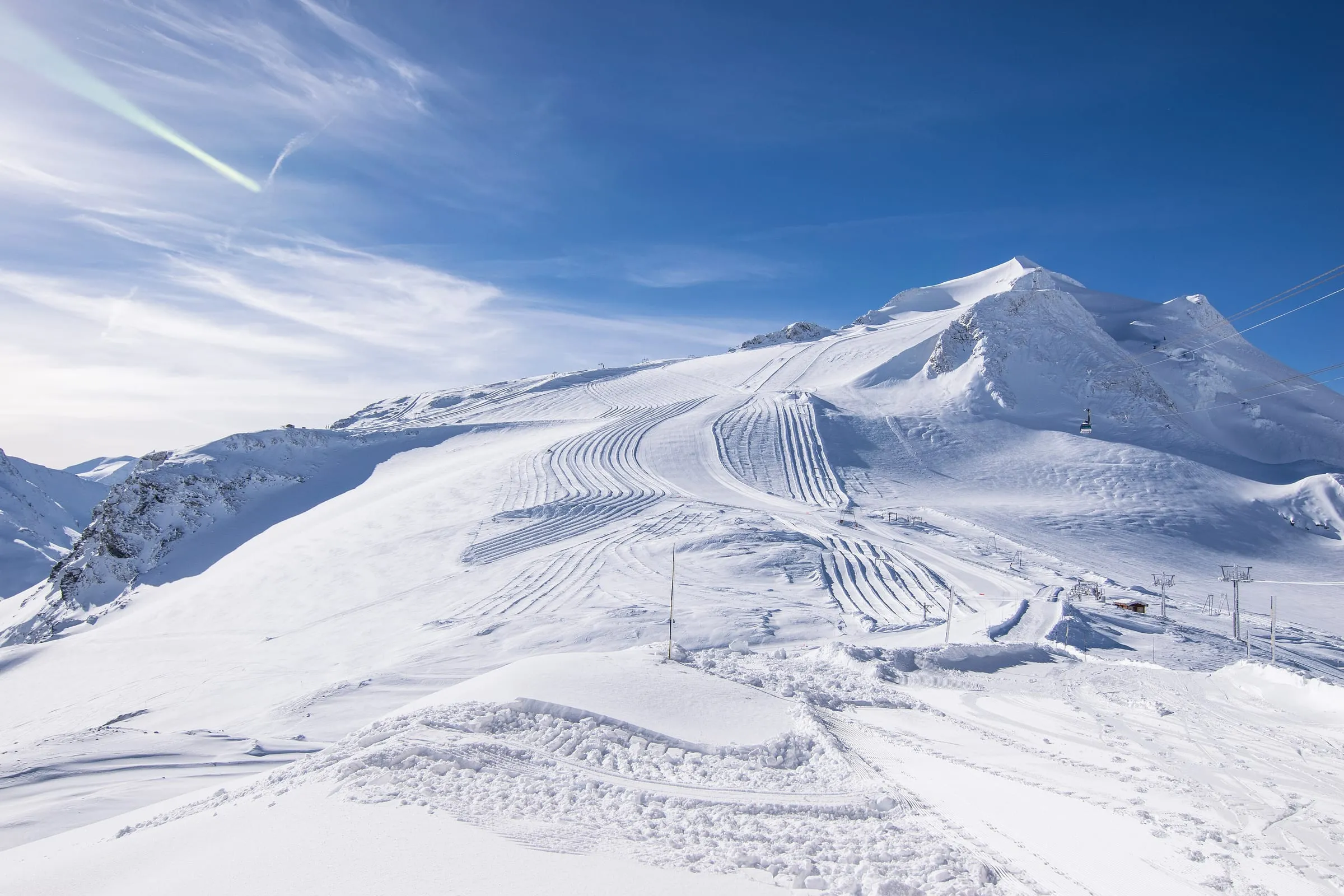
Our best bets for a last-minute trip at a glance
| Resort | Village / top altitude | Lifts 2026/27 | Quickest way in | Our snow record (natural snow, slopes station) |
|---|---|---|---|---|
| Val Thorens | 2,300 m / 3,230 m | 21 Nov to 2 May | Chambéry airport, about 1 h 45 by road | Orelle, 2,356 m: about 105 cm in January, 116 cm in April |
| Sölden | 1,350 m / 3,340 m, two glaciers | 12 Nov to 18 Apr, glacier to 2 May | Innsbruck airport, about 1 h 15 by road | No station on Sölden’s own slopes |
| St. Anton | 1,304 m / 2,811 m | 2 Dec to 18 Apr | Station in the village | Galzig, 2,079 m: about 125 cm in December, 155 cm in January |
| Tignes | 2,100 m / 3,456 m, glacier | 21 Nov to 2 May | Chambéry airport, about 2 h 50 on a Saturday | No station on the slopes |
| Zermatt | 1,608 m / 3,883 m, glacier | November to 2 May | Train into the village, about 3.5 h from Zurich airport | No station on the slopes |
| Chamonix | 1,035 m / 2,765 m | 28 Nov (La Flégère) to 2 May | Geneva airport, FlixBus about 1 h 25 | La Flégère, 1,850 m: about 89 cm in December, 126 cm in April |
| Ischgl | 1,377 m / 2,872 m | 26 Nov to 2 May | Innsbruck airport, about 1 h 20 to 1 h 30 | No station on the slopes |
| Obergurgl-Hochgurgl | 1,930 m (Hochgurgl 2,150 m) / 3,030 m | 19 Nov to 18 Apr | Innsbruck airport, about 1 h 45 by road | Obergurgl village, 1,941 m: about 63 cm in January, 65 cm in March (village station, not the slopes) |
Snow figures are the average natural snow depth at that one official station over the seasons on record (five for most months; four for Val Thorens from January to April, for St. Anton from December to February and for Chamonix in December). Obergurgl’s station is in the village, below the slopes, so read its figures as a floor. None of them is the pistes’ base.
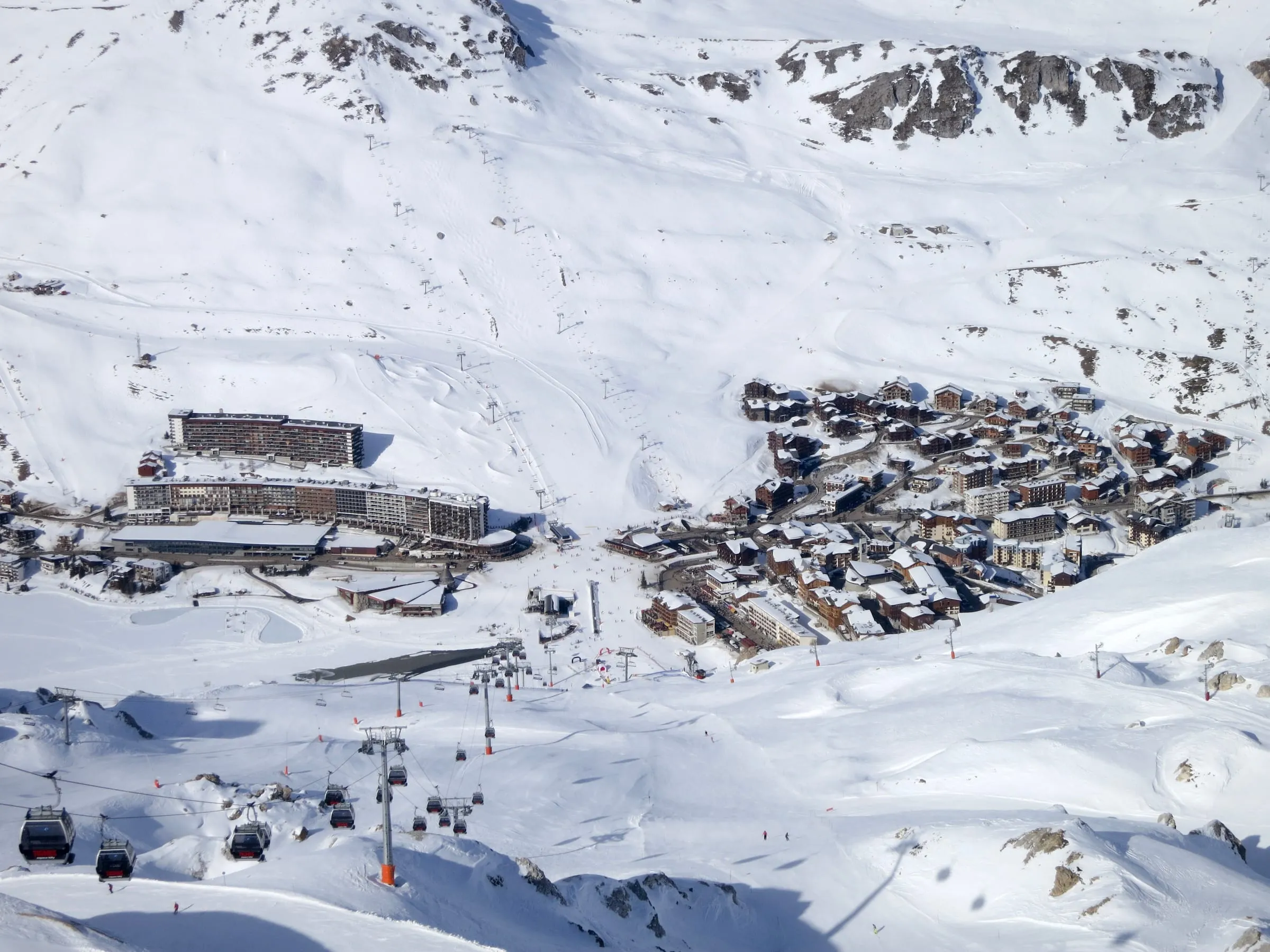
1. Val Thorens: the safest snow bet in France
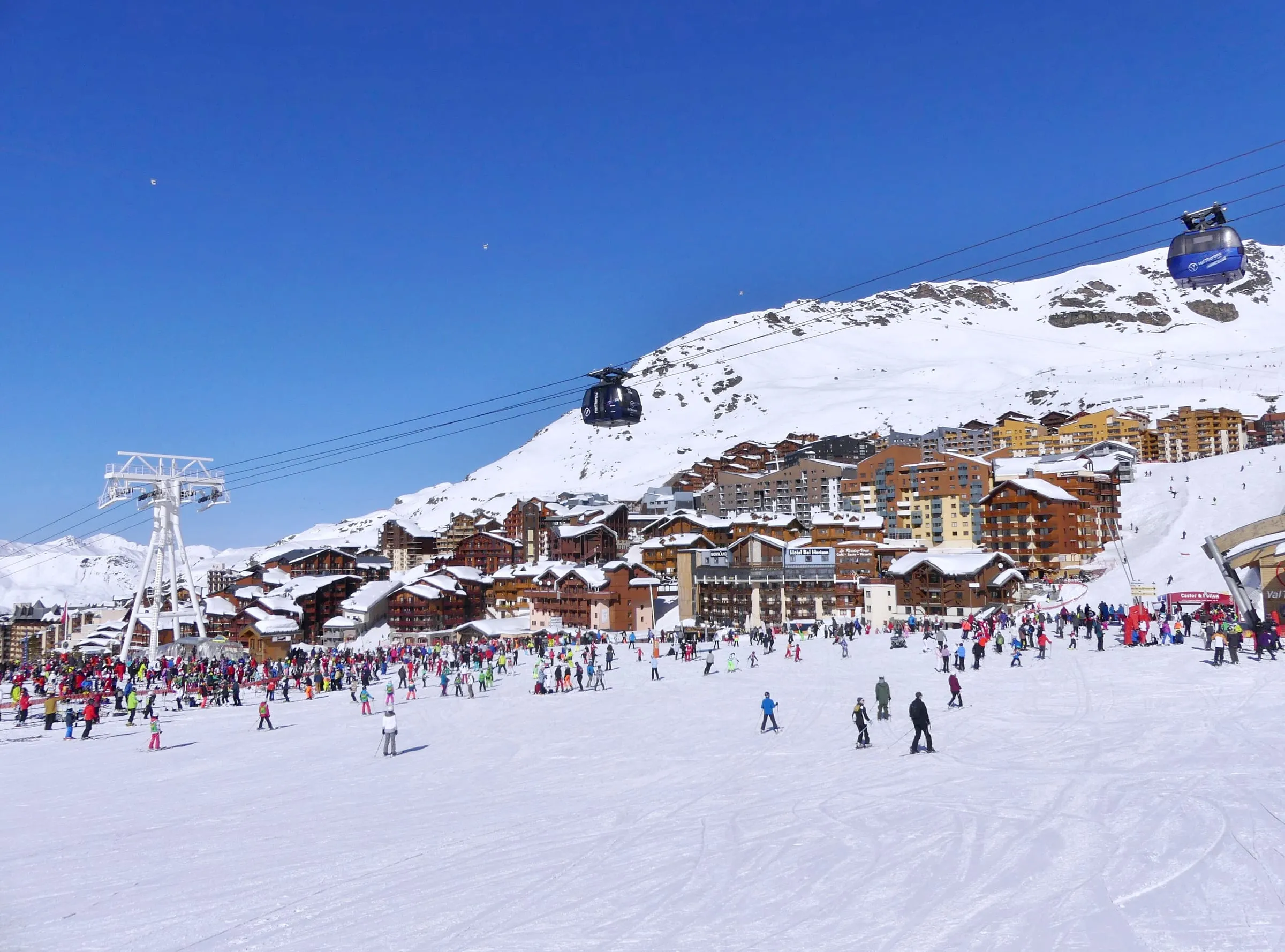
At 2,300 m, Val Thorens is the highest village in Les 3 Vallées, so if the Alpine forecast is uncertain this is where we’d book first (see the most snow-sure ski resorts). At the Orelle station (2,356 m), every week from January to April had at least 30 cm of natural snow in every season with full records. The village is almost entirely ski-in/ski-out, so it hardly matters which hotel has a room.
The catch: it’s a long climb from Moûtiers (about 45 minutes), apartments and club hotels run Saturday to Saturday, and drivers must book parking with the resort before arriving. See our Val Thorens guide and where to stay.
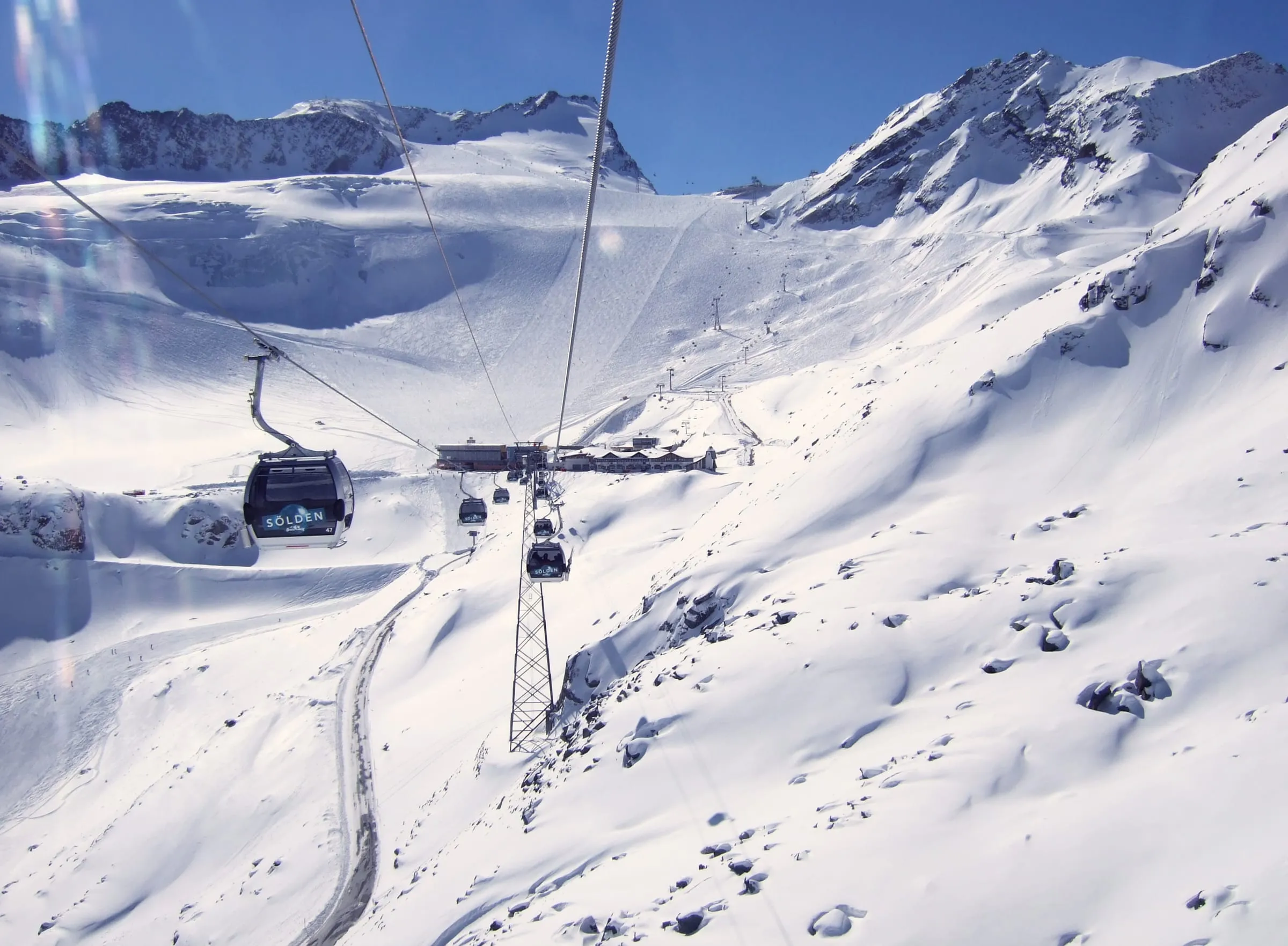
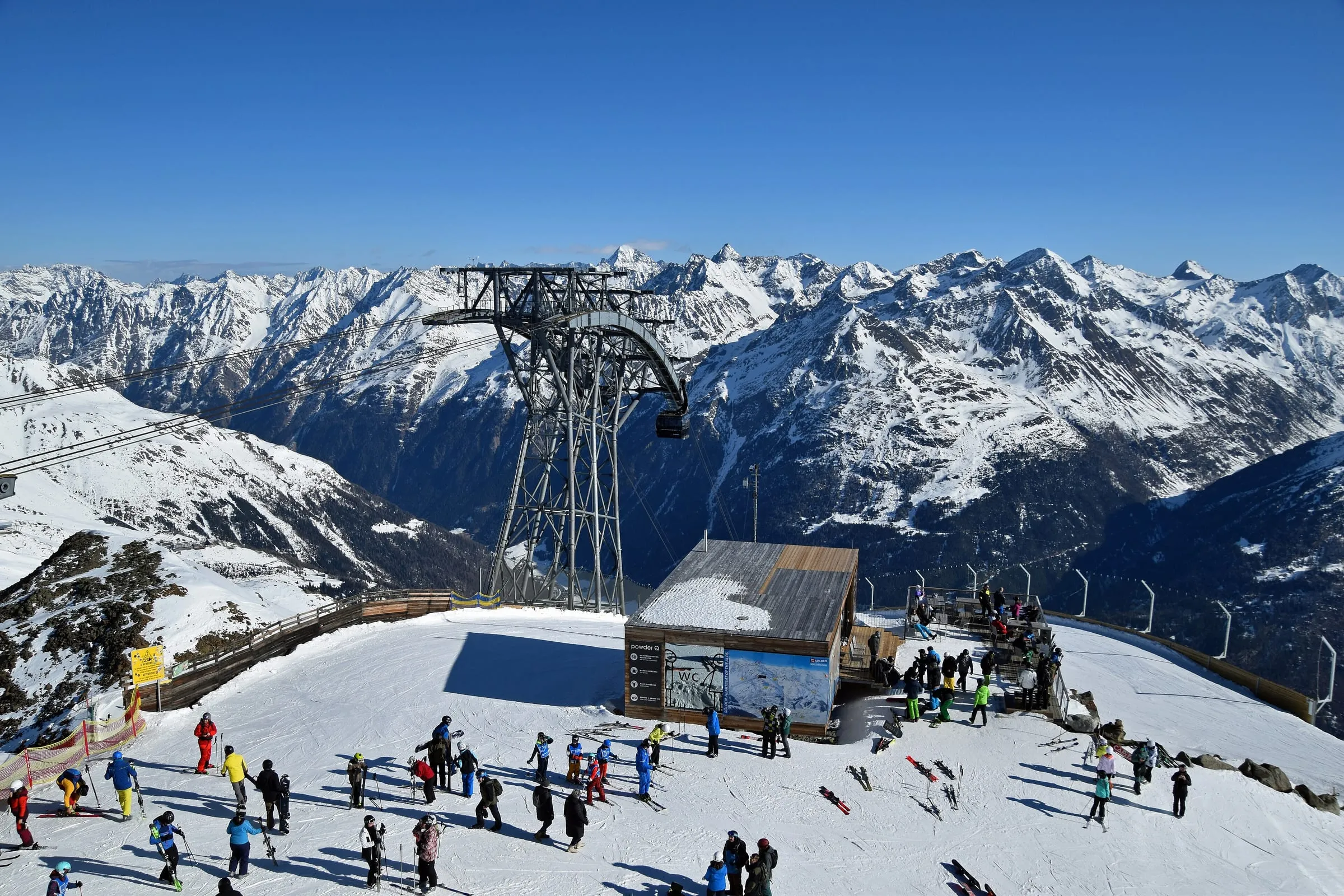
2. Sölden: two glaciers, 75 minutes from Innsbruck
Sölden is the answer when Austria looks thin. Its Rettenbach and Tiefenbach glaciers are skiing from mid-November, glacier spring skiing runs to 2 May, and the tourist office puts Innsbruck airport about 1 hour 15 minutes away by road, short enough for a long weekend. The Ötztal Shuttle and the valley bus from Ötztal station make it easy without a car.
The catch: the village sits at 1,350 m, so in a warm week the bottom of the valley run suffers, and the peak periods (19 December to 6 January and 30 January to 26 February) fill the hotels near the gondolas. Read the Sölden guide and hotels.
3. St. Anton: step off the train and ski
St. Anton’s station is in the village centre, on the main Arlberg line, so you can book on Wednesday and walk to the Galzigbahn on Saturday without arranging a transfer. Our Galzig station (2,079 m) recorded an average of 155 cm of natural snow in January and 139 cm in April, with at least 30 cm in every week of March and April in all five seasons.
The catch: in peak weeks many hotels sell by the week, often Saturday to Saturday, and the slopeside rooms go first. Nasserein and St. Jakob, on the free ski bus, last longest. See the St. Anton guide and where to stay.
4. Tignes: high from the first week to the last
With 93% of its pistes above 2,000 m (the tourist office’s figure) and the Grande Motte cable car reaching 3,456 m, Tignes is the high-altitude French choice in the first and last weeks of the season, when lower resorts are still waiting or already melting; more in early and late-season skiing. It shares the 300 km area and lift pass with Val d’Isère, so a room in either works.
The catch: Tignes has fewer hotels than its size suggests, so late bookers often end up in week-long apartments. Compare the two in Tignes or Val d’Isère, or go to the Tignes guide.
5. Zermatt: a glacier and a train to the door
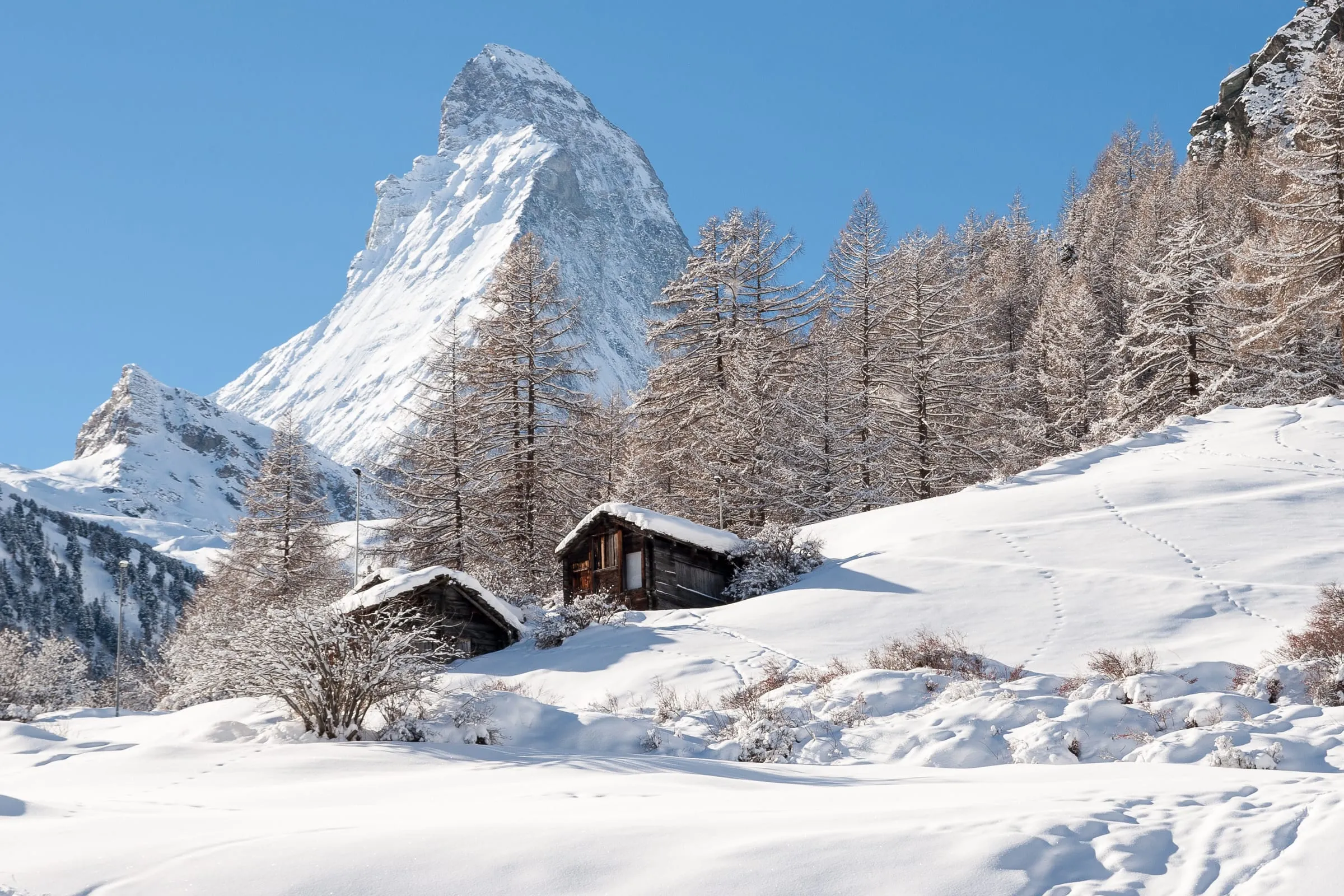
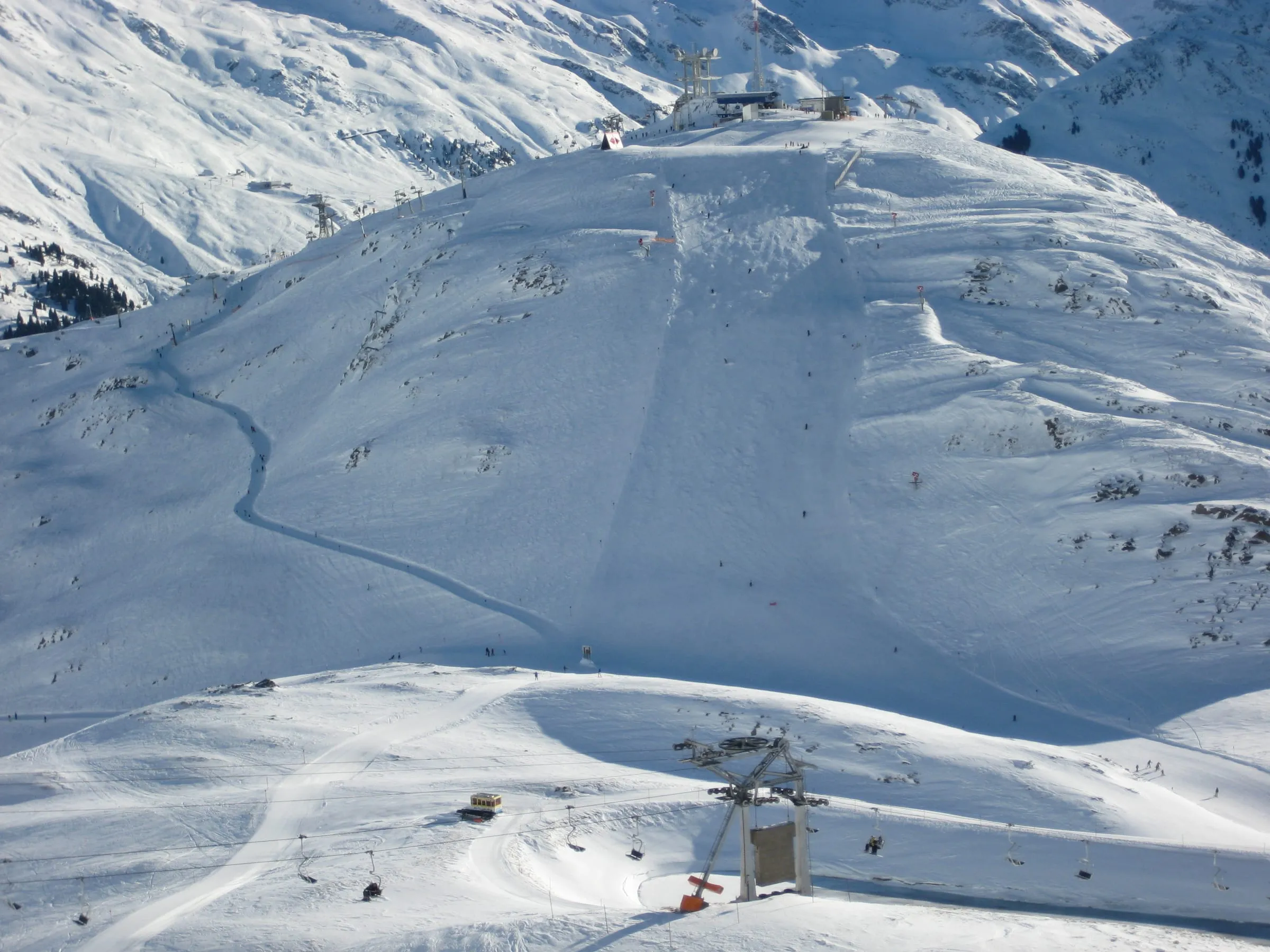
Zermatt has skiing up to 3,883 m and a season that runs from November to 2 May, so the snow is rarely what stops a late trip. Trains run into the car-free village about every half hour from Visp, and Zermatt Tourism puts the whole journey at about 3.5 hours from Zurich airport. Zermatt is a year-round village whose hotels take short stays outside the peak weeks, though some set minimum stays in them.
The catch: price. Pass prices vary by date (the lowest are in November and from 19 April) and the lift company says booking early saves money, so buy the pass online the moment the room is confirmed. If Zermatt is full, Cervinia on the Italian side is in the same ski area. See the Zermatt guide and Zermatt or Cervinia.
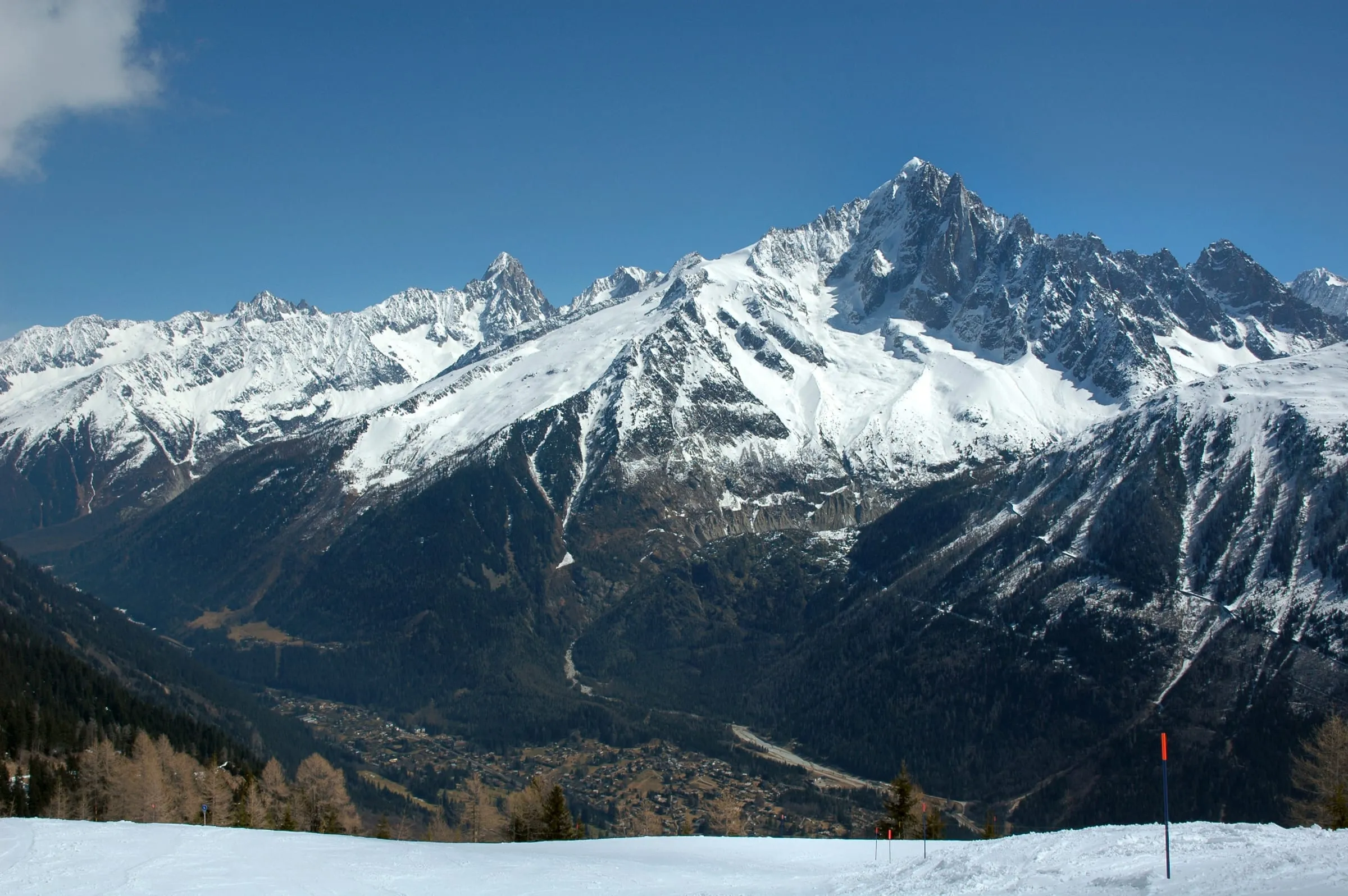
6. Chamonix: a real town an hour and a half from Geneva
Chamonix is a town with hotels that open all year rather than a resort built around one changeover day, so it usually has rooms when purpose-built resorts don’t. FlixBus takes about 1 hour 25 minutes from Geneva airport. At La Flégère (1,850 m) our records show an average of 126 cm of natural snow in April, with at least 30 cm in every week of April in all five seasons.
The catch: the town is at 1,035 m and the skiing depends on a few high lift systems that close in storms and strong wind. Watch the wind forecast as closely as the snow. Read the Chamonix guide.
7. Ischgl: Tyrol’s high, big-village choice
Ischgl skis up to 2,872 m on a 239 km area shared with Samnaun, and it has a lot of beds, so it’s one of the safer switches if your first choice in Tyrol looks marginal. Transfer companies quote 1 hour 20 to 1 hour 30 minutes from Innsbruck.
The catch: the opening concert weekend (28 November), the holidays and Easter fill the slope-side hotels first; garni hotels and Mathon last longer. See the Ischgl guide and St. Anton or Ischgl.
8. Obergurgl-Hochgurgl: Austria’s highest ski villages
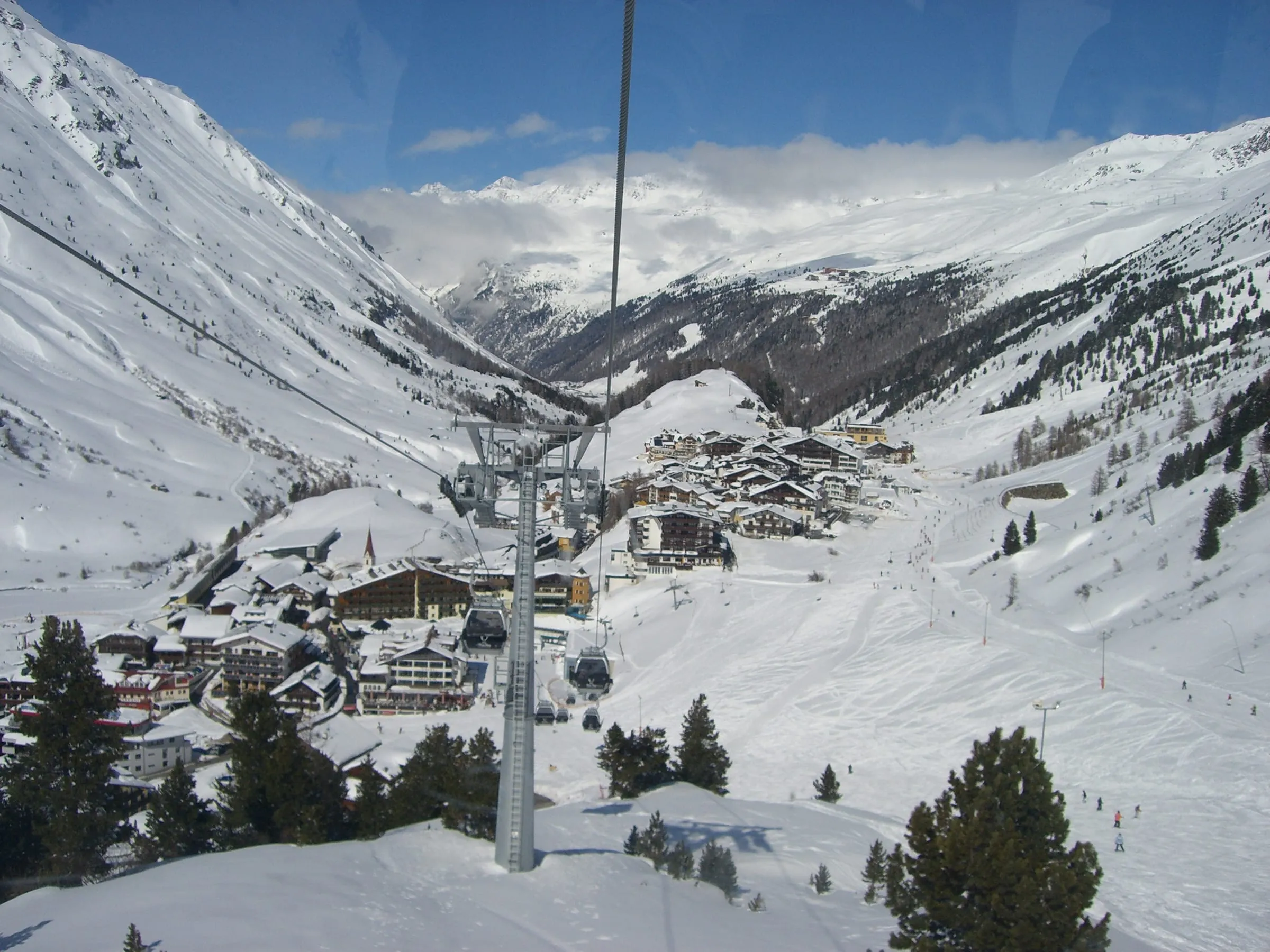
Obergurgl sits at 1,930 m and Hochgurgl at 2,150 m, among the highest villages in the Austrian Alps, with lifts to 3,030 m, so this is where we’d look in Austria on a thin forecast if you don’t need Sölden’s glaciers. At the GeoSphere Austria station in Obergurgl village (1,941 m), natural snow averaged about 63 cm in January, 73 cm in February and 65 cm in March over five seasons, and every week from late January to mid-March averaged 30 cm or more in every season. That’s the village; the pistes are higher. The lift company says more than 90% of the beds are within 250 m of a piste, so a late room is usually close to the snow.
The catch: it’s a small place at the end of the road, about 1 hour 45 minutes from Innsbruck airport (1 hour 15 to Sölden, then 30 minutes up the valley), and the slope-side family hotels go first in the peak weeks (19 December to 6 January and 30 January to 26 February). The bigger hotels often sell four-day or weekly packages rather than single nights; guesthouses are more flexible, and Sölden is on the same pass from three days. See the Obergurgl-Hochgurgl guide and where to stay.
Resorts that fill first, or need a good forecast
These are good resorts that are harder to book well at short notice.
Courchevel and Méribel share Val Thorens’s pass, but Courchevel 1850’s good-value rooms go early and many Méribel chalets only take Saturday-to-Saturday weeks in peak season. Try the lower villages, or Val Thorens.
Les Arcs is the easiest big French resort to reach by train, with a funicular from beside Bourg-Saint-Maurice station to Arc 1600 in about 7 minutes. But it has no glacier, so its lifts don’t open until 12 December, and much of its accommodation is apartments let by the week. Book it late from January, and in February look at Arc 1600 or Bourg-Saint-Maurice first.
Val Gardena, Alta Badia and Cortina have plenty of family hotels, but Dolomiti Superski’s high season runs from 20 December to 9 January and 31 January to 20 March, Carnival fills Cortina, and the World Cup weekend on the Gran Risa (19 to 21 December) fills La Villa in Alta Badia. All three are lower than our picks (most of Alta Badia’s skiing is between 1,500 m and 2,250 m), so we’d want snow already lying. See Cortina or Val Gardena.
Livigno is high and snow-sure, but the coach from Milan takes about 4 hours 40 minutes, and its Skipass Free offer (28 November to 19 December and 10 April to 2 May) only applies when you book with the hotel or through livigno.eu, not through booking sites.
St. Moritz and Verbier rarely lack snow, but rooms and value run out in February, and Verbier fills with Geneva weekenders. In St. Moritz, ask your hotel for Sleep + Ski: CHF 55 a day on all the Upper Engadin lifts this winter.
Kitzbühel, Mayrhofen and Grindelwald are easy by train and have lots of beds, so book them late when the snow is already good. Look first: at Kitzbühel’s Hahnenkamm-Sonnenrast station (1,667 m), every week of January had 30 cm of natural snow in only three of the last five seasons. More in ski resorts by train.
Alpe d’Huez books late well outside two weeks: the French February holidays and Tomorrowland Winter (20 to 27 March).
Saturday changeovers and short stays
In French purpose-built resorts, apartments, chalets and club hotels mostly run Saturday to Saturday, and in Austria many hotels sell peak weeks the same way (St. Anton’s Sporthotel sells its 2026/27 packages in weekly blocks). Outside the holidays, hotels are the flexible option: three- or four-night stays and midweek arrivals are far easier to find in Chamonix, Zermatt, St. Anton, Kitzbühel and Sölden than in an apartment-led resort like Tignes.
Two tricks help. Shift your arrival by a day: Val d’Isère’s tourist office suggests Sunday-to-Sunday stays in the holidays to avoid Saturday traffic. And search the next village on the same pass: Les Brévières for Tignes, Nasserein for St. Anton, Täsch or Cervinia for Zermatt. For a few days rather than a week, see the best ski resorts for a weekend.
Flights and trains at short notice
Saturday flights to Geneva, Innsbruck and Zurich in the holiday weeks tend to be the dearest; a Sunday or midweek flight is often cheaper, and the transfer roads are quieter. The resorts on our list with a station in the village or town (St. Anton, Zermatt, Chamonix, Kitzbühel, Mayrhofen, Grindelwald) let you skip the transfer altogether, and a train seat is easier to find at short notice than a place on a shared transfer: most Swiss trains need no reservation.
From London, the Eurostar ski train runs on Saturdays from 19 December to 20 February, with a change at Lille, reaching Moûtiers (for Val Thorens) at about 17:00 and Bourg-Saint-Maurice (for Tignes) at about 17:45. Fares start at £125 each way and climb as it fills.
Buy your lift pass online, and early
Lift passes are increasingly priced like flights. Sölden’s online prices are cheaper the earlier you buy, and from four days before your first ski day they cost the same as the ticket desk; Zermatt prices by date and says booking early saves. Know the cheap windows too: discounted 3 Vallées passes (5 to 18 December, 10 to 18 April), Ischgl’s VIP Special weeks (to 18 December, and April) and St. Anton’s Wedel and sun-ski weeks (2 to 18 December, 3 to 18 April). Book the room, then the pass, the same evening. Families should also read the best ski resorts for families.
Where to stay
Our picks for late bookers, all close to the lifts.
Our verdict
The week comes first, the resort second. Avoid mid-February, above all 13 to 21 February 2027, and aim for 9 to 30 January or 8 to 20 March. Then go high where the beds are: Val Thorens and Sölden for the least worry about snow, St. Anton and Zermatt for a train to the lifts, Chamonix for the best chance of a room. Check the station snow, the forecast and the freezing level, buy the pass the same evening, and go.