France
 Austria
 Italy
 Switzerland
 English
 Deutsch
 Nederlands
 Čeština
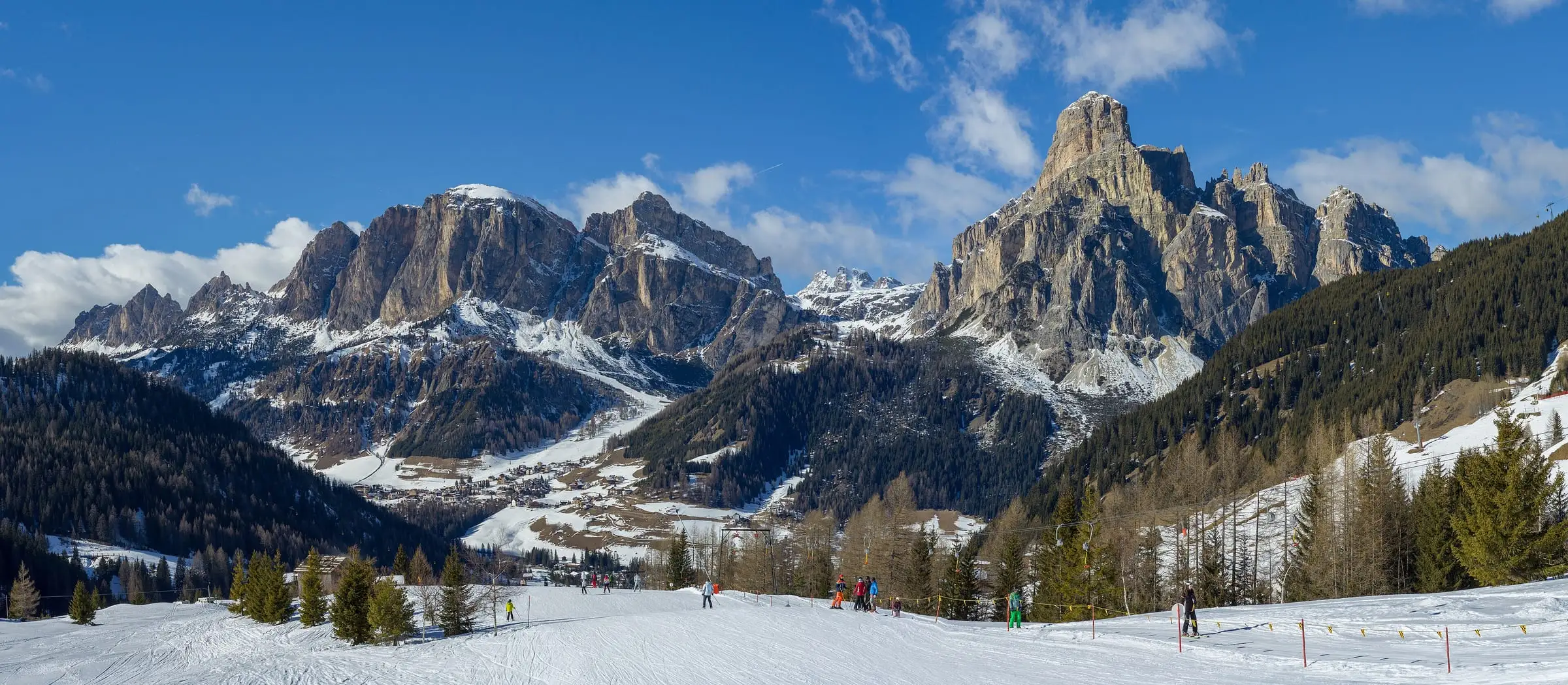
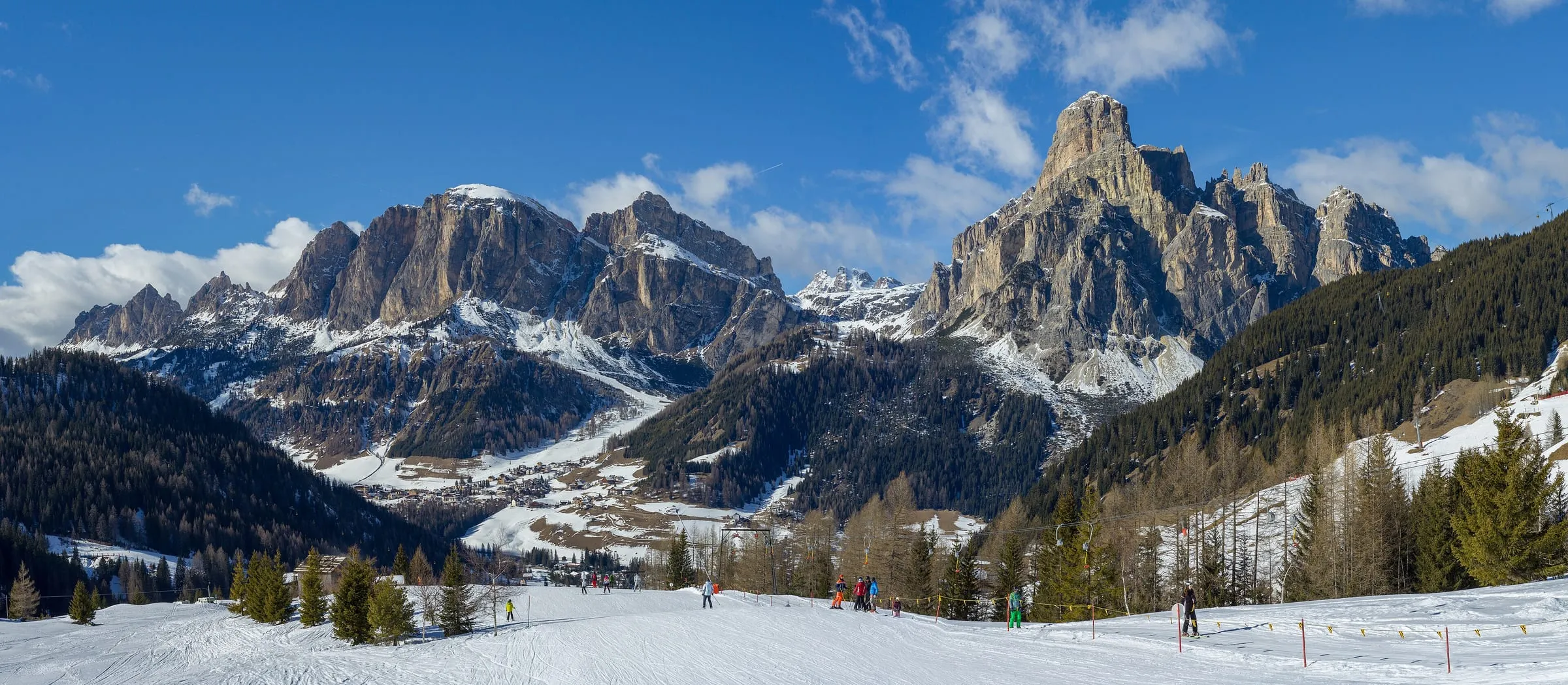
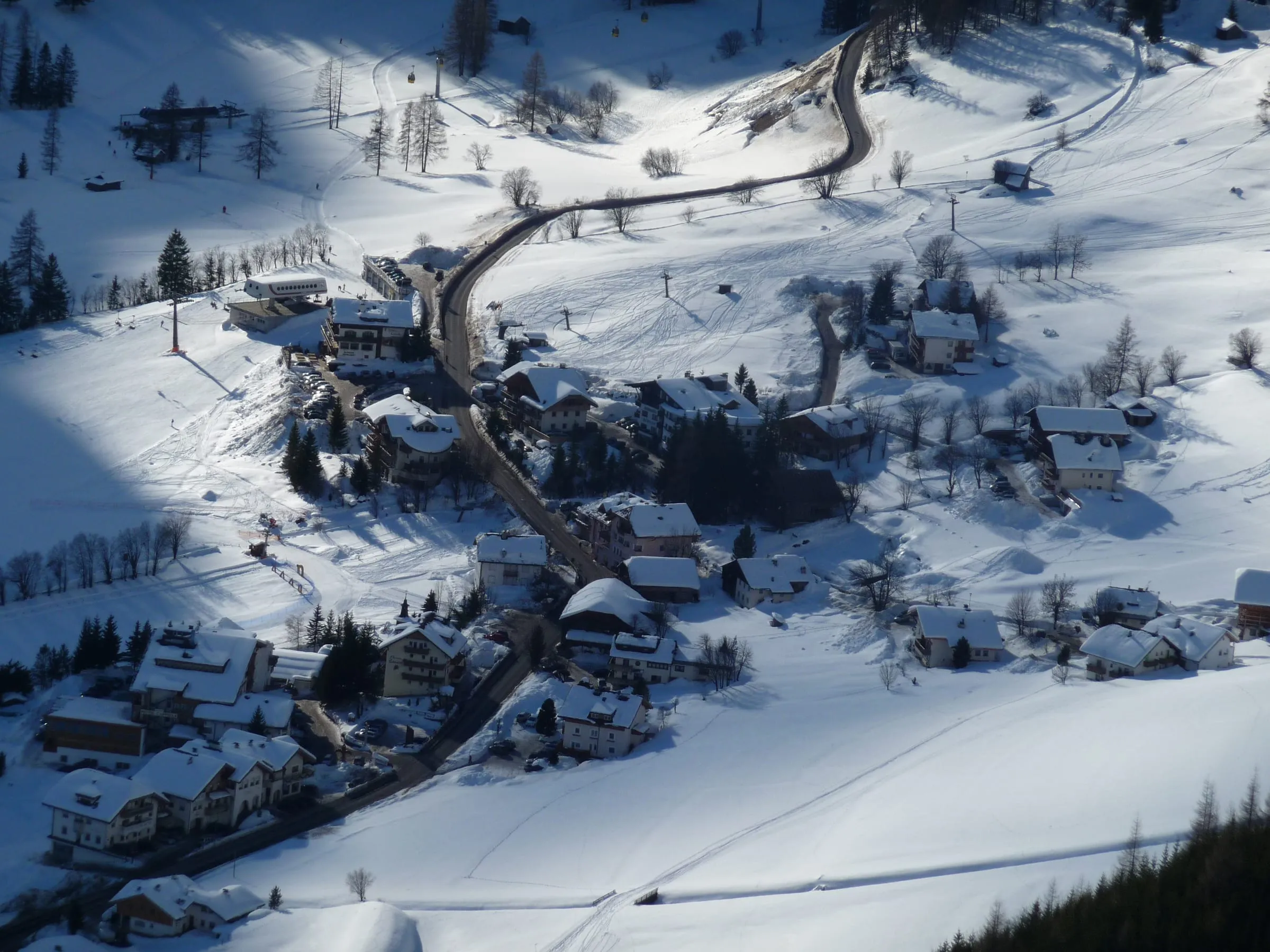
Alta Badia is a ski area in the Dolomites of South Tyrol, northern Italy, linking six Ladin villages: Corvara (1,568 m), Colfosco, La Villa, San Cassiano, Badia and La Val. The tourist office counts 130 km of runs and the 2026/27 piste map 53 lifts, with skiing up to 2,550 m at Vallon, and the area is part of Dolomiti Superski (about 1,200 km on one pass) with the Sellaronda starting in Corvara and Colfosco. It is the gentlest of the big Dolomites areas, more than half blue runs, and it suits intermediates, families and anyone who rates the lunch as highly as the skiing.
Alta Badia ski area: a sunny plateau on the Sellaronda
The heart of the skiing is a wide, rolling plateau between Corvara, La Villa and San Cassiano, around Pralongià, where most runs are blue or easy red and the lifts all link up. Around that sit four distinct corners:
- Corvara and Boè. The Boè gondola (2.5 km long) climbs from Corvara to about 2,200 m, and the Vallon chair above it reaches 2,550 m, the high point of Alta Badia’s own lifts. This is where the Sellaronda leaves clockwise for Passo Campolongo and Arabba.
- Colfosco and Passo Gardena. Above Colfosco (1,645 m), the Colfosco and Frara lifts climb towards Passo Gardena (2,121 m) and Val Gardena. The Col Pradat black sits above the village, and the Stella Alpina chair serves a gentle side valley.
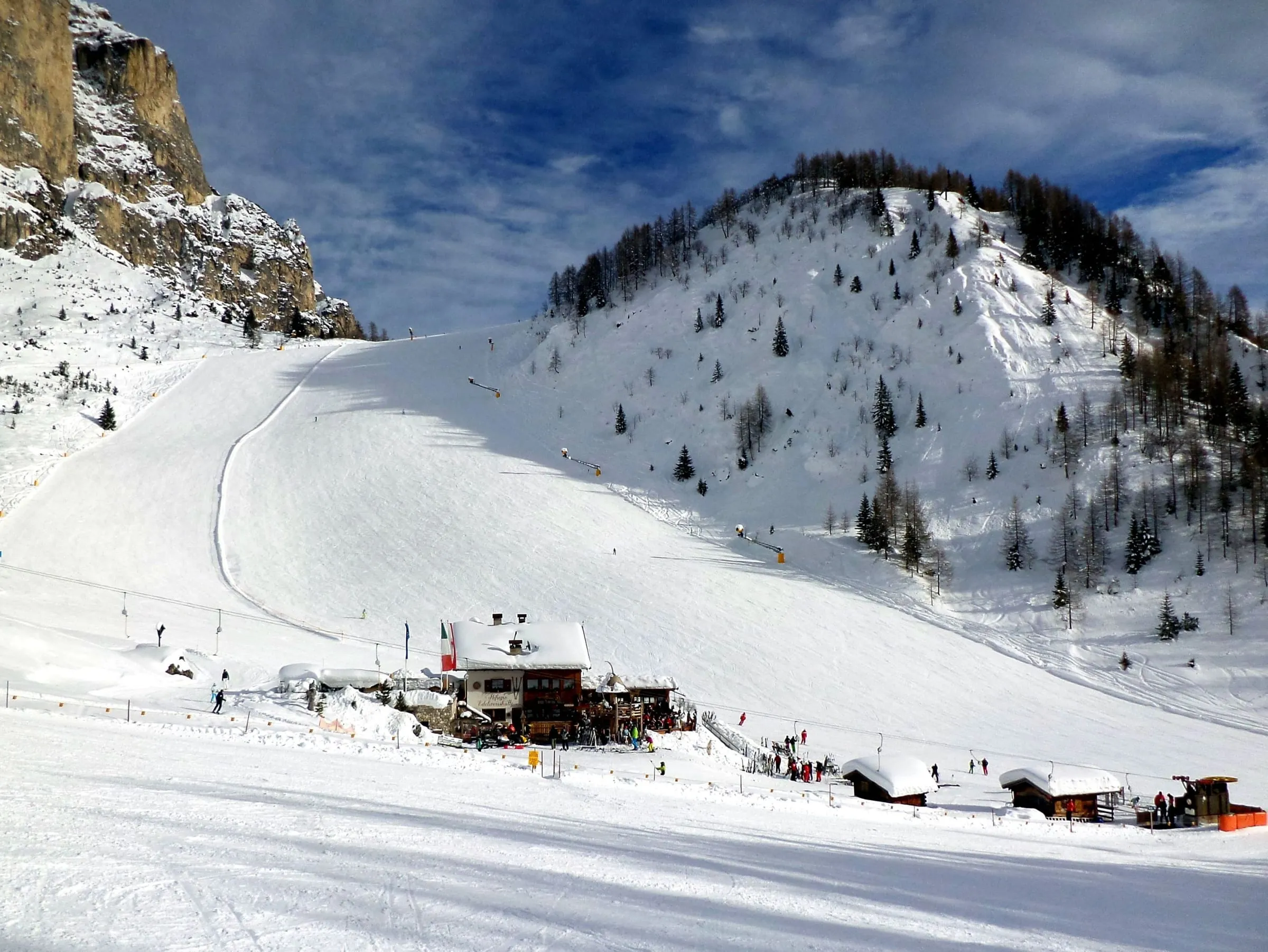
- La Villa and Piz La Ila. The Piz La Ila gondola rises 647 m from La Villa (1,433 m) to the plateau. The Gran Risa, the World Cup giant slalom run, drops straight back down.
- San Cassiano and Armentarola. The Piz Sorega gondola links San Cassiano (1,537 m) to the plateau. The Armentarola lift beyond it is where you return from the Lagazuoi run.
Badia, further down the valley, has its own sector at La Crusc (Santa Croce, 2,045 m), with the WinterPark and the La Crusc chairlifts.
New for 2026/27, Dolomiti Superski says Alta Badia gets a new run, 5c, at Arlara, and some old drag lifts are being replaced with modern ones of the same type.
The tourist office splits the 130 km into 74 km blue, 47 km red and just 9 km black. More than 90 piste machines groom the runs every night.
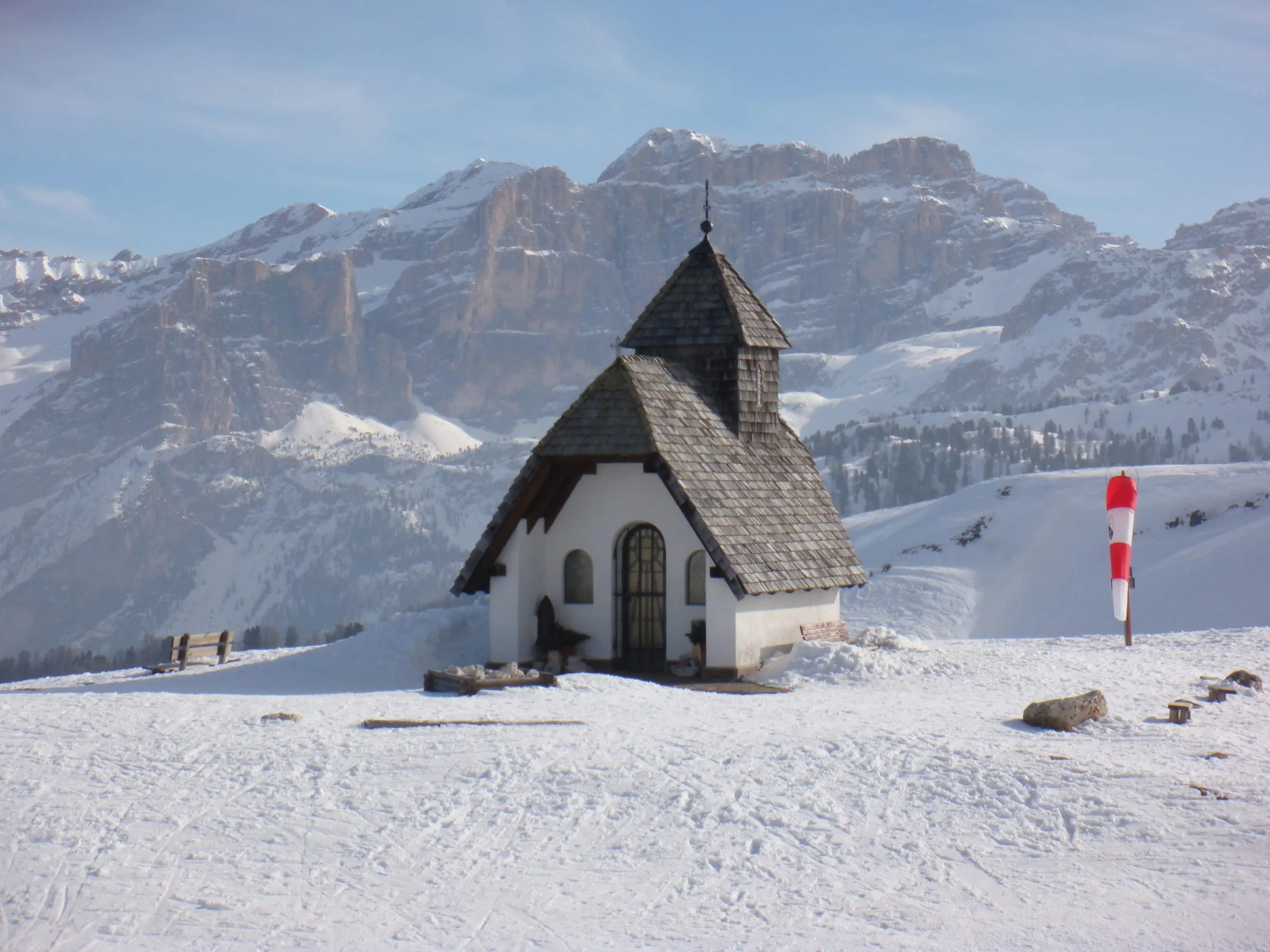
Skiing in Alta Badia for beginners, intermediates and experts
Beginners
This is one of the best big areas in the Alps to learn in, because the easy terrain isn’t a separate nursery corner: the blues run right across the plateau. Colfosco has a large beginner area beside the Pezzei lift, with the Kids Funpark next to it. Corvara’s Ladinia ski school, the valley’s oldest, runs a Baby Club for under-4s and group courses from age 4. Once you can link turns, the Pralongià blues are long, wide and sunny. There’s more in our Alta Badia with kids guide.
Intermediates
Alta Badia is built for you. You can ski from Corvara to San Cassiano and La Villa and back without touching anything harder than a red, and confident skiers can add the Sellaronda (the tourist office rates it moderate: 39.6 km, about 4 hours clockwise, 4 hours 30 the other way) or the 80 km First World War tour. The Lagazuoi run, 7.5 km and 1,130 m of vertical down the Hidden Valley, is a groomed red-standard descent that most intermediates manage happily. If you’ve already done Val Gardena’s long reds, Alta Badia feels more relaxed: wider, gentler, fewer steep pitches.
Experts
The Gran Risa is the real test: a black with nearly 500 m of vertical, steep, technical and full of changes of rhythm. The Vallon black under the Sella’s walls at 2,550 m and the Col Pradat black above Colfosco are the other two to tick off. Good skiers will have done the steep groomed runs in two days. The best expert days are guided off-piste in the Sella group or skiing the circuits hard. If steep terrain is your priority, St Anton or Chamonix are a better bet.
A first day in Alta Badia
This loop crosses the plateau and three villages, and suits anyone happy on blue and easy red runs.
- Corvara to Col Alto. Start on the Col Alto gondola from the centre of Corvara (420 m of vertical) and warm up on the Col Alto runs back to the village.
- Across to Pralongià. From Col Alto, ski on towards the Braia Fraida and Arlara lifts and up onto the Pralongià plateau. The Pralongià chairs give you a few easy laps with the Sella, the Marmolada glacier and the Sassongher all in view.
- Down to San Cassiano. Ski the blues off Pralongià towards Piz Sorega and San Cassiano. This is the place to stop for lunch at one of the plateau’s huts.
- Over to La Villa. Head back across the plateau through the Biok and La Brancia lifts to the top of the Piz La Ila gondola. Look over the edge of the Gran Risa; ski it only if you’re confident on black, or ride the gondola down to La Villa and back up.
- Home to Corvara. Ski back across the plateau towards Col Alto and take the Col Alto runs down into Corvara before the lifts shut.
On day two, take the Boè gondola and the Vallon chair for the high skiing, then set off on the Sellaronda on day three. Save the Lagazuoi run for a clear, settled day.
Snow in Alta Badia: how reliable is it?
Alta Badia is mid-altitude with no glacier. Its villages sit between 1,324 m (San Leonardo, Badia) and 1,645 m (Colfosco), and most of its lifts top out between about 2,000 m and 2,250 m: Piz Sorega 2,003 m, La Crusc 2,045 m, Piz La Ila about 2,100 m, Boè about 2,220 m. Only Vallon (2,550 m) goes higher on the area’s own lifts; Lagazuoi (2,778 m on the piste map) is reached by bus or taxi to Passo Falzarego. So most of the skiing is between 1,500 m and 2,250 m, a little lower than Val Gardena at the top.
In a dry Dolomites winter, the pistes rely on machine-made snow, and Alta Badia takes that seriously. The tourist office publishes a live snowmaking report with the Corvara lift company, showing where snow is being made and groomed, and Dolomiti Superski’s 2026/27 plans include renewed snowmaking on Alta Badia’s pistes. Neither gives a figure for how much of the area is covered, so we won’t quote one. Expect good groomed pistes most winters and treat powder as a bonus.
2026/27 season: 4 December 2026 to 4 April 2027, according to the tourist office. Our Alta Badia snow report has the live depths and the month-by-month picture.
Is Alta Badia good for a last-minute ski trip?
Mostly yes, if you pick the week. The valley has a big stock of family-run hotels, garnis and apartments across six villages, so something nearly always turns up, but the ski-in hotels in Corvara and the luxury addresses in San Cassiano fill early.
Dolomiti Superski’s price calendar marks high season as 20 December to 9 January and 31 January to 20 March. The cheaper, quieter windows are early December, 10 to 30 January and late March to the close. The World Cup weekend on the Gran Risa (19 to 21 December 2026) fills La Villa in particular.
If the forecast looks thin, Alta Badia holds up better than its altitude suggests, because the blue and red plateau is easy to keep covered with machine snow. If you need real height, Cervinia or Livigno go higher.
Alta Badia lift passes
You have two choices. The Alta Badia pass covers the valley’s own 130 km. The Dolomiti Superski pass covers 12 areas and about 1,200 km, and you need it for the Sellaronda, which crosses into Arabba, Val di Fassa and Val Gardena. For a week, almost everyone should buy Dolomiti Superski.
| Dolomiti Superski, adult, 2026/27 | High season | Regular season |
|---|---|---|
| 1 day | €89 | €80 |
| 6 days | €453 | €407 |
| Season pass, presale | €990 |
Prices are from Dolomiti Superski’s online calculator and its 2026/27 press release. The Alta Badia local pass is priced on the tourist office’s calculator. Buying online at least two days ahead saves 5%. One child born 2019 to 2023 skis free with each full-price adult pass bought at the same time; otherwise children pay 50%, juniors (born 2009 to 2018) 70% and seniors (born 1961 or before) 90% of the adult price. Ski-pass offices are at the Boè gondola in Corvara, the Piz La Ila gondola in La Villa, the Piz Sorega gondola in San Cassiano, the Santa Croce gondola in Badia and in Colfosco. The ski bus to Passo Falzarego and the horse tow on the Lagazuoi run cost extra.
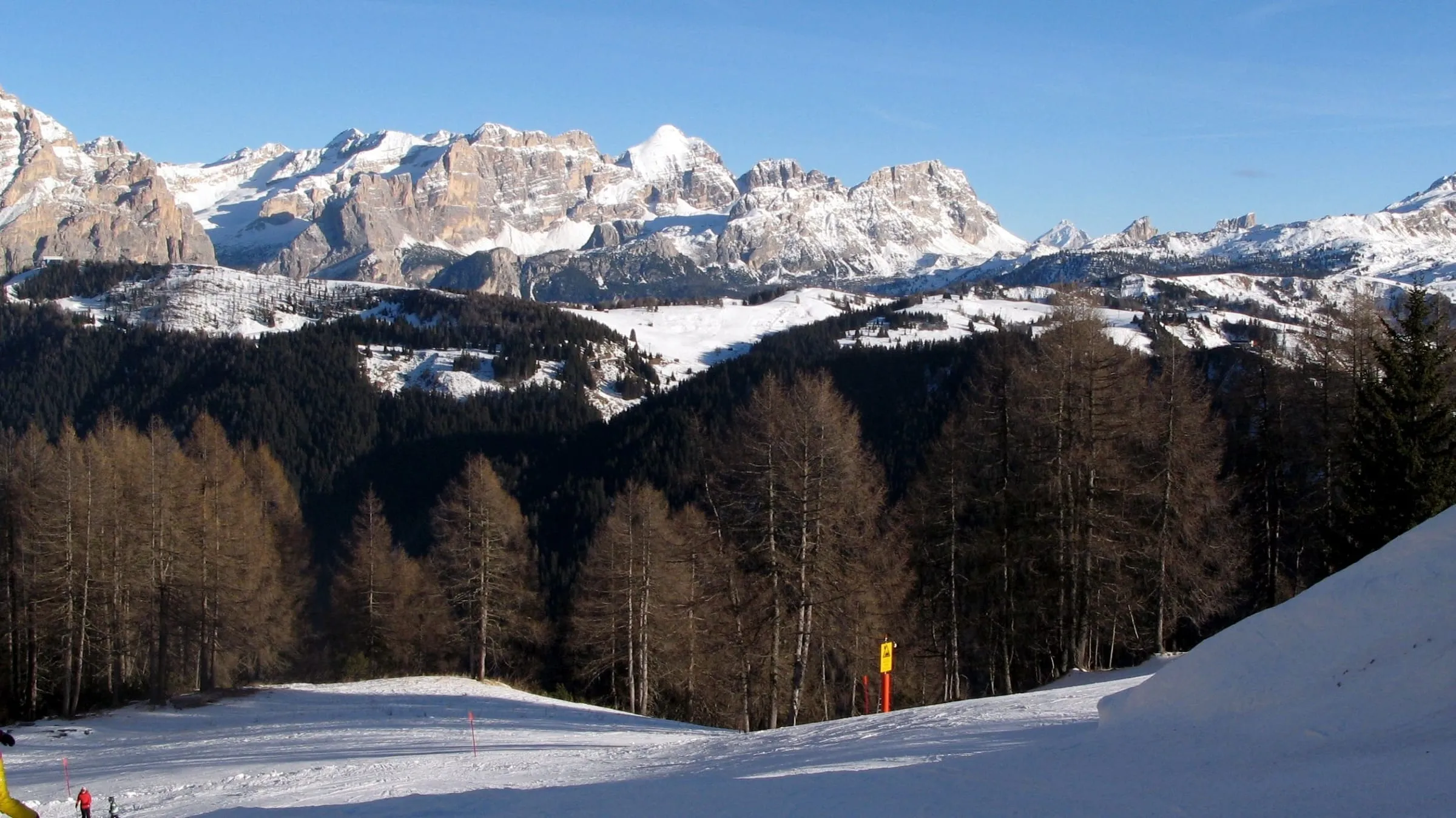
Après-ski and things to do in Alta Badia
Alta Badia is about food, not table-dancing. The tourist office lists Michelin-starred cooking in the valley, including La Stüa de Michil at Hotel La Perla in Corvara, and its events calendar is full of eating on skis: the Gourmet Skisafari on 13 December 2026, the Sommelier on the slopes and wine safaris at the huts. Après means a hut terrace in the afternoon sun, then a drink in Corvara, the liveliest village.
Off the slopes, the Tru dla liösa Foram toboggan run comes 3.1 km down from Piz Sorega to San Cassiano, Corvara has an ice stadium and La Villa an indoor pool.
Who Alta Badia suits, and who it doesn’t
Choose Alta Badia if you want long, easy cruising with huge scenery, a calm atmosphere and the best mountain food in the Dolomites. It’s ideal for couples, families and groups where some people ski much better than others.
If you’re torn between Alta Badia and Val Gardena, Val Gardena has longer reds, the 10 km La Longia and a real town in Ortisei; Alta Badia is gentler and quieter, with better food. Against Cortina d’Ampezzo, Cortina is higher and more glamorous but split into separate areas, while Alta Badia’s skiing links up from the door.
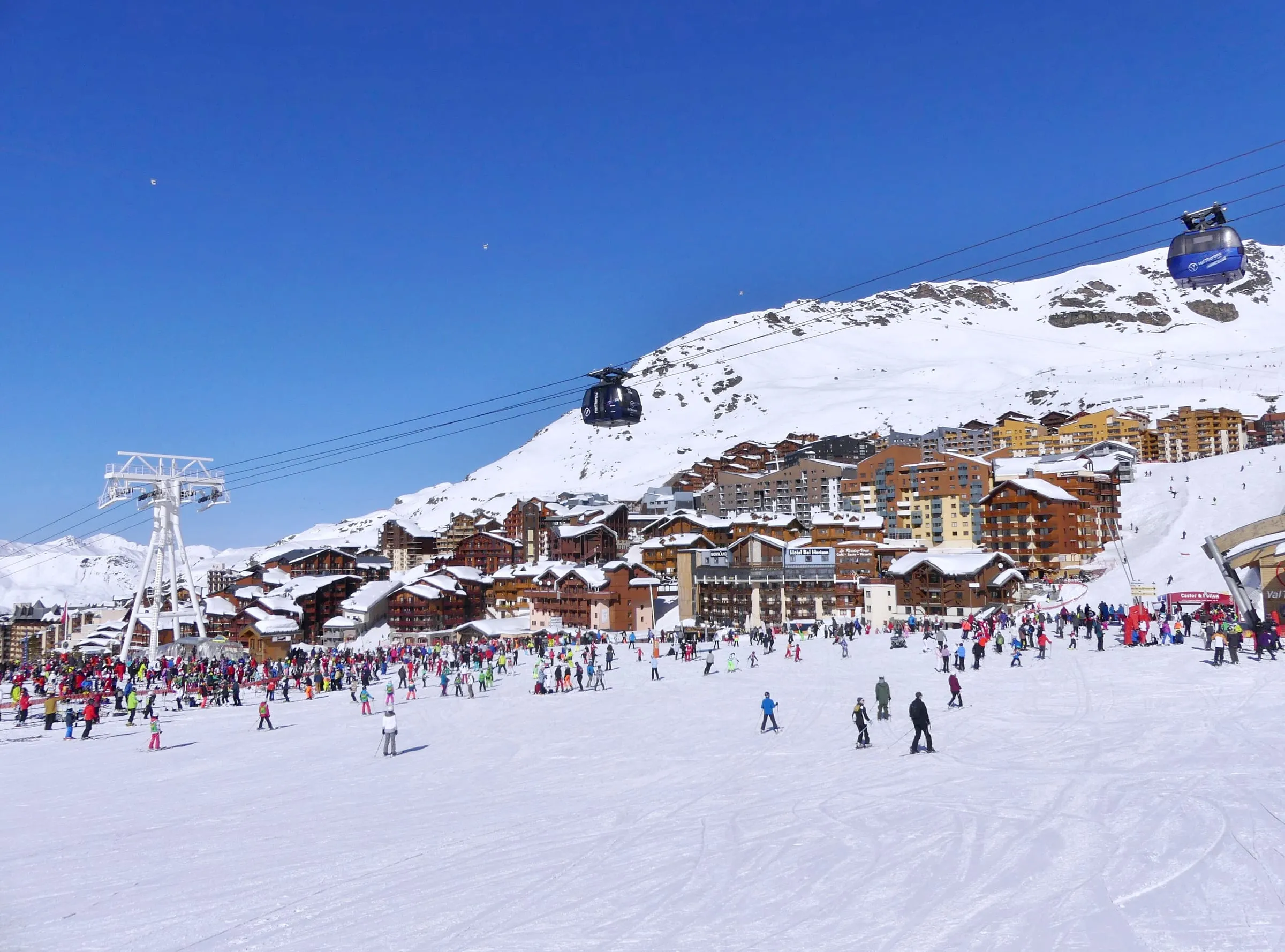
Look elsewhere if you want steep off-piste, a party scene or high-altitude snow: try St Anton, Ischgl or Val Thorens.
How to get to Alta Badia
By plane and transfer
Bolzano is the closest airport, about 70 km from Corvara, with SkyAlps flights including London. The Kolfuschgerhof hotel in Colfosco puts the drive at about 1 hour 30 from Bolzano, about 2 hours 15 from Innsbruck (135 km) and about 2 hours 40 from Verona. Venice (about 170 km) and Treviso (about 160 km) work well from the south, and Munich, Bergamo and Milan are further. The tourist office lists a shared airport shuttle running Friday to Sunday, bookable online, plus the Alta Badia taxi consortium and helicopter transfers.
By train
Brunico (Bruneck), on the Val Pusteria line, is the nearest station, just over 30 km away. Bus 460 runs from Brunico up the valley to Corvara and Colfosco. Bressanone and Bolzano stations on the Brenner line are about 65 km away. The South Tyrol Guest Pass, free at partner accommodation, covers public transport in the province, including the Corvara–Colfosco bus every 30 minutes.
By car
From the Brenner on the A22, leave at Bressanone/Val Pusteria and follow the SS49 towards Brunico, then turn into Val Badia on the SS244 to Corvara. From the south, leave the A22 at Bolzano Nord or Chiusa, cross Val Gardena and Passo Gardena, or come from Venice on the A27 via Belluno and Passo Campolongo. The passes are high and exposed in winter, so the Val Pusteria approach is the safer bet in a storm. Italy’s rule on winter tyres or chains runs from 15 November to 15 April wherever the road authority requires it, and the tourist office says you need them for the valley.