France
 Austria
 Italy
 Switzerland
 English
 Deutsch
 Nederlands
 Čeština
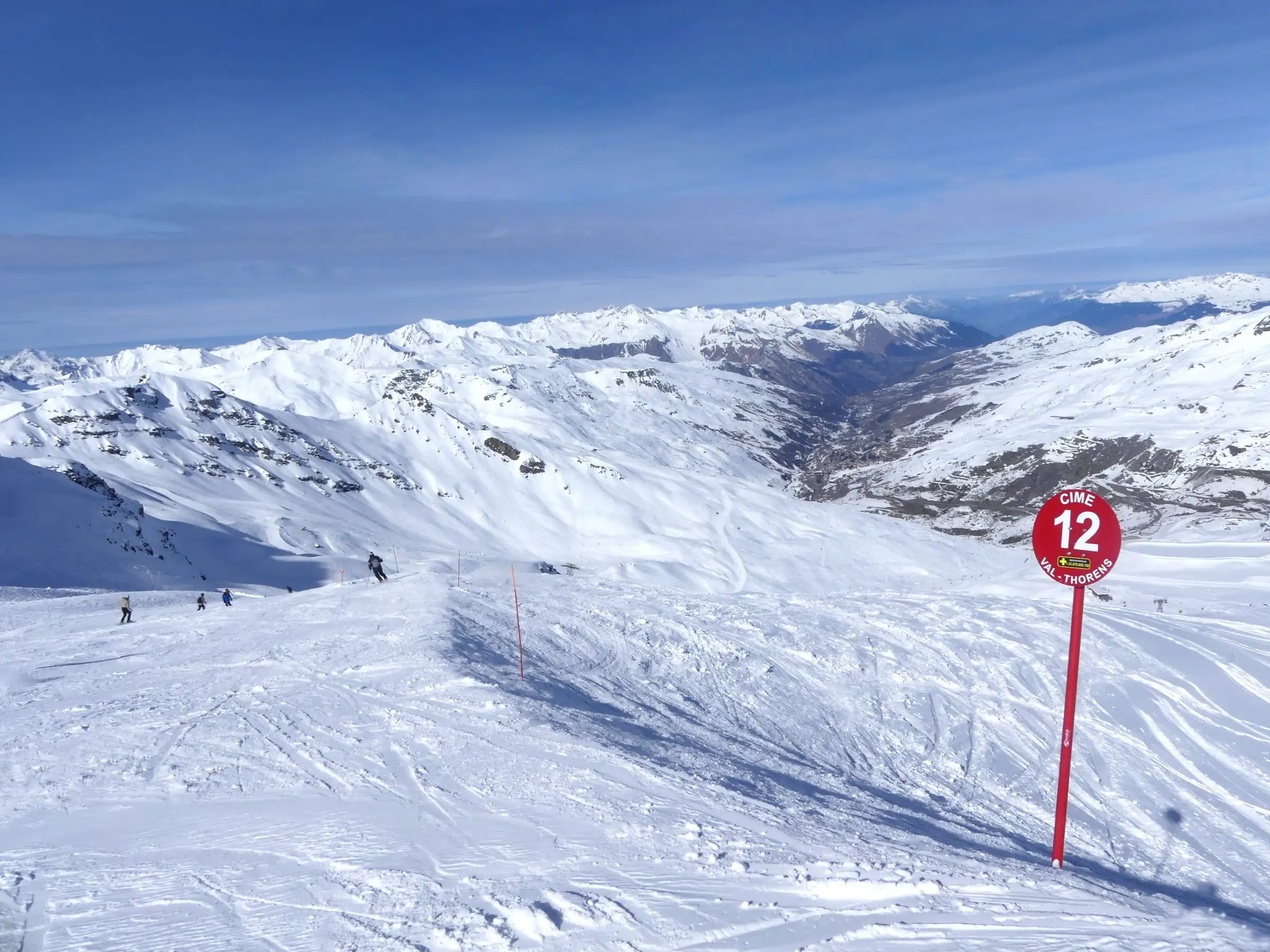
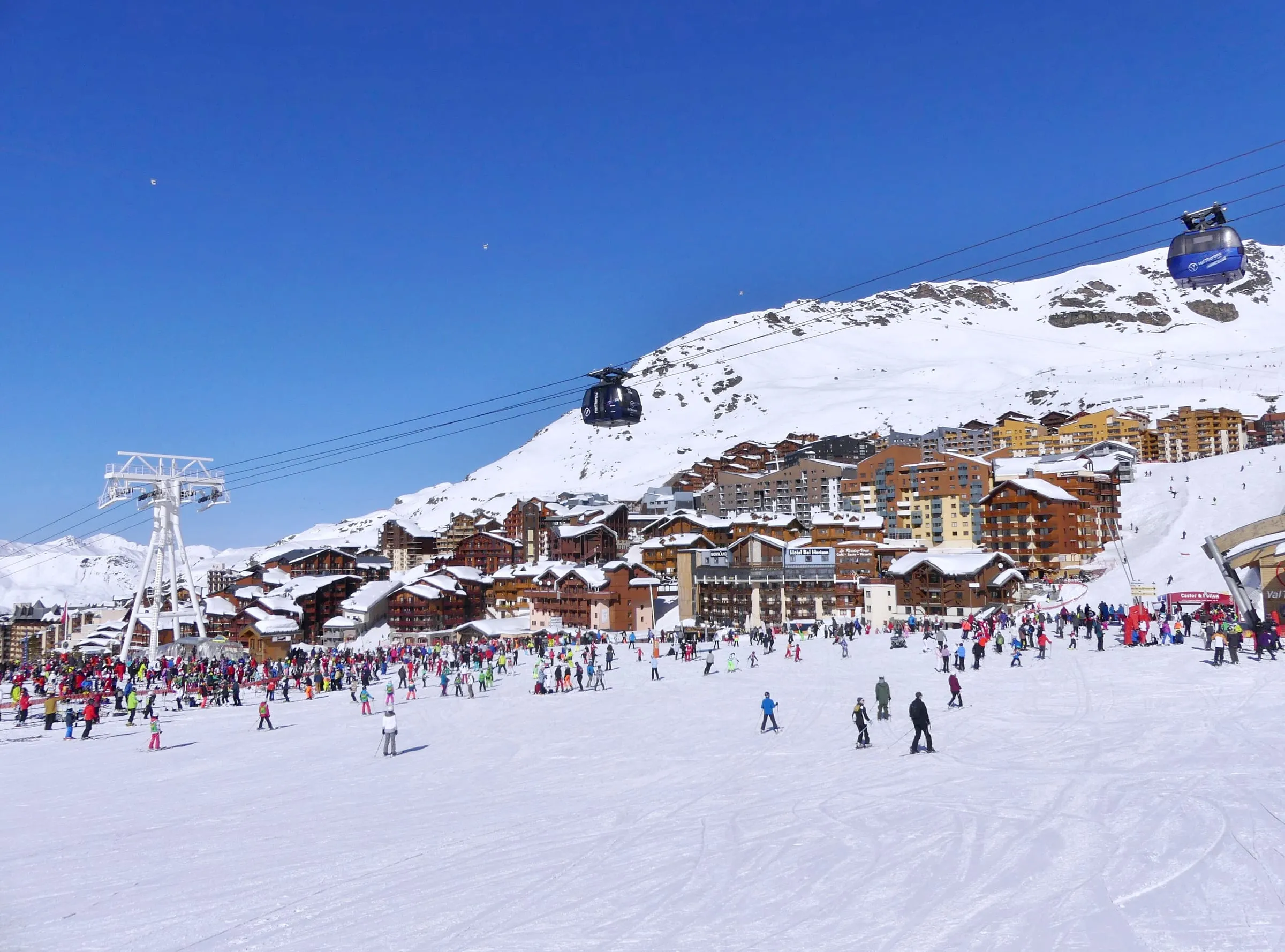
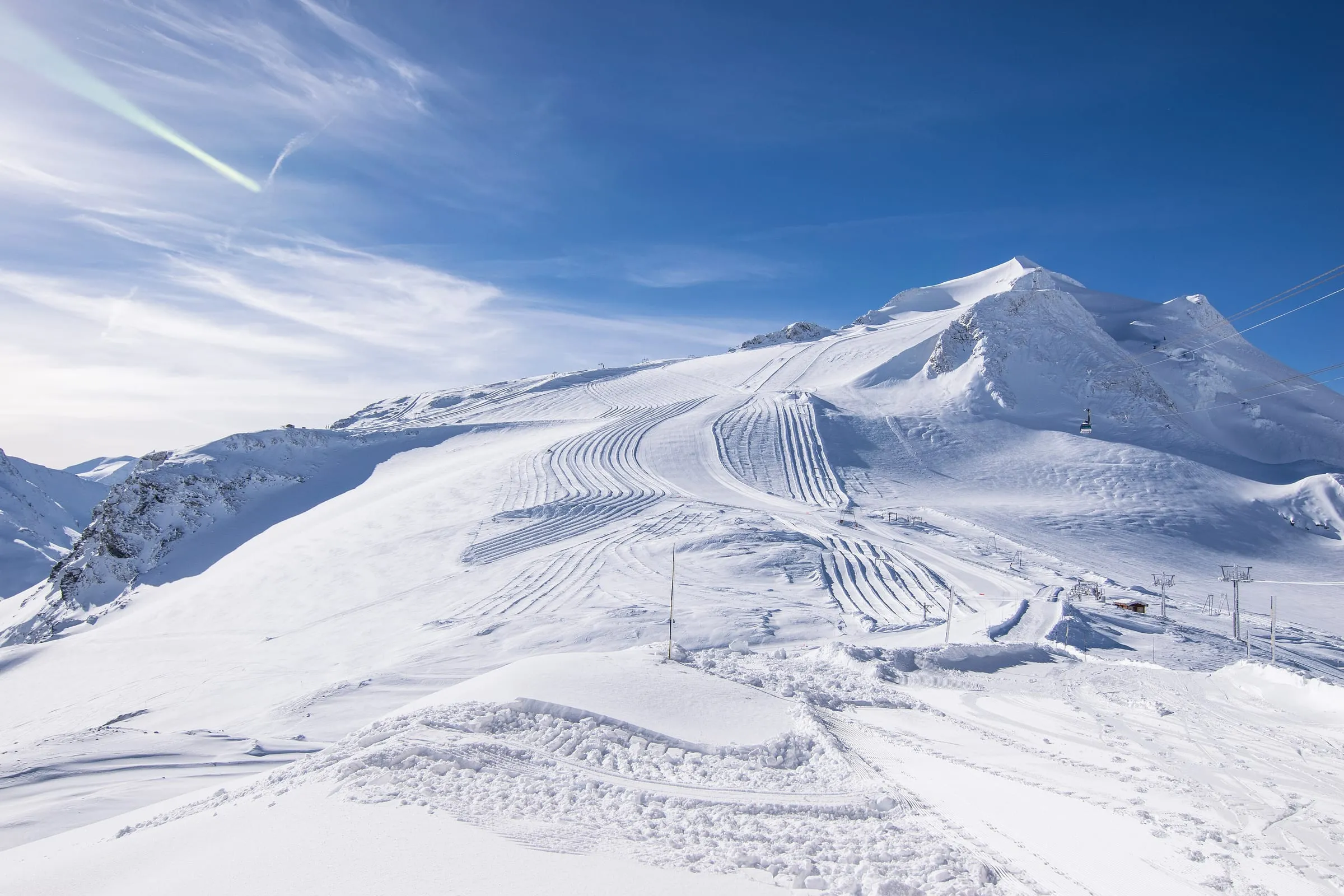
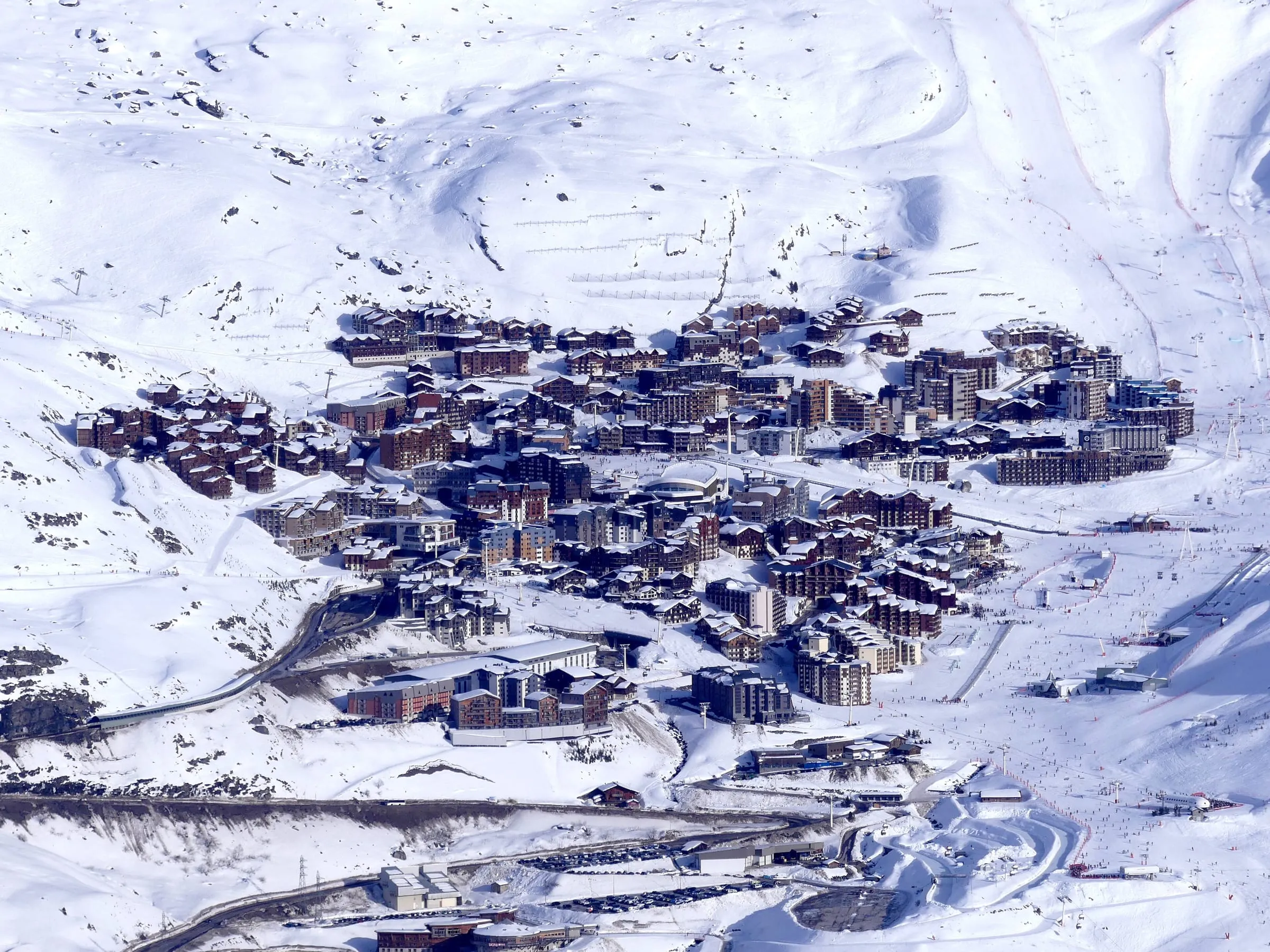
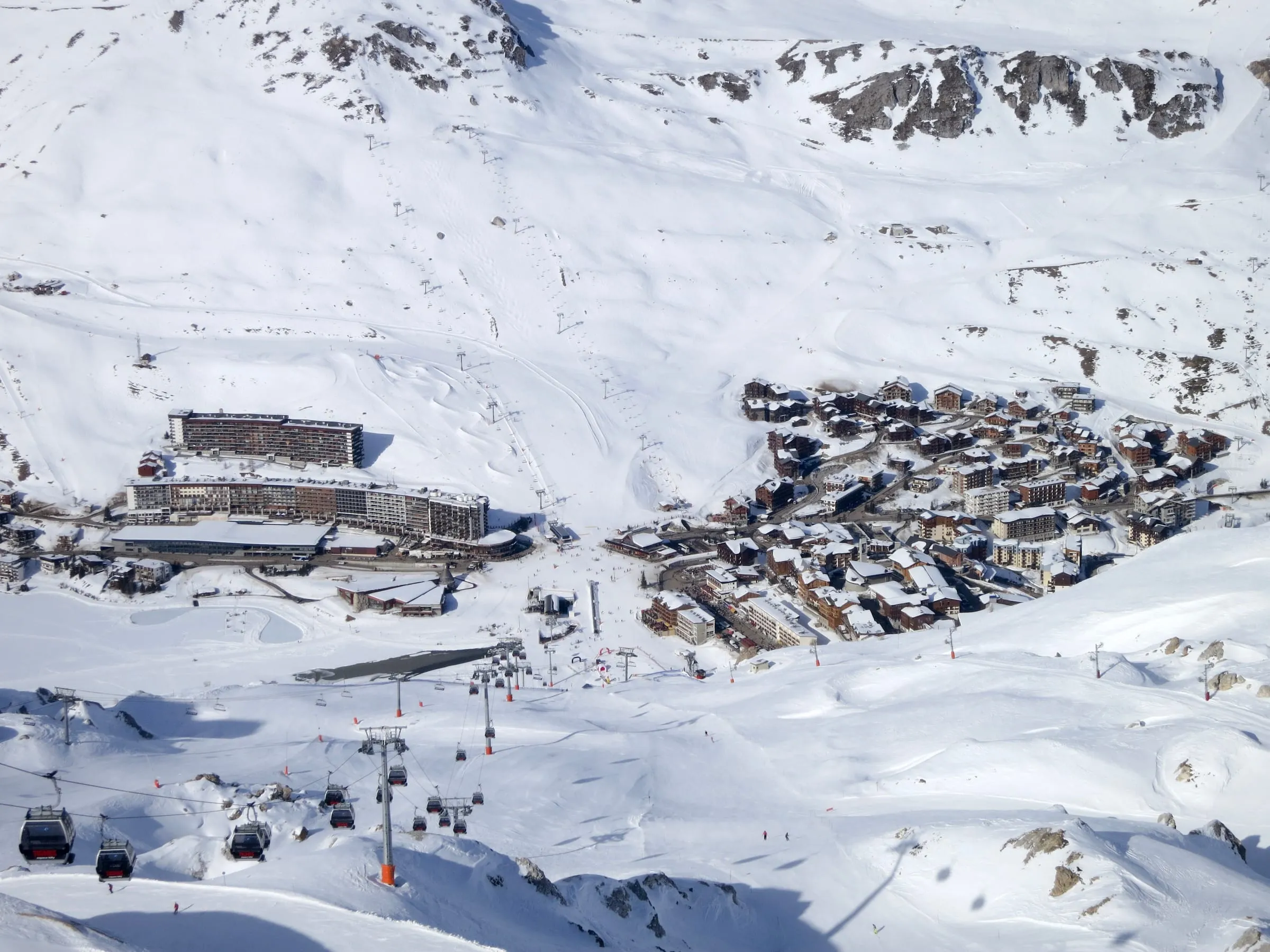
Val Thorens is the snow-surest resort in Les 3 Vallées: the village is at 2,300 m, the lifts reach 3,230 m, and the lift company puts 99% of its ski area above 2,000 m. There is no lift-served glacier; for 2026/27 the lifts run from 21 November 2026 to 2 May 2027, the longest season in the 3 Vallées, and the links to Méribel and Courchevel from 5 December to 18 April.
How snow-sure is Val Thorens?
Very. Altitude does the work here: the village sits higher than the top of many Alpine ski areas, and the whole bowl is above the treeline, so the snow stays cold and there is no low, wooded section to melt out. Snowmaking backs it up. Les 3 Vallées says 2,838 snow guns cover 54% of its pistes across the whole linked area, though it doesn’t give a figure for Val Thorens alone.
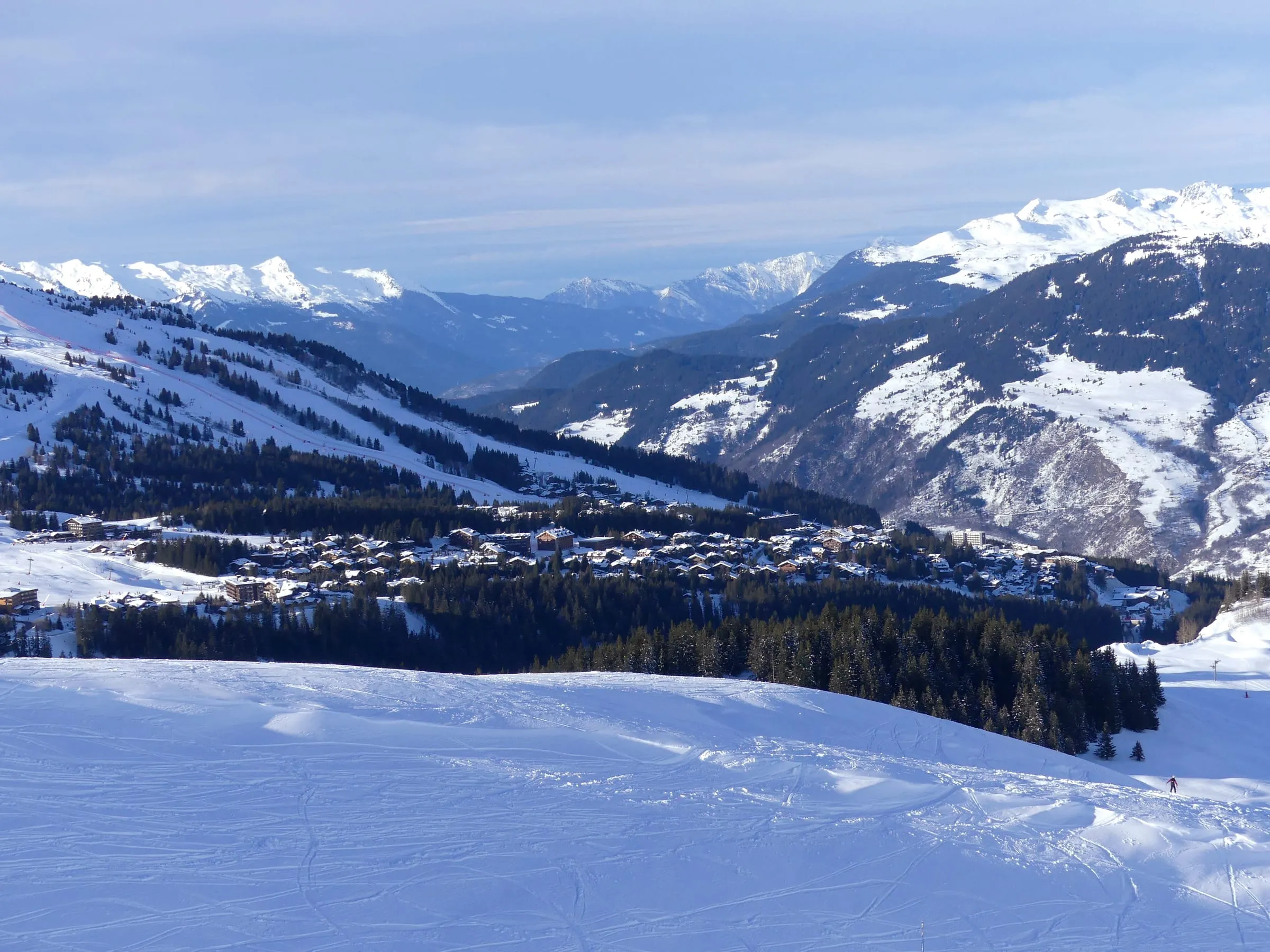
The one real competitor in France is Tignes, which is about as high and adds the Grande Motte glacier. Against Méribel and Courchevel, Val Thorens opens two weeks earlier, closes two weeks later and never has a thin run back to the village.
The best time to ski Val Thorens for snow
The best long-term guide we have is the Météo-France station at Orelle (2,356 m), on the Orelle side of the ski area. It measures natural snow at one spot, not the depth on the pistes, but it shows the pattern well.
- Late November and December: the area opens in stages from 21 November. At Orelle, natural snow has averaged about 75 cm in December, with 30 cm or more every week in all three Decembers on record. Early-season passes are cheaper from 5 to 18 December.
- January: about 105 cm on average, and cold. The quietest snow-sure weeks of the winter.
- February: about 119 cm, but the French school holidays and UK half-term fill the slopes.
- March: about 122 cm, the deepest month on record at Orelle, with longer days. Our pick.
- April and early May: still about 116 cm on average in April, with 30 cm or more every week in all four seasons on record. The 3 Vallées links close on 18 April, but Val Thorens and Orelle keep going to 2 May. Late-season mornings are firm; by early afternoon the sunny slopes soften.
Where the snow is best in Val Thorens
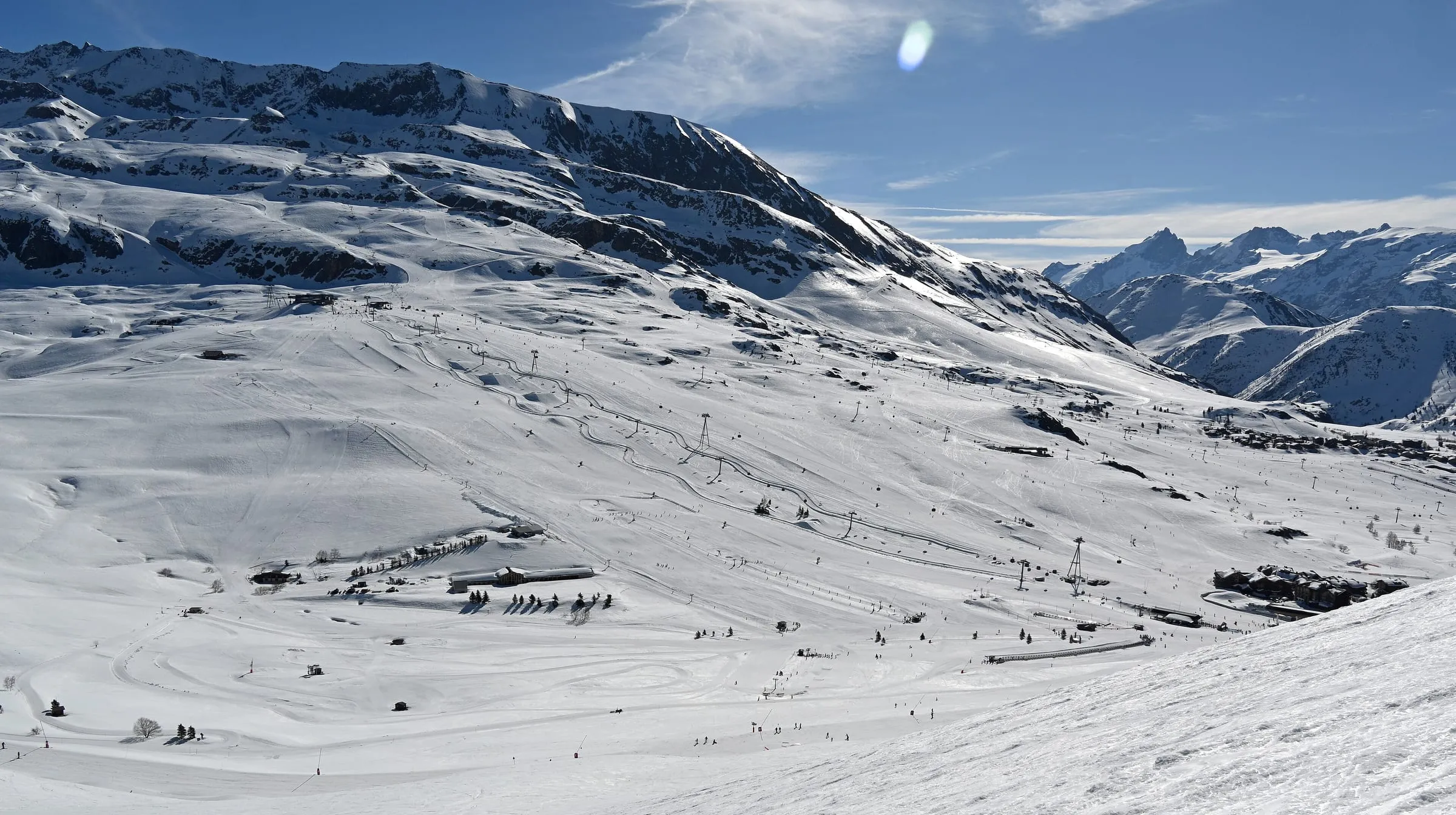
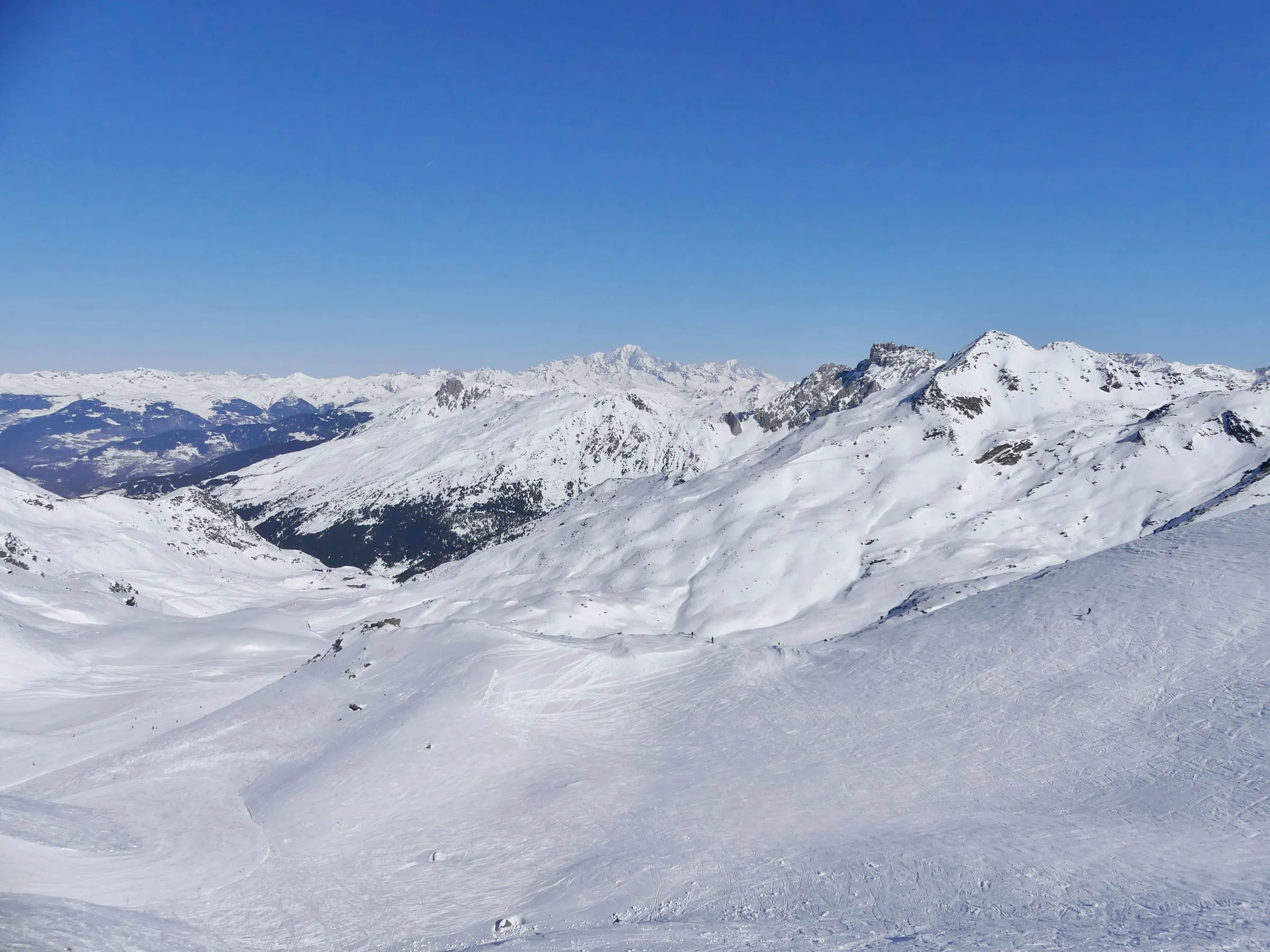
The top of the area holds its snow longest. The Thorens funitel to the Col de Thorens (3,002 m), the Grand Fond funitel to the Col de Rosaël (3,000 m) and the Cime Caron cable car (3,200 m) reach the highest terrain, and the Bouchet chair on the Orelle side tops out at 3,230 m. The black Combe de Caron faces north under the cable car and often keeps powder for days; the Combe de Rosaël faces south and softens first.
The runs that suffer earliest are those that drop below the village towards Les Menuires, the low end of the Belleville valley. Everything that comes back into Val Thorens itself is high enough to stay skiable to the last day.
If the snow is poor in Val Thorens
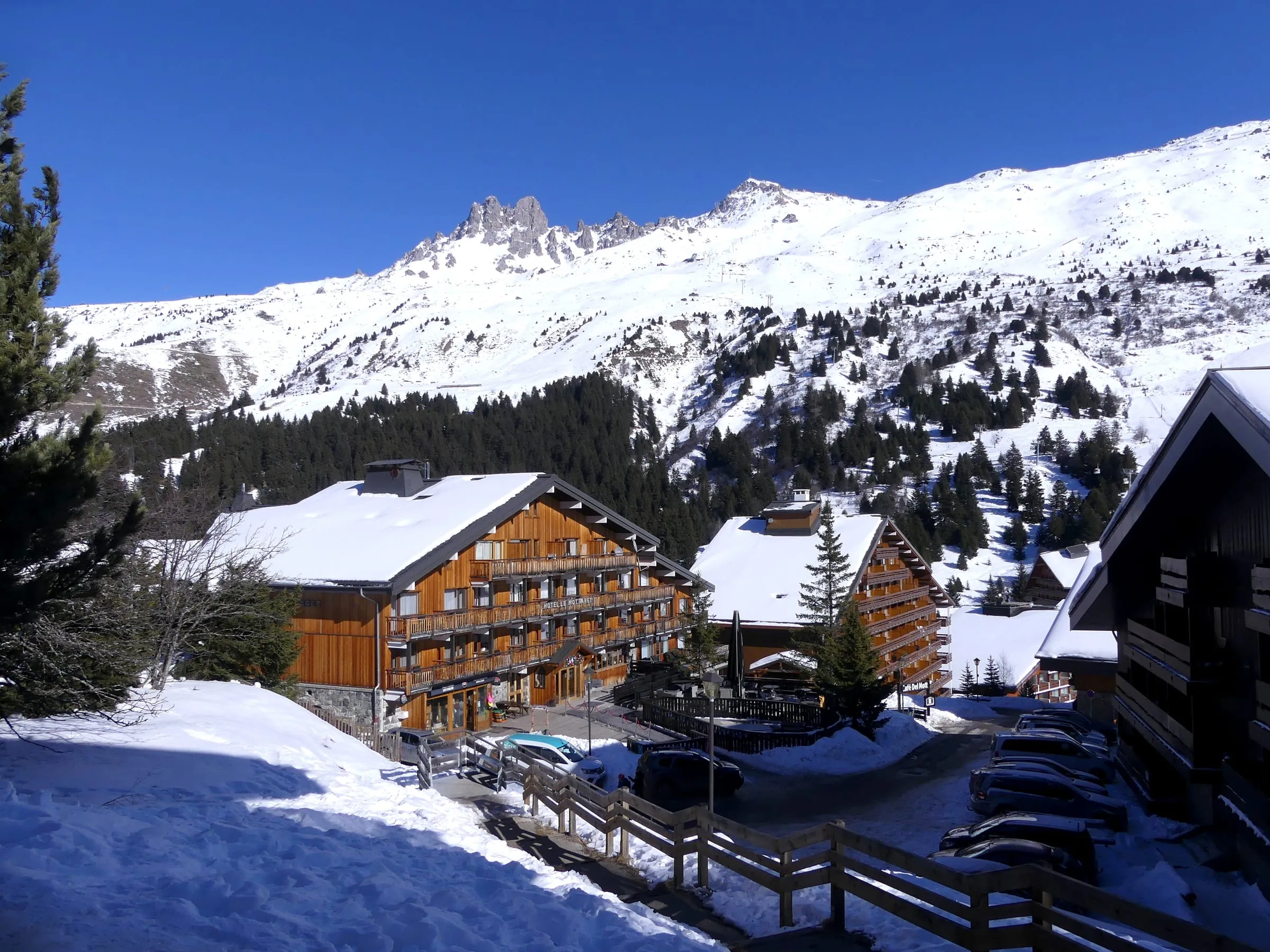
If it’s poor here, it is poor everywhere nearby. The more common problem is wind and flat light, since there are no trees. The Péclet, Thorens and Grand Fond funitels run in stronger winds than the chairlifts, so check them before giving up. The tree runs in Méribel and Courchevel are a 3 Vallées pass away, but the route crosses the Col de la Chambre at 2,850 m, which is exposed on a stormy day.
For a second high-altitude option, look at Tignes or Val d’Isère. More on the resort in our Val Thorens guide and where to stay.
Webcams and official snow reports for Val Thorens
Les 3 Vallées runs the webcams for Val Thorens and Orelle, and its live lift and piste page shows what is open today. Check both first thing on a windy morning.