France
 Austria
 Italy
 Switzerland
 English
 Deutsch
 Nederlands
 Čeština
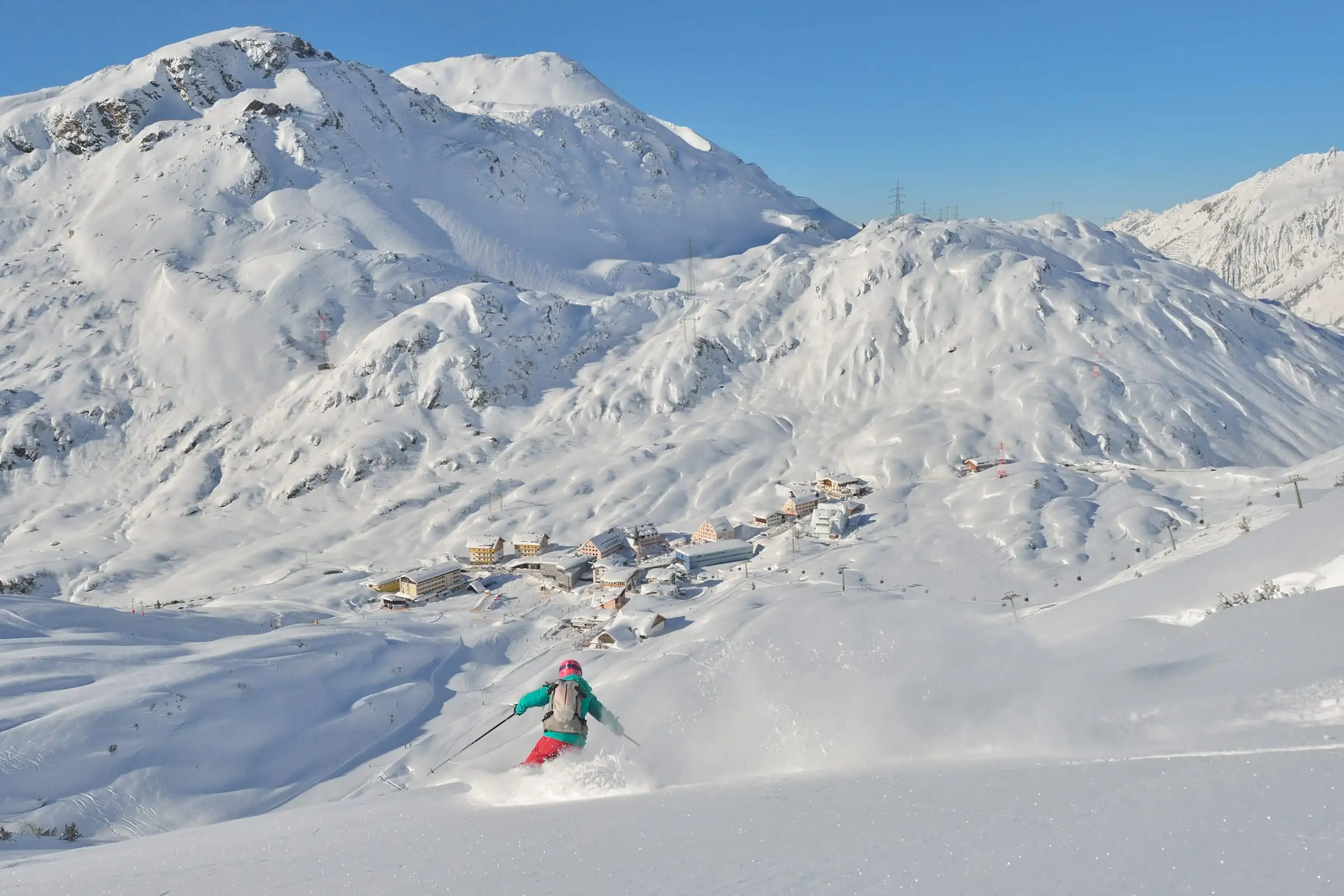
St. Anton’s lifts run from the village at 1,304 m to the Valluga at 2,811 m, with no glacier but a big snowmaking network and some of the heaviest natural snowfall in Austria. For 2026/27 Ski Arlberg opens St. Anton, St. Christoph and Stuben on 2 December 2026 and closes on 18 April 2027, with limited operation possible at both ends.
How snow-sure is St. Anton?
Very, for a resort without a glacier. Ski Arlberg puts average snowfall across the area at about 9 m a season. The tourist office says 88% of St. Anton’s slopes can be covered by snowmaking, and the piste machines measure snow depth by GPS so the snow guns work where the base is thin.
The month-by-month figures above are from the Galzig station at 2,079 m, on the slopes at about the height of the Galzigbahn top station. They measure natural snow at one point, not the groomed base on the pistes, but they show the pattern well. Ignore the Langen station in the table above for skiing: it sits at 1,221 m on the far side of the pass and tells you about valley snow, not the slopes.
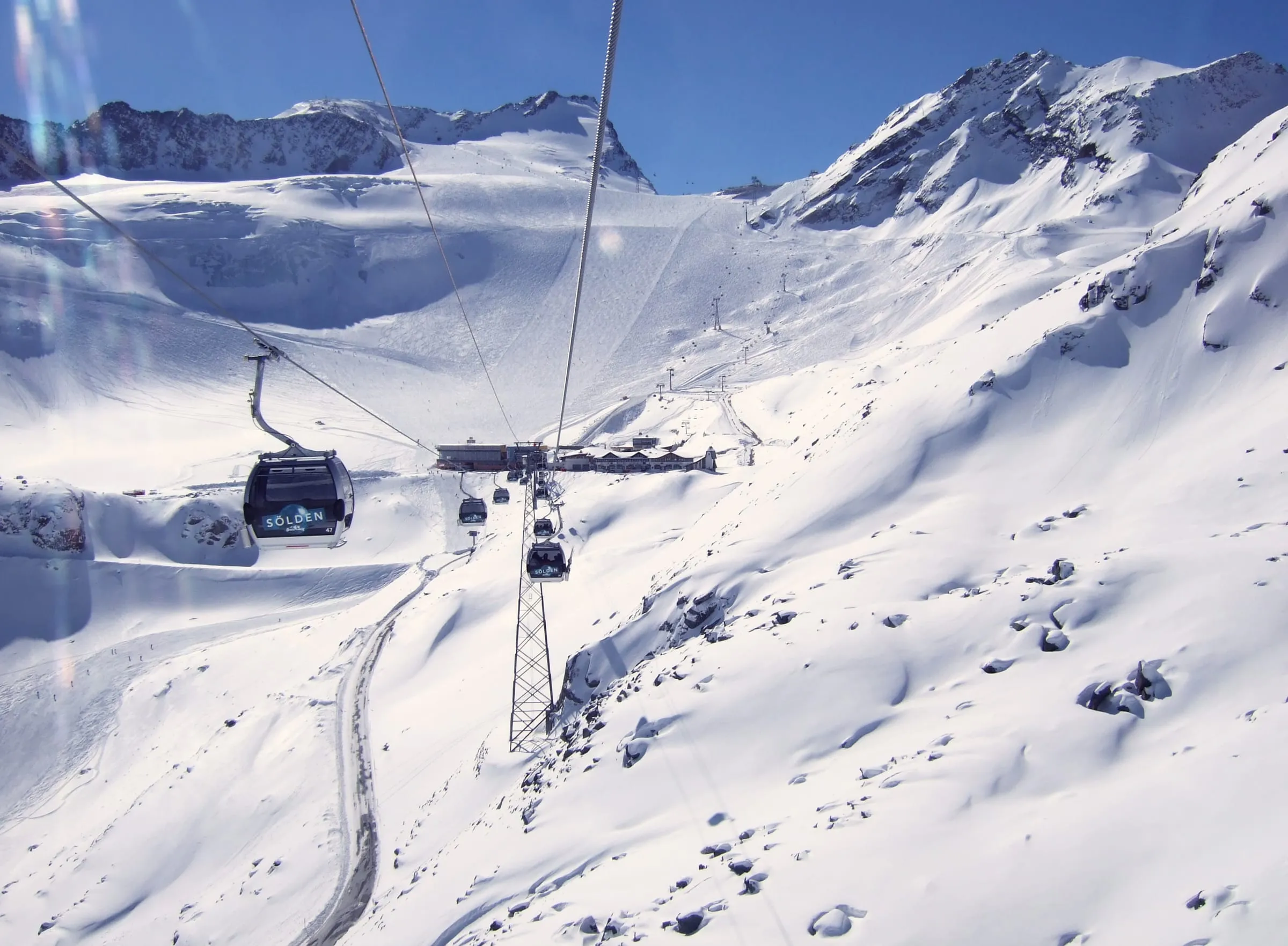
Compared with our other Austrian resorts, St. Anton holds far more natural snow than Kitzbühel: in February the Hahnenkamm station there (1,667 m) averaged about 70 cm, against 175 cm on the Galzig. It can’t match the glaciers of Sölden at either end of the season, though.
The best time to ski St. Anton for snow
All figures are averages of natural snow at the Galzig station over the last five seasons (2021/22 to 2025/26).
- December: about 125 cm, with 30 cm or more every week in all four Decembers on record. The upper mountain is usually skiing well; the home runs lean on snowmaking until mid-month.
- January: about 155 cm, 30 cm or more every week in all four seasons on record. Quieter on the slopes after the first week.
- February: about 175 cm, the same in all four seasons on record. Peak depth and peak crowds.
- March: about 176 cm, with 30 cm or more every week in all five seasons. Our pick for snow and sun together.
- April: about 139 cm, still 30 cm or more every week in all five seasons. The mountain holds up well to the 18 April close; the lowest runs into the village and to Nasserein are what turn to slush first.
November and May are a different story: about 36 cm and 40 cm on average, too thin to plan a trip around.
Where the snow is best in St. Anton
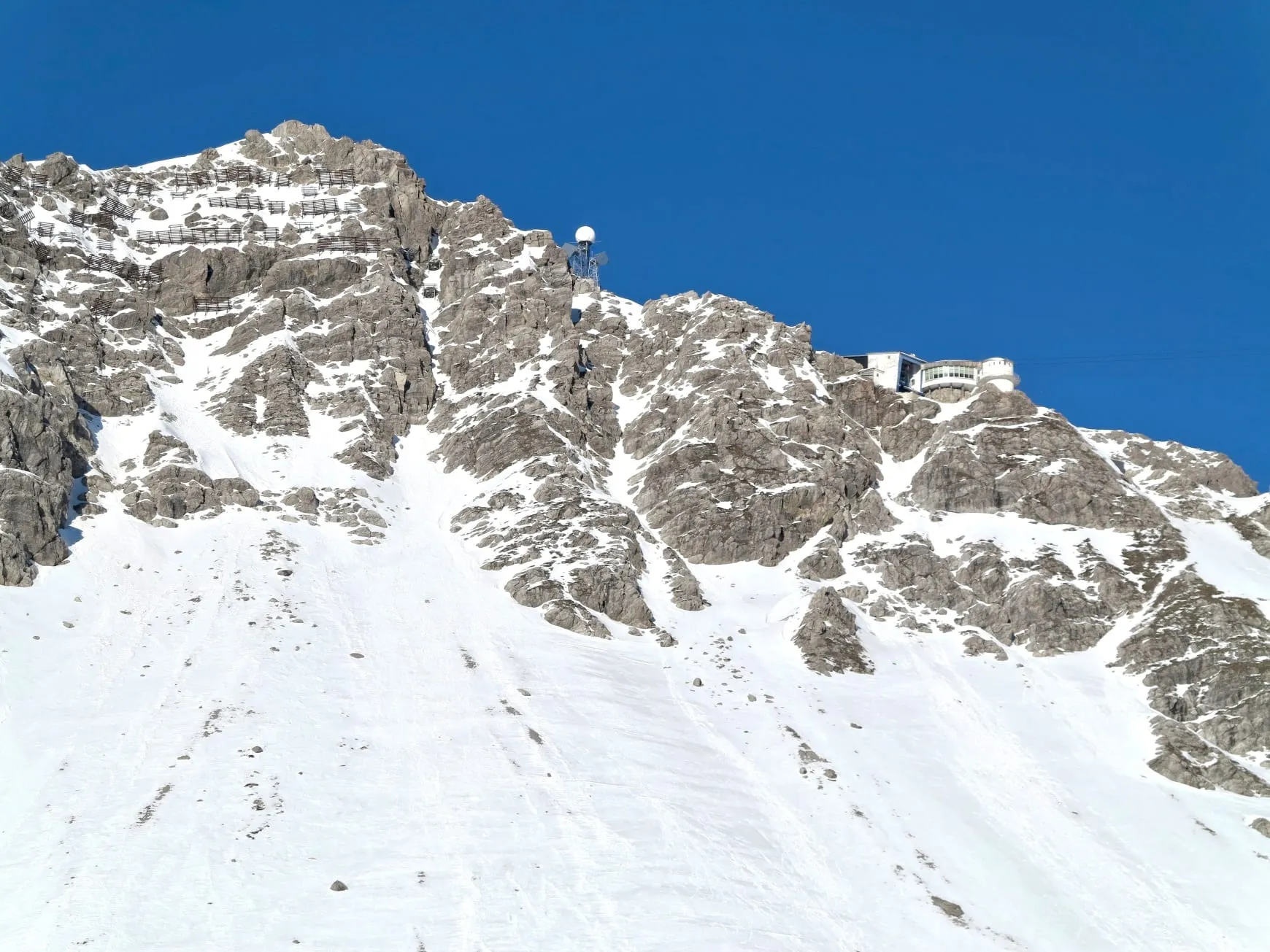
The Rendl, across the valley, has north- and west-facing slopes that keep cold snow longest after a sunny spell. The Valluga and Schindlergrat, the highest lifts, hold the deepest snow but are the first to close in wind. The Kapall (2,328 m) above the Gampen is the high ground on the other side of the main valley.
The weak spots are the long runs home: the Steissbachtal (55) and Zammermoos (50) into the village, and run 33 to Nasserein. In a thin December or a warm April they are the ones to check before you set off; the Galzigbahn and Nassereinbahn will take you down.
If the snow is poor in St. Anton
Stay high: the Galzig, Kapall and Rendl sectors usually keep skiing when the village runs are thin, and the Ski Arlberg pass also covers Lech and Zürs if you want a change of scene. If the whole Arlberg is short of snow, Sölden has two glaciers above 2,600 m and Ischgl skis almost entirely above 1,900 m. Our St. Anton overview and where to stay in St. Anton help you choose a base that keeps your options open.
Webcams and official snow reports for St. Anton
Ski Arlberg’s snow and avalanche report gives valley and mountain depths, new snow and the avalanche level each day. The tourist office’s St. Anton webcams cover the Galzig, Gampen, Valluga, Rendl and St. Christoph.