France
 Austria
 Italy
 Switzerland
 English
 Deutsch
 Nederlands
 Čeština
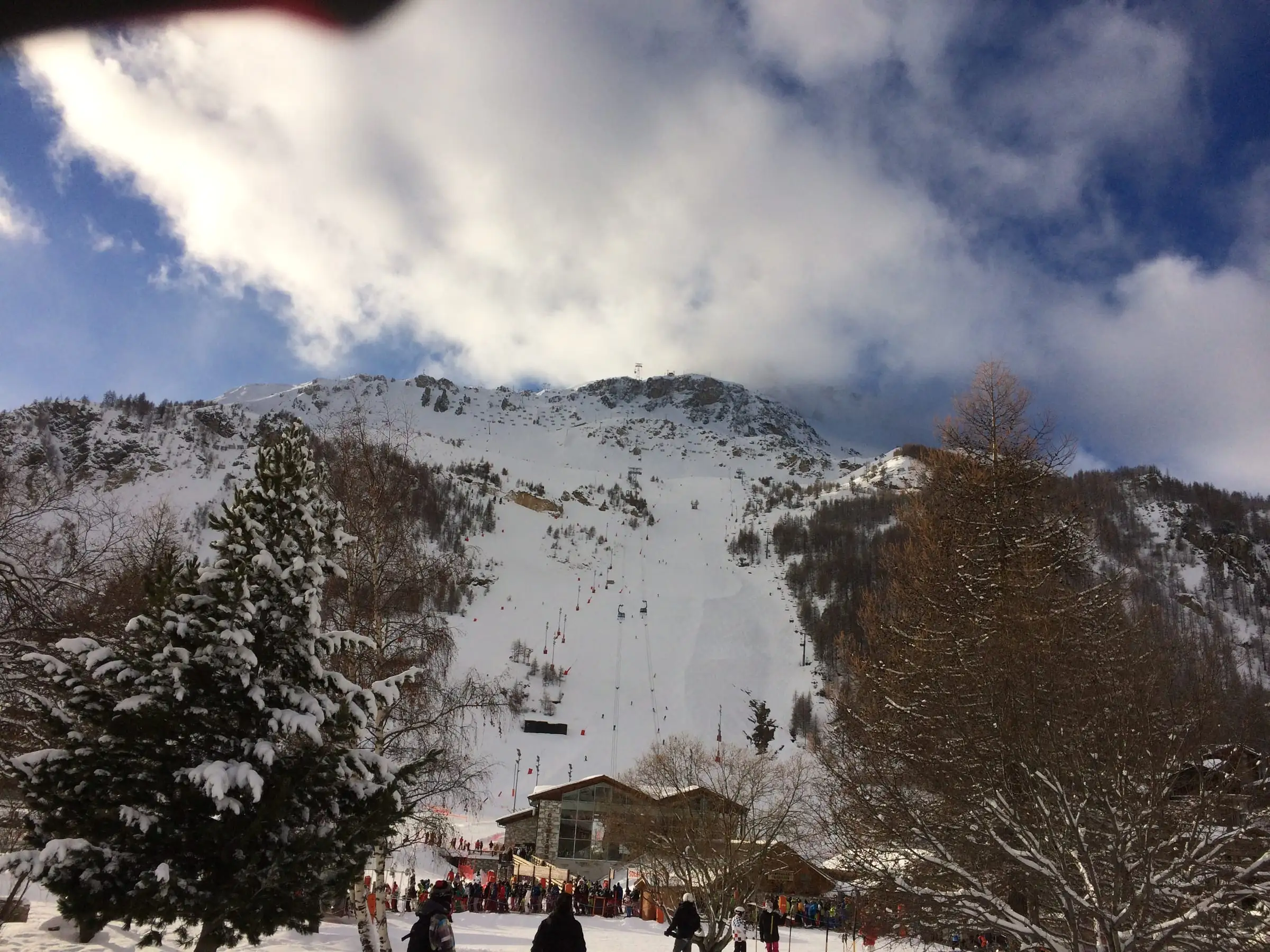
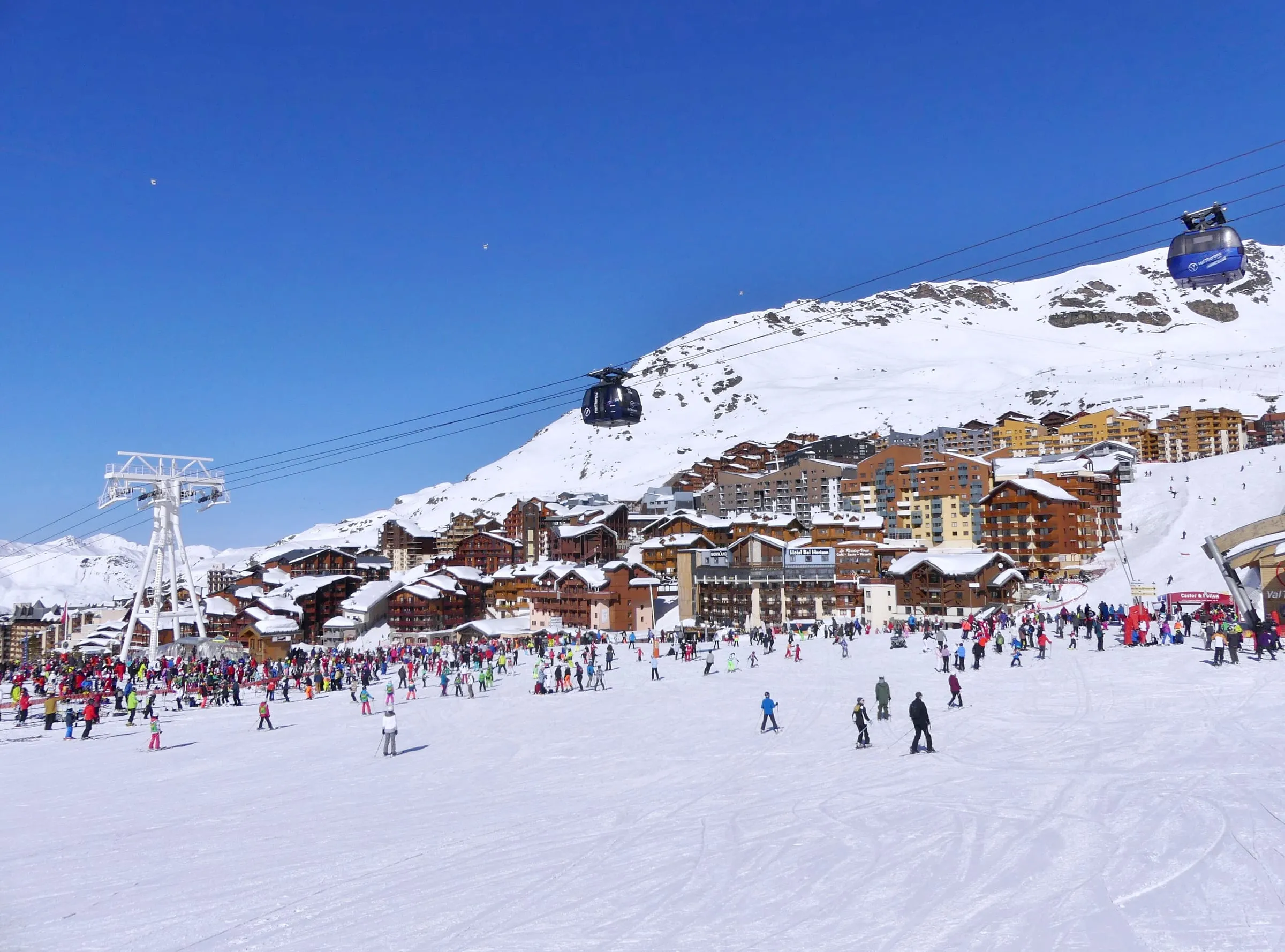
Val d’Isère’s own slopes run from about 1,830 m to just under 3,200 m on the Pissaillas glacier, the lift company puts 60% of them above 2,000 m, and the tourist office says they are mostly north-facing, with snowmaking on more than 65 km of runs. For 2026/27 the lifts run from 28 November 2026 to 2 May 2027.
How snow-sure is Val d’Isère?
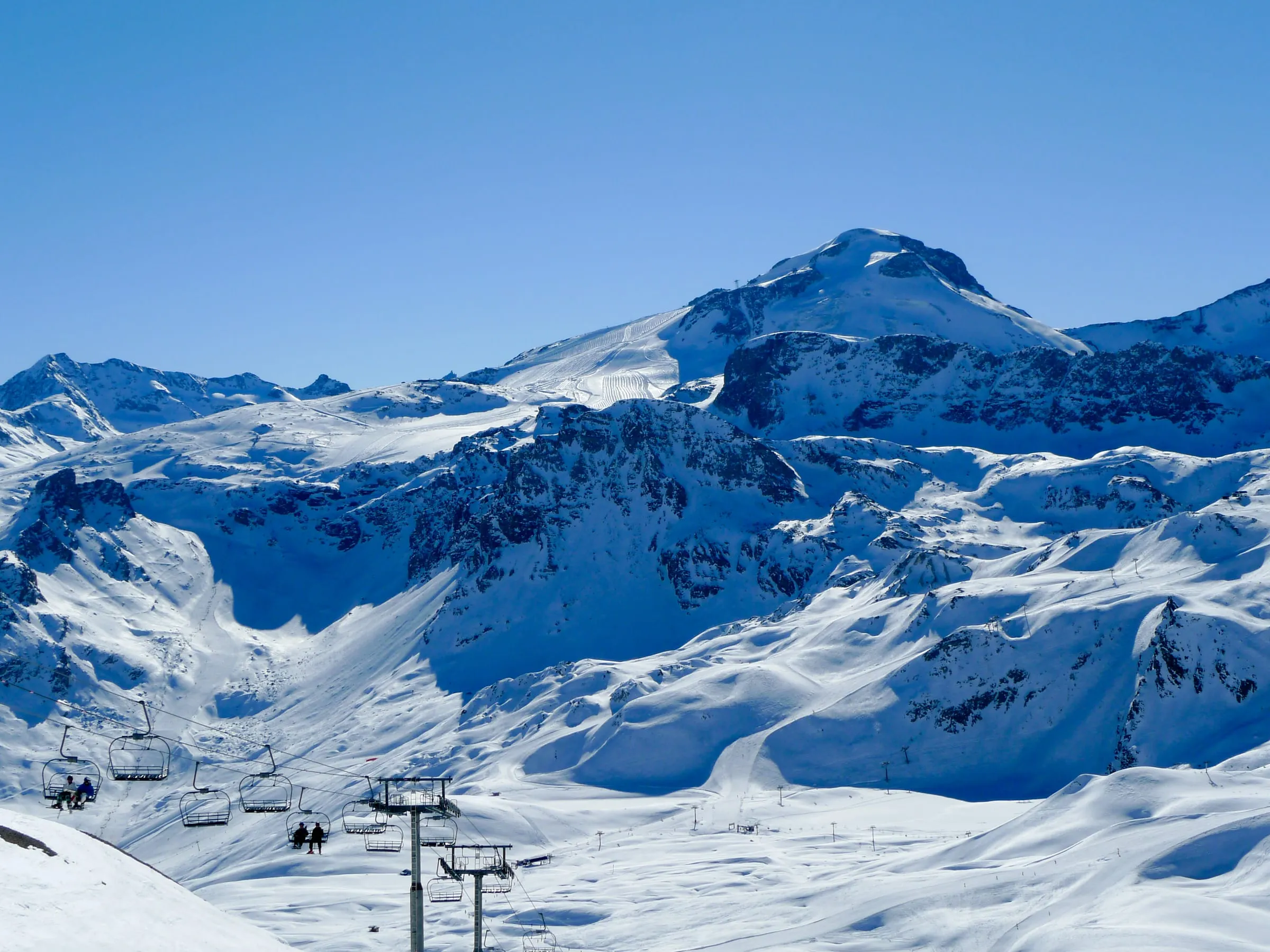
Very. Altitude, aspect and snowmaking all work in its favour, and the lift company goes as far as saying snow cover is guaranteed from December to early May. We’d treat that as a confident forecast rather than a promise, but it is backed by a glacier on each side of the area: the Pissaillas above Le Fornet and, on the shared pass, Tignes’ Grande Motte at 3,456 m.
Against Tignes, Val d’Isère’s village is lower (1,850 m against 2,100 m), but its slopes are mostly north-facing, which keeps the snow cold, and it has trees around the Village Perdu and above La Daille. Val Thorens is higher at the base but has no glacier.
None of the official weather stations near Val d’Isère with five seasons of records stands on its slopes: Val d’Isère Joseray is in the village, so it tells you about the village, not the skiing.
The best time to ski Val d’Isère for snow
- Late November to mid-December: a provisional opening plan covers 28 November to 19 December, so the area grows week by week. Passes are cheaper until 11 December, and the World Cup Critérium comes to the Face de Bellevarde on 12 and 13 December.
- January: cold, quiet and usually fully covered. The best value for snow.
- February: good snow, busy slopes.
- March: our pick, with deep cover and long days.
- April and early May: the lifts run to 2 May, and late-season passes are cheaper from 24 April. The north-facing slopes and the glacier hold; the runs into La Daille and the village go first. Check hotel dates, as several close in mid-April.
Where the snow is best in Val d’Isère
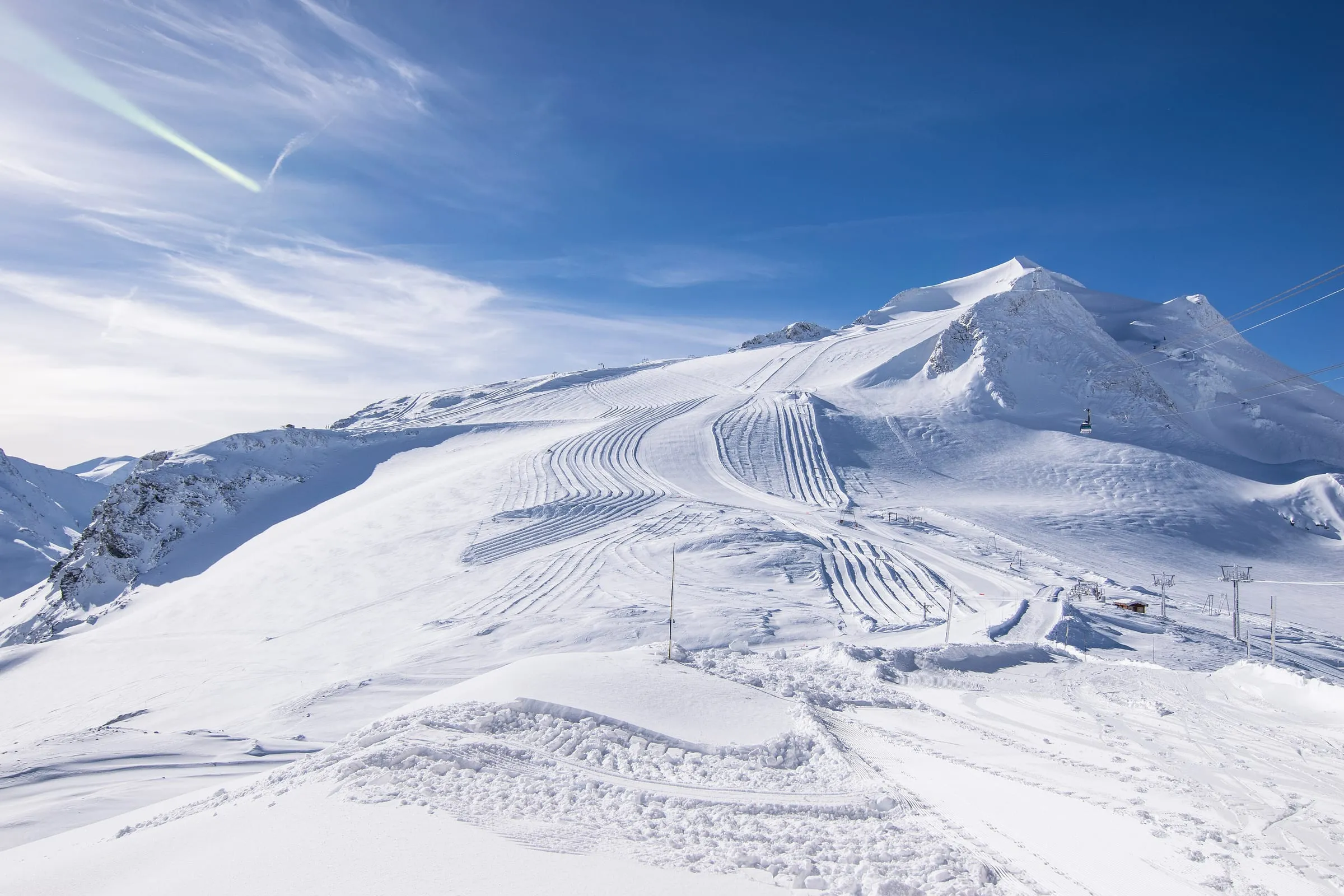
The Pissaillas glacier is the high ground: the Vallon gondola from the Iseran side climbs to 2,790 m at its foot in under seven minutes, and the drag lifts above reach 3,197 m. Bellevarde, reached by the Olympique from the village or the Funival from La Daille, is the main mountain, with the Face de Bellevarde coming straight down to the village. Solaise, on the other side of the village, has the Easy Skiing area and is the way to the glacier.
The first to suffer are the bottom sections: the runs into La Daille and the last pitches to the village.
If the snow is poor in Val d’Isère
Go high and go to Tignes. On a Tignes – Val d’Isère pass, the Grande Motte adds terrain up to 3,456 m. In flat light, the trees around the Village Perdu and above La Daille give definition. For a day off, the Centre Aquasportif has a 25 m pool and a climbing hall.
Val Thorens is the other high choice in France. Our Val d’Isère guide and where to stay have the details.
Webcams and official snow reports for Val d’Isère
The tourist office’s snow report gives the snow depth, last snowfall and avalanche risk at 1,850 m and 3,000 m, and its webcams show the slopes live.