France
 Austria
 Italy
 Switzerland
 English
 Deutsch
 Nederlands
 Čeština
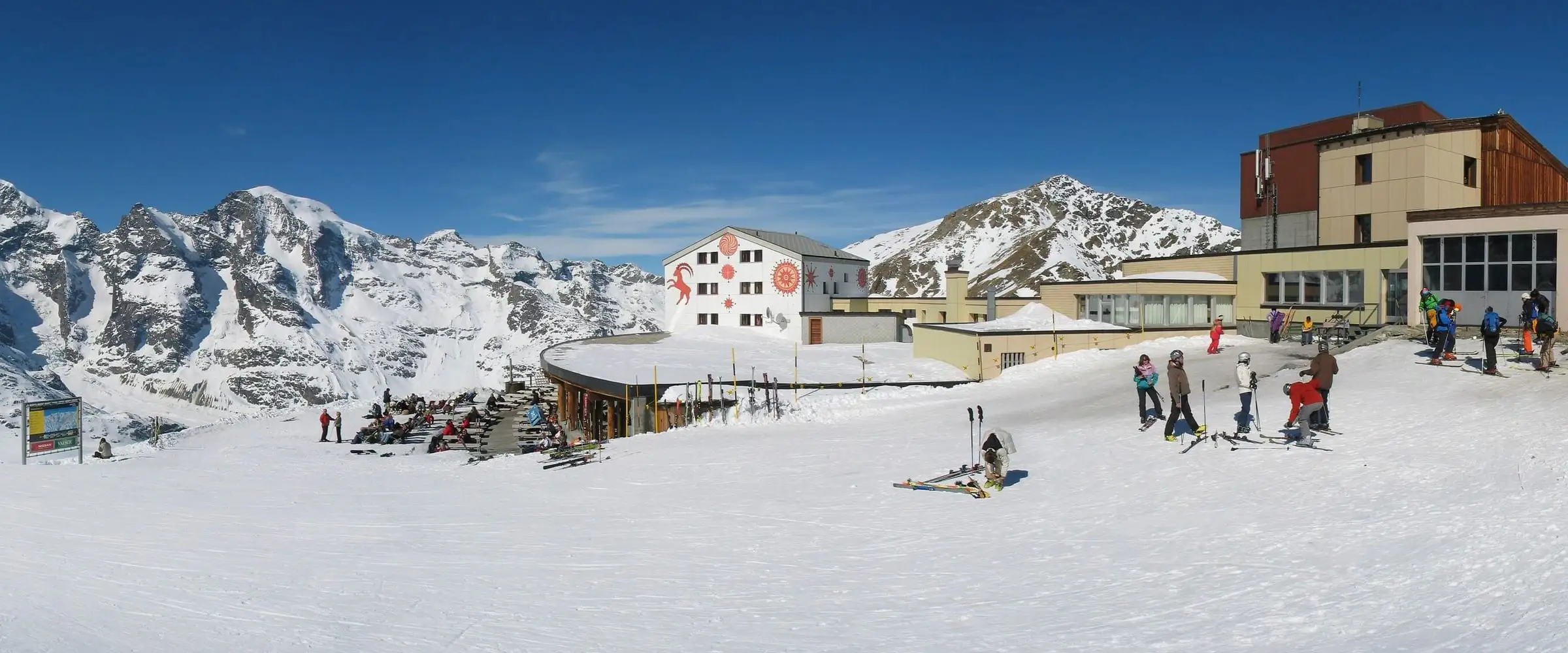
St. Moritz’s home mountain, Corviglia, skis from 1,730 m to 3,057 m on Piz Nair, with no glacier of its own but snowmaking fed by two high reservoirs; Corvatsch across the valley reaches 3,303 m and Diavolezza has a glacier run. For 2026/27 Corviglia is open from 28 November 2026 to 4 April 2027, Corvatsch from 21 November to 25 April and the Diavolezza cable car until 2 May.
How snow-sure is St. Moritz?
Very, thanks to altitude more than snowfall. The town is at 1,846 m and Corviglia’s slopes start at 1,730 m, so even the valley runs begin higher than many resorts’ mid-stations. Most of the lifts run between about 2,000 m and 3,057 m.
Snowmaking is the other half. Engadin St. Moritz Mountains fills its Corviglia snow guns from Lej Alv, a reservoir holding about 400,000 m³, and since 2025 from Lej Nair Pitschen, about 300,000 m³ at roughly 2,600 m. The company says the slopes can now be covered with meltwater alone, and that what once took several weeks of snowmaking now takes considerably less. It doesn’t publish a share of pistes covered, so we don’t give one.
The catch is the climate. The Engadine is a dry, sunny valley, and when big storms hit the northern Alps, around Grindelwald or St Anton, St. Moritz often sees less. Expect cold, groomed pistes and blue skies more often than powder. Zermatt is higher still, with a glacier inside its main lift system.
The best time to ski St. Moritz for snow
- October and November: Diavolezza opened on 17 October 2026, with skiing on Wednesdays and weekends until mid-November. Corvatsch opens on 21 November and Corviglia on 28 November.
- December: Corviglia fills in through the month: Suvretta from 4 December, Alp Giop and Randolins from 5 December, and Piz Nair, Fuorcla Grischa and Lej da la Pêsch from 19 December.
- January: cold, dry and bright, and the quietest month after the holidays. Snow on the groomed runs keeps well in the cold.
- February: the busiest and most expensive weeks on the slopes, with everything open.
- March: our pick for sun and long days. Corviglia’s sunny slopes soften by early afternoon, so ski them in the morning and cross to Corvatsch later.
- April: Corviglia closes on 4 April. Corvatsch, which its operator says has powder until the end of April, runs to 25 April, and Diavolezza to 2 May.
Where the snow is best in St. Moritz
On Corviglia, the highest lifts hold up best: Piz Nair, Trais Fluors at 2,752 m and Plateau Nair at 2,656 m. These carry the skiing when the lower slopes are tired.
Across the valley, Corvatsch and Furtschellas face away from the sun and keep colder, drier snow later into spring. Diavolezza’s 8 km glacier run to Morteratsch is the long, scenic option, but check that it’s open to the bottom before you set off.
The runs that go first are the valley runs: No. 27 to St. Moritz Dorf and No. 25, Saluver, to Celerina. In spring, download on the funicular or the Marguns gondola rather than ski them in the afternoon.
If the snow is poor in St. Moritz
Use the pass. The Upper Engadin pass covers Corviglia, Corvatsch–Furtschellas, Diavolezza–Lagalb and the smaller areas, so on a thin week you simply move to the highest one open: Corvatsch for colder snow, Diavolezza for the glacier. They are linked by bus and train, not on skis, so decide before breakfast. Our St. Moritz guide explains how the areas fit together, and where to stay which base suits which mountain.
If the whole valley is short of snow, the higher alternative is Zermatt, where the glacier is part of the main lift system and is skied all year.
Webcams and official snow reports for St. Moritz
Engadin St. Moritz Mountains shows open lifts and pistes and webcams at Corviglia, Piz Nair, Trais Fluors, Plateau Nair and Marguns. For Corvatsch and Diavolezza, see the slope report and live webcams.