France
 Austria
 Italy
 Switzerland
 English
 Deutsch
 Nederlands
 Čeština
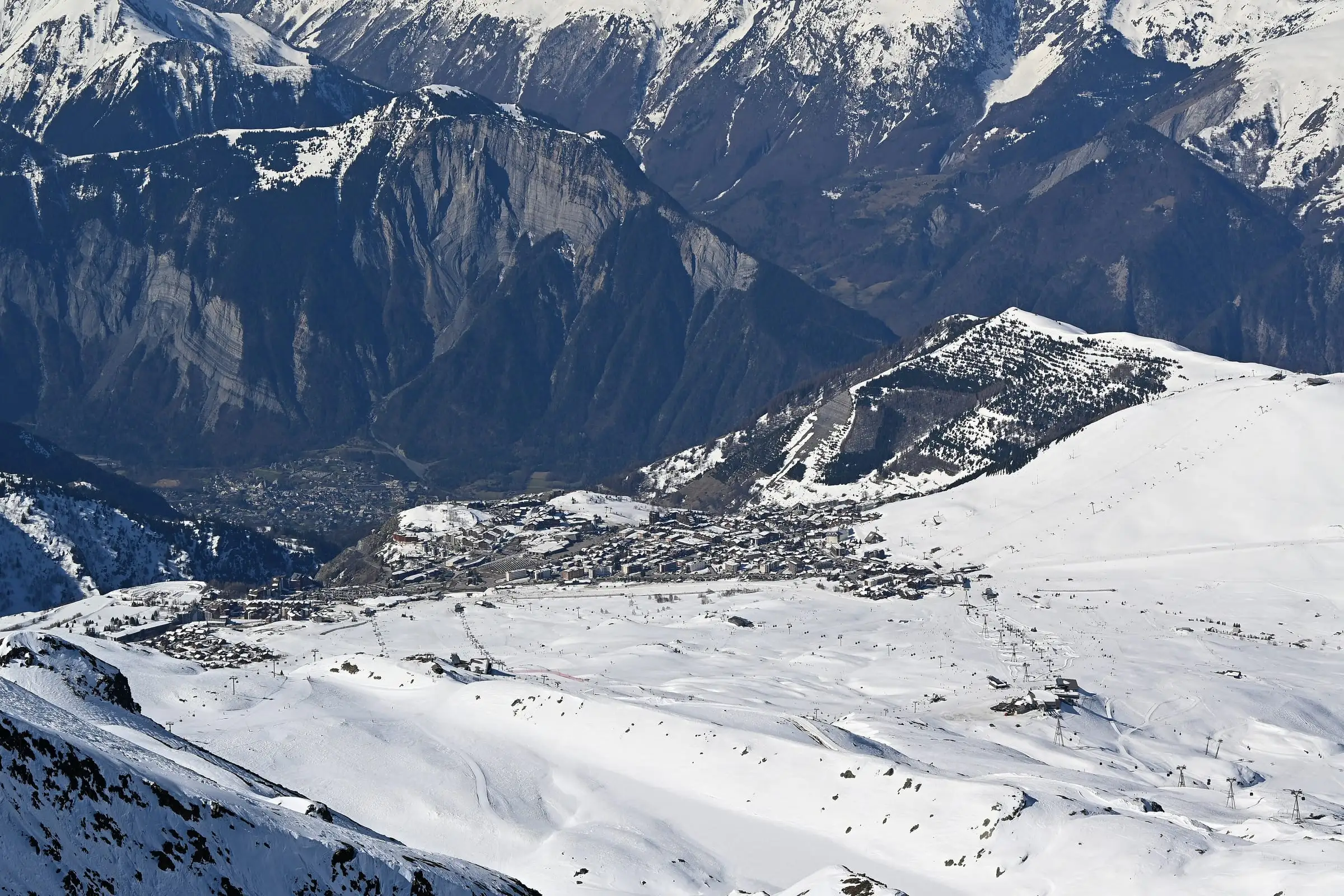
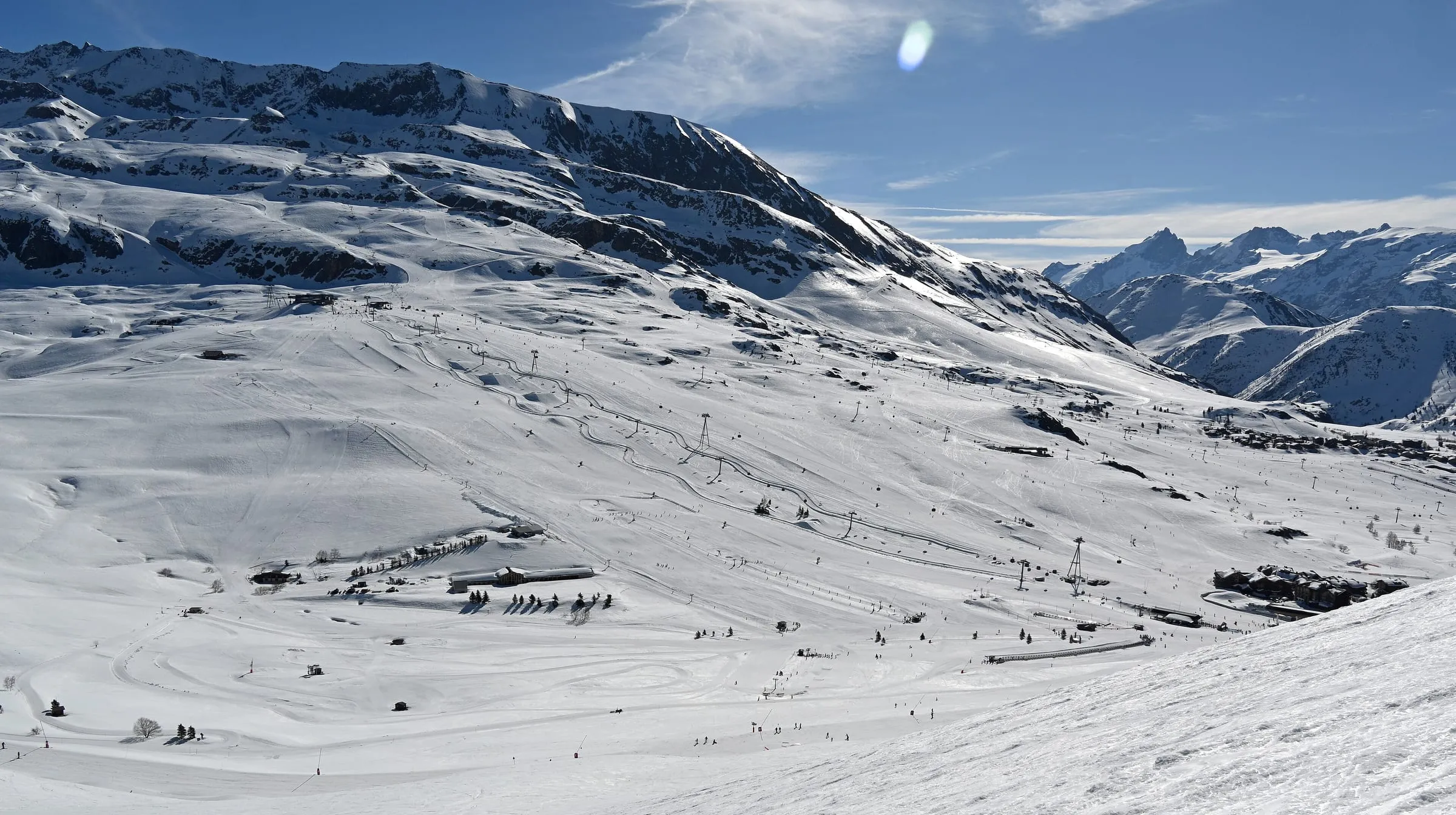
Alpe d’Huez’s ski area climbs from 1,250 m at Vaujany to 3,330 m on Pic Blanc, with the village at 1,860 m on a south-facing plateau, and the Isère tourist board counts about 1,000 snow guns across the area. For 2026/27 the whole area is due to open from 5 December 2026 to 25 April 2027.
How snow-sure is Alpe d’Huez?
Reasonably, with a caveat about the sun. The core intermediate skiing sits between 2,100 m and 2,700 m, and the Pic Blanc and the Marmottes lifts reach 3,330 m and 3,060 m. But most slopes face south, so the snow goes soft early on sunny days and can refreeze hard overnight in spring.
Our long-term guide is the Météo-France station at the resort (1,860 m), at the foot of the slopes. It measures natural snow at one spot, not the depth on the pistes. Over the last five seasons it averaged about 92 cm in January, 118 cm in February and 121 cm in March, with 30 cm or more every week of those months in all five seasons. April falls to about 72 cm. The Tarentaise resorts, such as Val Thorens and Tignes, are higher and hold their snow later.
The best time to ski Alpe d’Huez for snow
- December: the area opens on 5 December, and passes are cheaper until 18 December. Natural snow at the resort station has averaged about 64 cm in December, with 30 cm or more every week in all three Decembers on record; the snowmaking network keeps the main runs to the village going.
- January: about 92 cm on average, cold and quiet. Good value.
- February: about 118 cm, but the French holidays (6 February to 8 March 2027) fill the resort.
- March: about 121 cm, the deepest month on record, with long, sunny days. Avoid 20 to 27 March 2027 if you don’t want the Tomorrowland Winter festival.
- April: about 72 cm at the resort station, with 30 cm or more every week in two of the three Aprils on record. Passes are cheaper from 10 April and the lifts close on 25 April. Ski high early and come down by mid-afternoon.
Where the snow is best in Alpe d’Huez
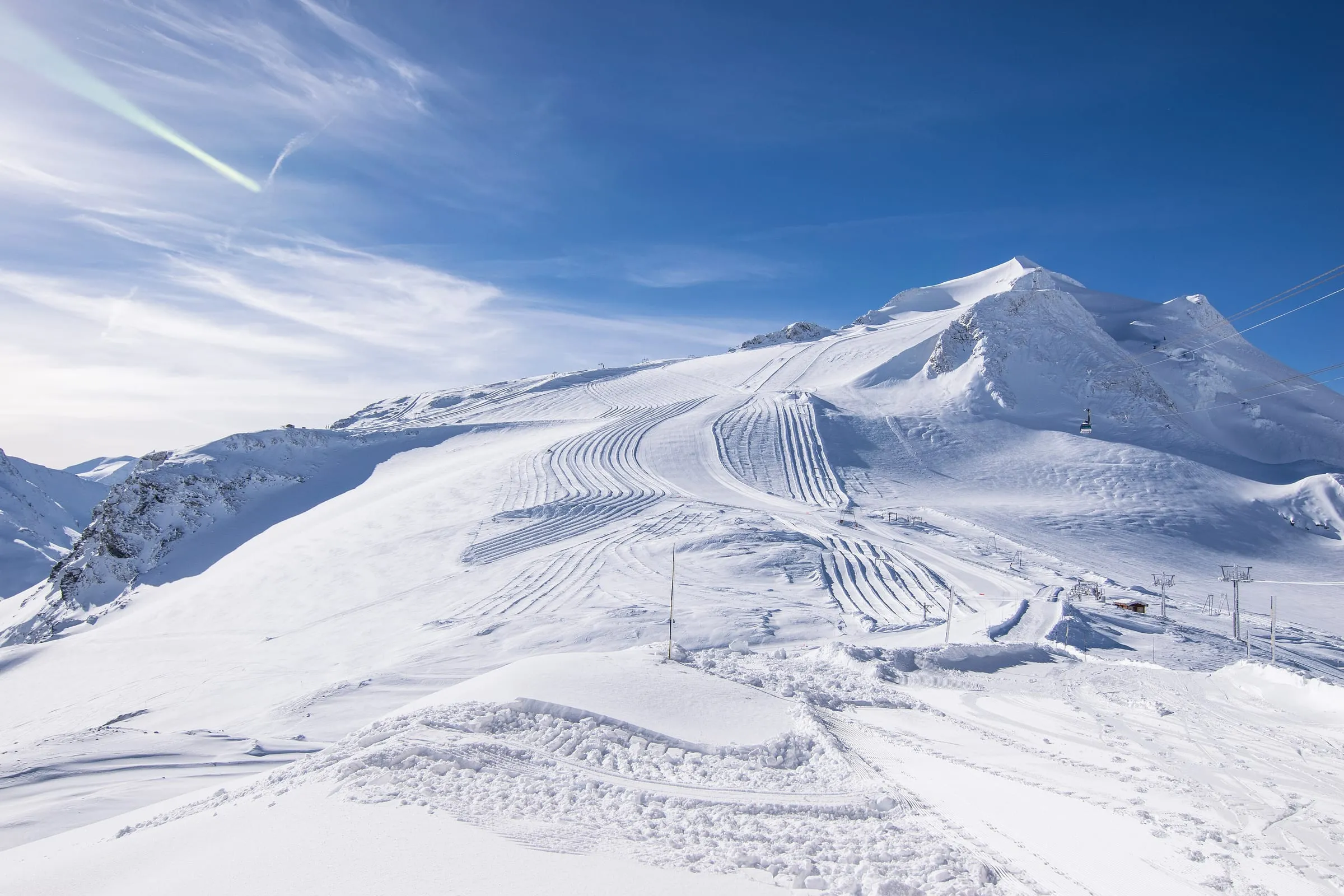
The higher you go, the better it lasts. Pic Blanc 2 to Lac Blanc (2,700 m) and the cable car to the Pic Blanc summit (3,330 m) reach the best late-season snow, with Le Tunnel starting near 3,000 m. The Marmottes lifts from Les Bergers climb towards the Clocher de Macle (2,800 m) and the Herpie (3,060 m). In the Oz–Vaujany sector, La Fare is a north-facing black through the trees.
The first to go are the low satellites (Vaujany at 1,250 m, Oz at 1,350 m, Villard-Reculas at 1,500 m) and the lower end of the long Sarenne run.
If the snow is poor in Alpe d’Huez
Stay high: Lac Blanc and the Marmottes sector, early in the day. In flat light, the trees of Oz and Vaujany are the better bet. The Agor’Alp sports centre in the village has heated pools and an ice rink for a day off.
If the forecast is poor across the Oisans, the higher Tarentaise resorts are the alternative: Val Thorens, Tignes or Val d’Isère. See our Alpe d’Huez guide and Alpe d’Huez with kids.
Webcams and official snow reports for Alpe d’Huez
The lift company’s webcams cover the Alpe d’Huez, Villard-Reculas, Auris and Oz–Vaujany sectors, and its weather page carries the daily conditions.