France
 Austria
 Italy
 Switzerland
 English
 Deutsch
 Nederlands
 Čeština
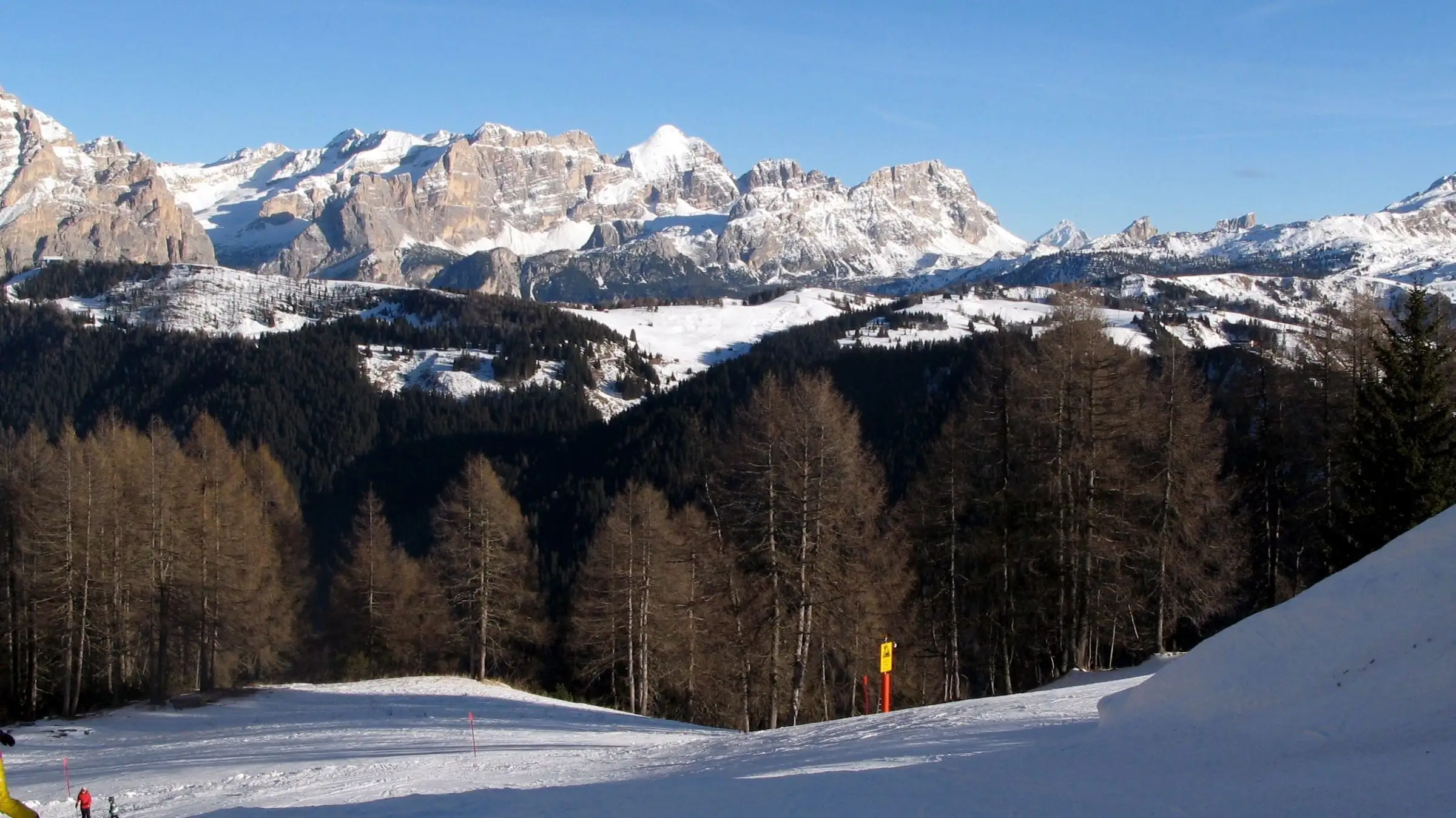
Alta Badia skis from its villages at 1,324 m (San Leonardo) to 1,645 m (Colfosco) up to 2,550 m at Vallon, with no glacier, and keeps its gentle runs covered with a snowmaking network the tourist office tracks live. The lifts run from 4 December 2026 to 4 April 2027, according to the tourist office.
How snow-sure is Alta Badia?
For pistes, quite; for natural snow, less so. Most of the lifts top out between 2,000 m and 2,250 m: Piz Sorega 2,003 m, La Crusc 2,045 m, Piz La Ila about 2,100 m and the Boè gondola about 2,220 m. Only Vallon, above Boè, reaches 2,550 m. Lagazuoi (2,778 m) is higher, but it’s a bus or taxi ride away at Passo Falzarego and is a day trip, not part of the everyday skiing.
What makes up for the altitude is the kind of terrain and the machinery. Wide blue and red runs on a rolling plateau need less snow to ski well than steep, rocky ones, and they’re easy to cover. The tourist office runs a real-time snowmaking report with the Corvara lift company, showing snow production and grooming, and Dolomiti Superski’s 2026/27 plans include renewed snowmaking on Alta Badia’s pistes. Neither gives a figure for how much of the area is covered, so we won’t quote one.
It’s a similar picture to Val Gardena, which reaches 2,518 m on Seceda. Cortina d’Ampezzo goes much higher on the Tofane.
The best time to ski Alta Badia for snow
- December. Opening day is 4 December 2026, usually on machine snow on the main runs. The Gran Risa World Cup on 19 to 21 December needs the area in shape, but natural cover off the pistes is often thin before Christmas.
- January. Cold, quiet and usually the firmest grooming of the season. The 10 to 30 January window is regular season on the Dolomiti Superski pass.
- February. Usually the deepest base, but high season from 31 January, so expect busy lifts around the Sellaronda.
- March. Long, sunny days. The tourist office’s spring advice is to ski the sunnier slopes in the morning and switch to the higher, north-facing ones in the afternoon, when the snow stays firm longer. High-season prices end on 20 March.
- April. The season ends on 4 April 2027, a week after Easter (28 March). Expect slush on the runs back to La Villa and Badia by early afternoon.
Where the snow is best in Alta Badia
Head up. The Boè gondola and the Vallon chair, the highest skiing on the Alta Badia pass at 2,550 m, hold their snow longest, along with the Passo Gardena slopes above Colfosco at about 2,100 m. On the plateau, Pralongià and the Piz La Ila area at around 2,000 to 2,150 m are good all season thanks to grooming and snowmaking.
The first runs to suffer are the lowest ones: the descents to La Villa (1,433 m), including the bottom of the Gran Risa, and Badia’s La Crusc sector, which runs down towards the valley floor. The Lagazuoi and Armentarola run depends on natural snow in the Hidden Valley; the horse tow back to the Armentarola lift doesn’t run when that route is closed.
If the snow is poor in Alta Badia
Stick to the groomed plateau and the Boè and Vallon sector, and ski in the morning. The full Dolomiti Superski pass is worth having in a thin winter, because it opens up the rest of the Sellaronda and other areas on the same pass when one valley is struggling. If you need real altitude, Cervinia (up to 3,883 m) or Livigno are the higher Italian choices, and Val Thorens is the safest bet in the Alps.
See our Alta Badia ski guide for the lifts and runs, and where to stay in Alta Badia for hotels close to the high lifts.
Webcams and official snow reports for Alta Badia
The tourist office’s lifts, slopes and snow page shows what’s open, and its snowmaking report tracks snow production and grooming. The Alta Badia webcams cover Boè, Piz Arlara, Piz La Ila, Piz Sorega, La Crusc, Passo Gardena and each village.