France
 Austria
 Italy
 Switzerland
 English
 Deutsch
 Nederlands
 Čeština
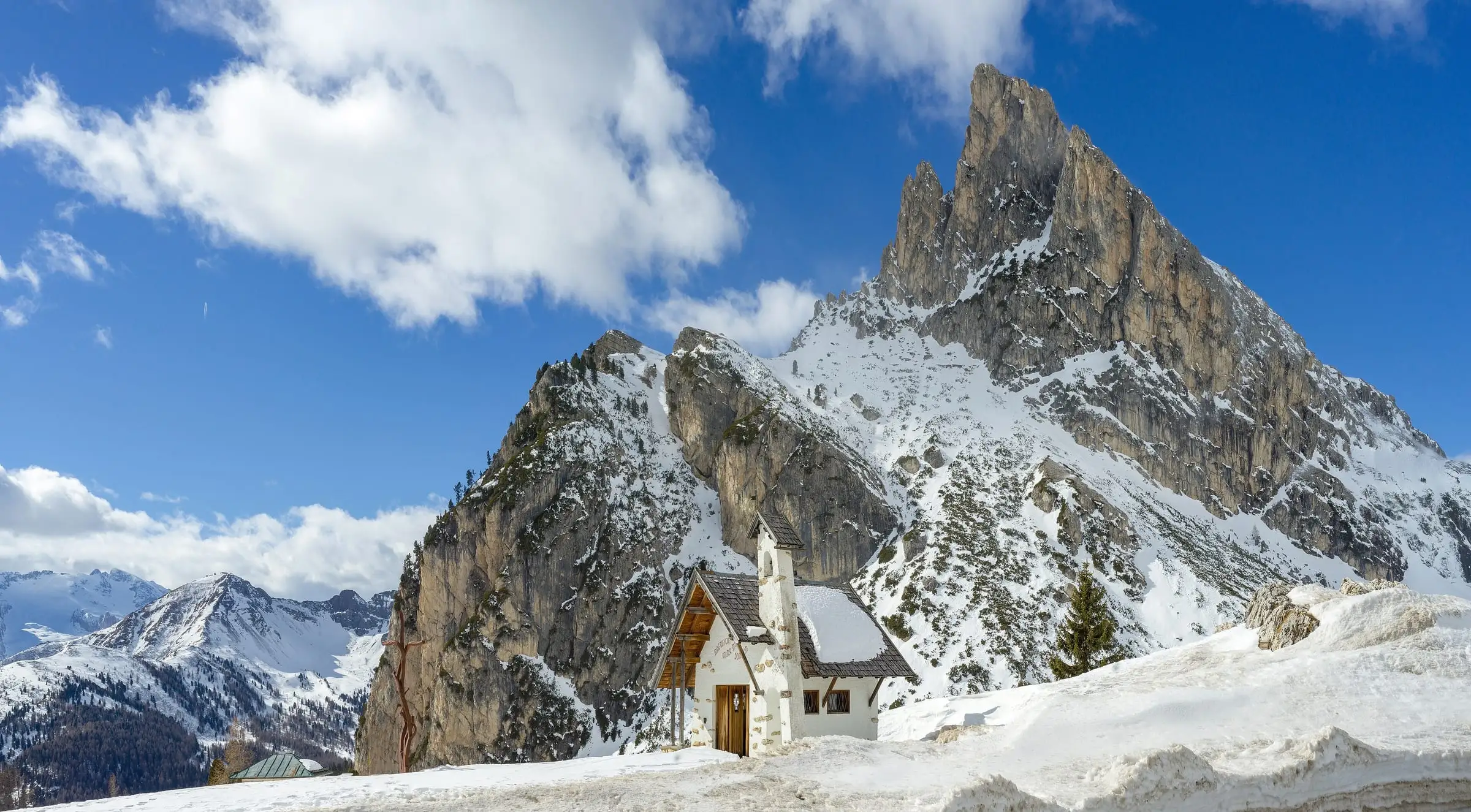
Cortina’s skiing runs from the town at 1,224 m to 3,244 m on the Tofana di Mezzo, with no glacier, so its snow depends on altitude and on snowmaking that Dolomiti Superski says it is renewing on Cortina’s pistes for 2026/27. The season runs from 28 November 2026 to 2 May 2027, though each sector sets its own dates within that.
How snow-sure is Cortina d’Ampezzo?
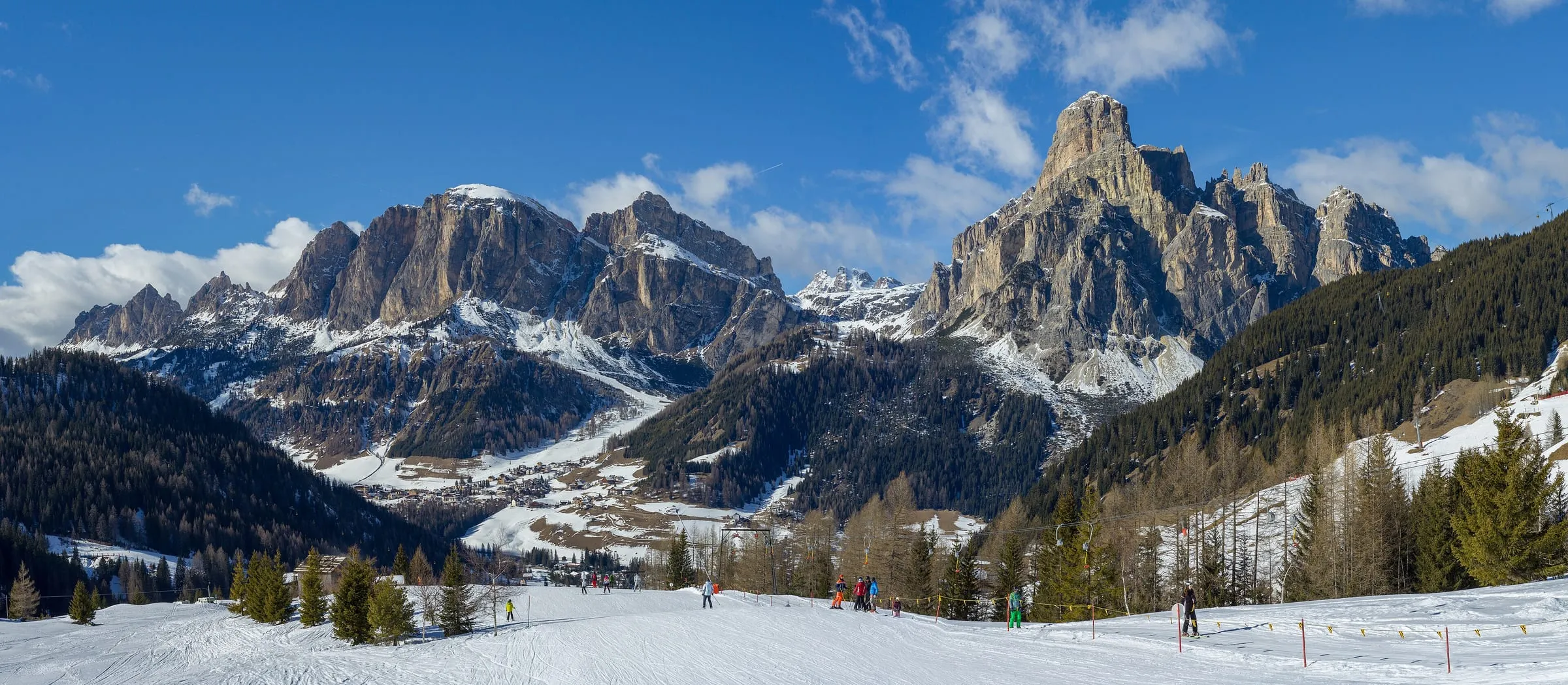
Fairly, as long as you ski high. The town is low for a big resort, and the runs that finish there are the weak link. Most of the skiing sits well above it: Cinque Torri and Bai de Dones from about 1,900 m, the Falzarego Pass at 2,105 m with the Lagazuoi cable car rising to 2,732 m, Faloria at 2,123 m and Son Forca at 2,215 m, and the upper Tofana, where Ra Valles is at 2,470 m.
Snowmaking does the heavy lifting on the groomed runs. The lift companies don’t publish a figure for how many of Cortina’s pistes it covers, so we won’t guess one. The notable exception is Ra Valles: the Freccia nel Cielo describes it and the Forcella Rossa run as natural-snow terrain, which makes it superb after a storm and unavailable in a dry spell.
Compared with our other Italian resorts, Cortina is lower and less certain than Cervinia or Livigno, and broadly in the same league as Val Gardena: good snowmaking, mid-altitude, no glacier. It also sits on the southern side of the Alps, so its snowy and dry spells don’t always match those of Austria or France. Judge it by a Dolomites forecast.
The best time to ski Cortina d’Ampezzo for snow
- December: A staged start. Col Gallina opens on 27 November and the main lifts from 28 November; the Freccia nel Cielo starts in early December, snow permitting, and the Lagazuoi cable car not until 23 December. Expect machine-made pistes and limited natural-snow terrain unless it has snowed.
- January: The coldest snow and, from 10 to 30 January, the quiet low-season window on the Dolomiti Superski pass. The best value weeks of the winter for snow.
- February: Usually the deepest snow, and the busiest weeks, with Carnival and Italian school holidays.
- March: Long, sunny days and a deep base; the low runs into town soften by early afternoon. Low season on the pass returns from 21 March.
- April: The Lagazuoi cable car closes on 4 April. The consortium’s season runs to 2 May, but which lifts stay open late depends on snow, so check the open-lifts page before you book late April.
Where the snow is best in Cortina d’Ampezzo
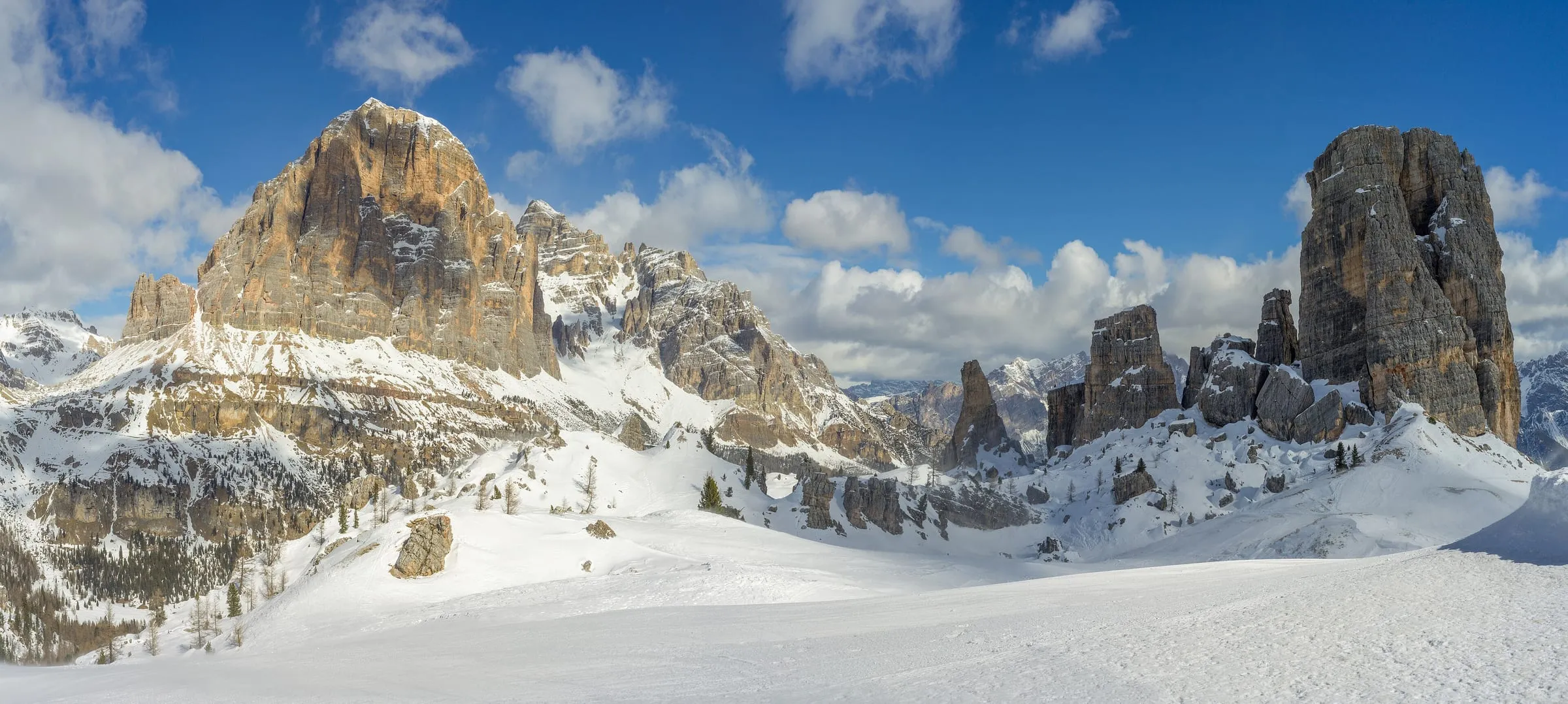
Go up, and go west. The upper Tofana (Ra Valles and the top section of the Freccia nel Cielo) has the highest skiing and the best snow after a fall. Lagazuoi and Col Gallina on the Falzarego Pass start above 2,100 m, and Col Gallina is the first area to open this winter, on 27 November. Cinque Torri and Averau are the next best bet. On the other side of the valley, Faloria and Son Forca top out above 2,100 m.
The lowest runs are the ones that end in or near town, around Socrepes and the bottom of the Tofana slopes. They’re the first to turn thin or slushy in a mild spell.
If the snow is poor in Cortina d’Ampezzo
Head for the Falzarego Pass and the upper Tofana, and ride the cable cars down rather than skiing to town. A Dolomiti Superski pass also opens up the rest of the Dolomites: Alta Badia via the Lagazuoi run to Armentarola, and Val Gardena on a day out. If the whole southern Alps are dry, Cervinia and Livigno are the higher Italian options. For everything else, see our Cortina ski guide and where to stay in Cortina.
Webcams and official snow reports for Cortina d’Ampezzo
The lift consortium’s open lifts and open slopes pages show what’s running, and its weather page links to the Veneto snow and avalanche bulletin. The tourist board’s webcams cover every sector, and the Freccia nel Cielo has its own webcam and weather page for the Tofana.