France
 Austria
 Italy
 Switzerland
 English
 Deutsch
 Nederlands
 Čeština
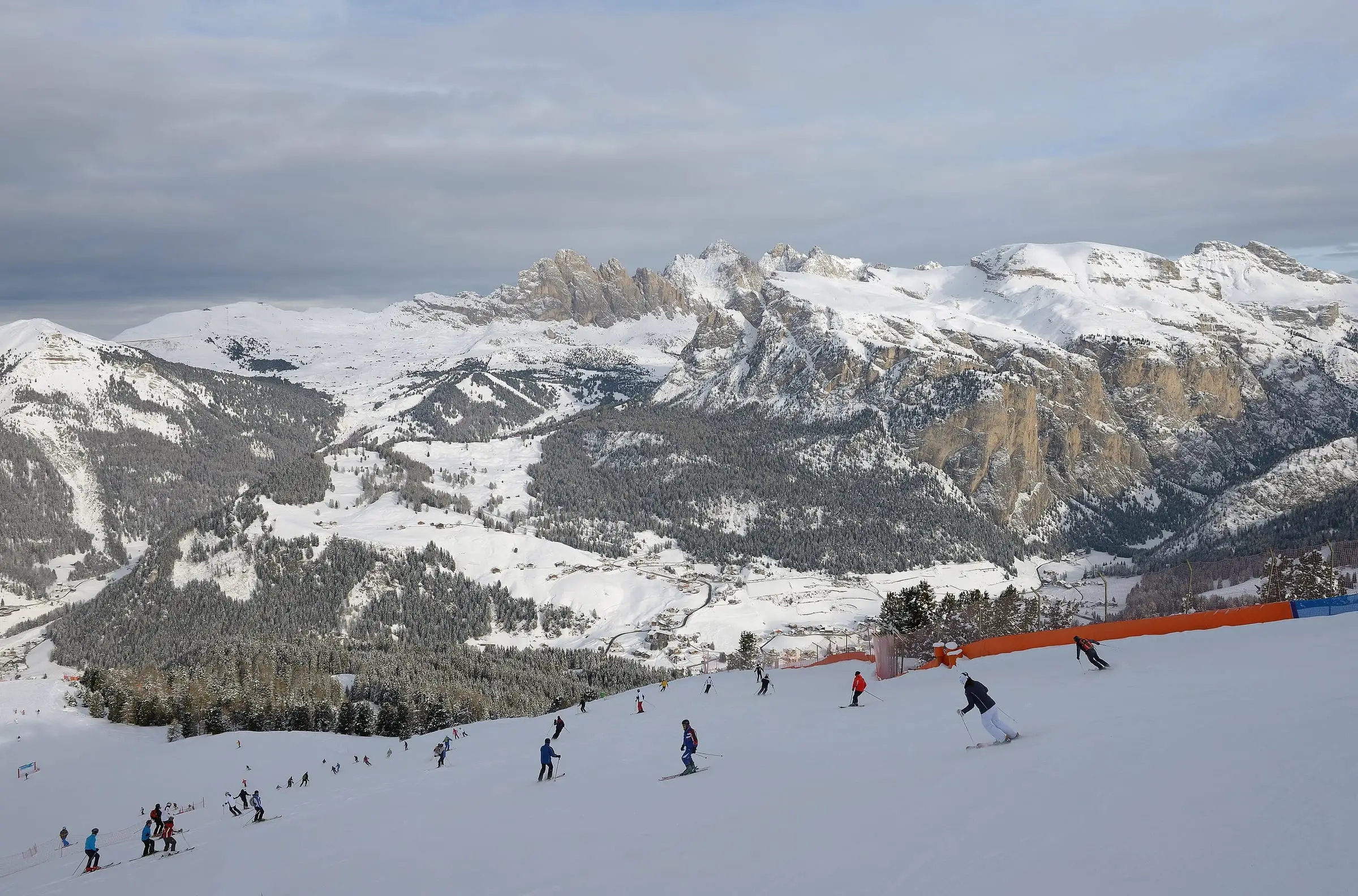
Val Gardena skis from its villages at 1,236 m (Ortisei) to 1,563 m (Selva) up to 2,518 m on Seceda, with no glacier, and leans on a snowmaking network the tourist office sells as a “100% snow guarantee”. The lifts and the Sellaronda run from 4 December 2026 to 4 April 2027, according to the tourist office.
How snow-sure is Val Gardena?
For pistes, very; for natural snow, less so. Most of the skiing sits between about 1,500 m and 2,300 m. The high points are Seceda (2,518 m), Piz Sella (2,284 m), Ciampinoi (2,254 m), Mont de Sëura (2,117 m), Col Raiser (2,103 m) and Mont Sëuc on the Alpe di Siusi (2,005 m). That’s a long way below Cervinia or Val Thorens.
What makes up the difference is machinery. The tourist office claims a “100% snow guarantee thanks to technically programmed snowmaking”, and Dolomiti Superski’s 2026/27 plans include new water reservoirs for snowmaking at Selva. Neither publishes a figure for kilometres covered, so we won’t give one. In practice, a dry Dolomites winter here tends to mean firm, groomed pistes between bare slopes rather than closed runs.
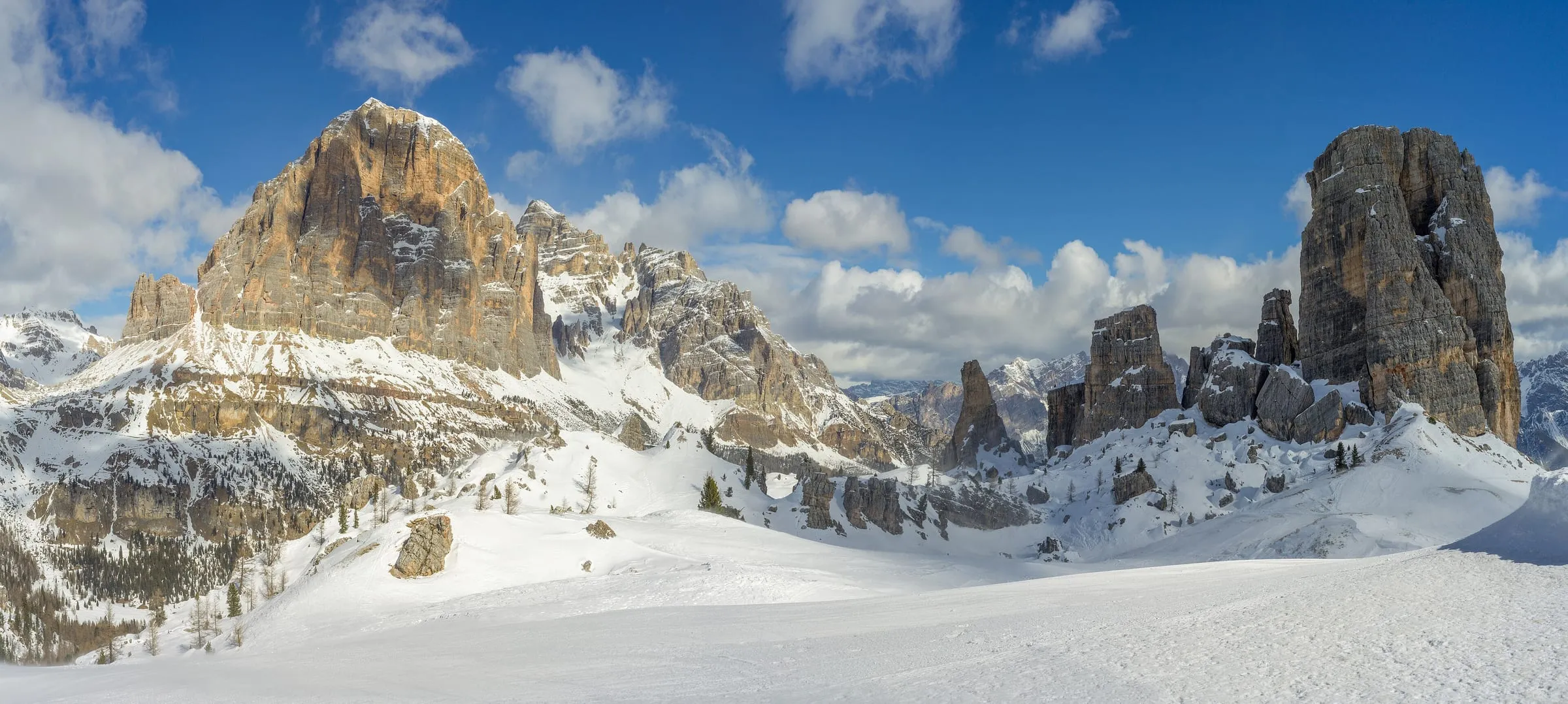
It’s a similar picture to Cortina, a little lower at the top but more compact, with the Sellaronda lifts tying the sectors together.
The best time to ski Val Gardena for snow
- December: The season starts on 4 December, on mostly machine-made snow. By mid-month the main runs are in shape. The World Cup races on 18 and 19 December 2026 bring crowds, and the Saslong A is closed from 13 to 23 December.
- January: Cold, clear and the most reliable snow quality. From 10 to 30 January it’s low season on the Dolomiti Superski pass, our pick for a snow-led last-minute trip.
- February: Usually the deepest base, and the busy weeks of Carnival and school holidays.
- March: Longer days and softening afternoons. Ski the high sectors early and the runs to the villages before lunch.
- April: Short. The season ends on 4 April 2027, a week after Easter (28 March). If you want late snow, look elsewhere.
Where the snow is best in Val Gardena
Seceda is the top of the valley and the place to start the day. Its upper slopes, below the Odle peaks, keep the coldest snow; La Longia, the 10 km run from Seceda to Ortisei with 1,273 m of vertical, is the one to ski early, because its bottom half ends in the lowest village in the valley. Piz Sella, Dantercepies and the slopes towards Passo Gardena and Passo Sella are the other high ground, and they’re where the Sellaronda runs.
Ciampinoi is mid-height, and the runs from it to Selva and Santa Cristina, including the Saslong, are among the lowest you’ll ski. Monte Pana (1,667 m) and the village practice slopes are lower still. On the Alpe di Siusi, the plateau is high and gentle but its cover depends on the winter.
If the snow is poor in Val Gardena
Stay high on Seceda and around the Sella passes, and take the lifts down instead of the long runs to the villages. The snowmaking keeps the Sellaronda going in most winters, and a Dolomiti Superski pass reaches Arabba and the Marmolada, whose season runs two weeks longer than Val Gardena’s, to 18 April 2027.
If you need serious altitude, Cervinia and Livigno are the high Italian choices. For a gentler start, see Val Gardena with kids; for beds near the high lifts, our Val Gardena hotels guide.
Webcams and official snow reports for Val Gardena
The tourist office’s slopes and lifts page gives snow depth in the valley and on the mountain, with open slopes and the Sellaronda status beside it. Its webcams include live cameras at Seceda, Ciampinoi, Piz Sella and Col Raiser.